Welcome to the Runes: Symbols of Wisdom, Mystery, and Power
The runes are far more than just letters of an ancient alphabet. To the Old Norse and other Germanic peoples, they were sacred symbols—mystical tools of writing, magic, and divination. Rooted in myth and mystery, the runes carry a deep spiritual resonance that still speaks to us today.
This guide is your companion whether you’re brand new to the runes or looking to deepen your understanding. We’ll explore the two main runic systems—the Elder Futhark and the Younger Futhark—along with their history, meanings, magical uses, and enduring cultural significance.
The Runic Alphabets: Elder and Younger Futhark
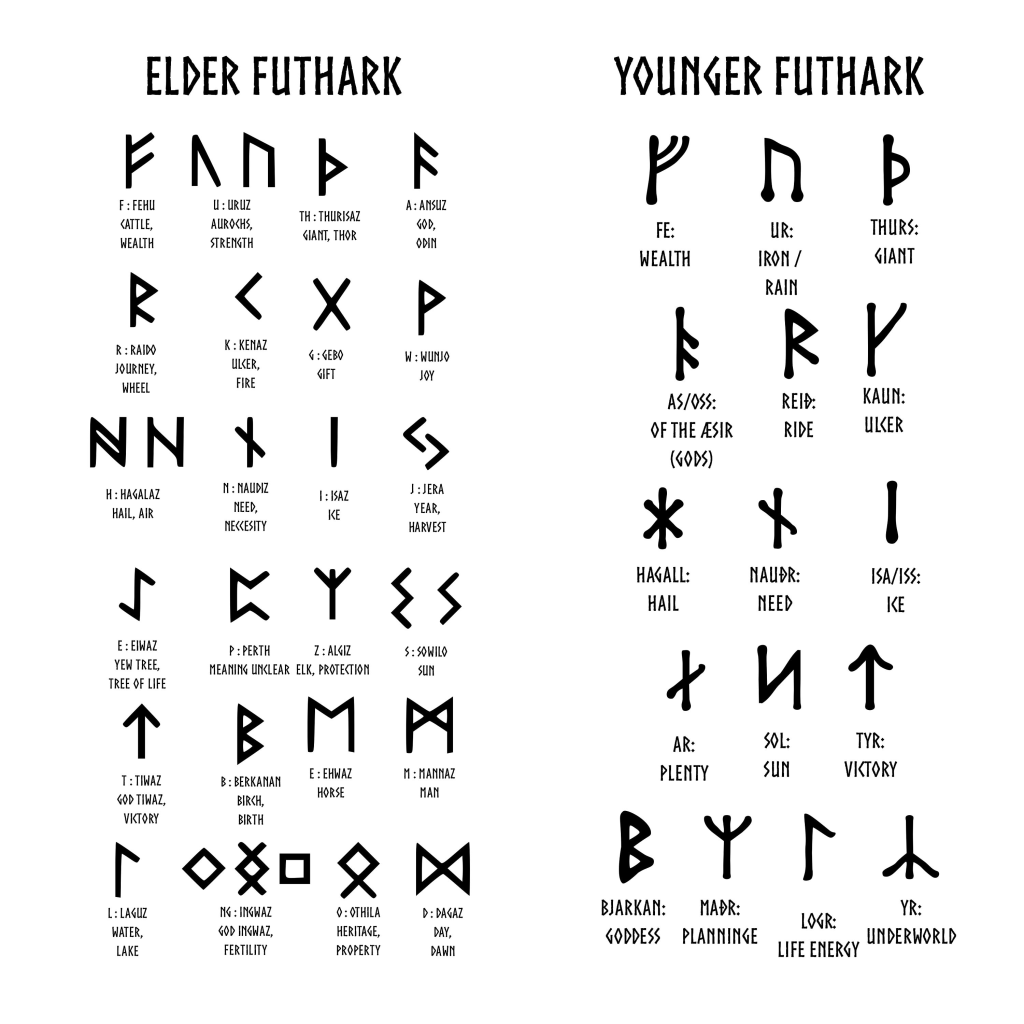
The Elder Futhark is the oldest known runic system, dating back to roughly the 2nd century AD and used until around the 8th century. It consists of 24 runes, each representing a sound, an idea, and often a deeper metaphysical concept. These runes were used across a wide swath of Northern Europe—from modern-day Scandinavia to parts of Germany and the British Isles.
As the Norse language evolved, so did the script. By the 8th century, the Younger Futhark began to emerge. This simplified system has just 16 characters and was used until around the 12th century, particularly during the Viking Age.
Though simplified in form, the Younger Futhark was deeply entwined with Norse culture and myth. It’s important to note that these systems didn’t replace one another overnight. There was a long period of overlap, with multiple runic traditions coexisting across regions.
A Glimpse at Other Runic Traditions
In addition to the Elder and Younger Futhark, other runic alphabets developed over time:
The Anglo-Saxon Futhorc, used from the 5th to 11th centuries in England, expanded the runic alphabet to 33 characters to suit the Old English language.
The Gothic Runes, though less widely known, show Greek influence and contain 27 letters. These were used by the Goths, an East Germanic people, until the 6th century, when they adopted the Latin alphabet.
Despite their eventual decline, these early scripts helped shape both linguistic and magical traditions that continue to influence modern rune practice.
The Elder Futhark in Use
From its origin in the 2nd century until its decline around the 8th, the Elder Futhark served both mundane and magical purposes. It was carved into tools, weapons, jewelry, and stones—not only to record names and mark possessions but also to invoke protection, success, and divine aid.
The early Germanic and Norse peoples—including the Angles, Saxons, and Jutes who migrated to Britain—used runes as part of everyday life and spiritual practice. Divination and magic were key components of this tradition. Each rune held layers of symbolic meaning, providing insight into natural forces, divine will, and human experience.
The Structure of the Elder Futhark: The Three Ættir
The 24 runes of the Elder Futhark are grouped into three families, or ættir. Each ætt contains eight runes, often associated with a particular deity or spiritual theme. These groupings serve as a guide for understanding the relationships between the runes and the energies they represent.
Freyja’s (or Freyr’s) Ætt – The Cycle of Life and Abundance (click the link to learn more about this Ætt )
This first ætt is linked to the Vanir deities Freyja and Freyr, associated with fertility, prosperity, and the life force. The runes here often speak to creation, growth, and joy in the material and emotional realms.
Fehu (F) – “Cattle or wealth.” Represents abundance, prosperity, and life’s natural rhythms.
Uruz (U) – “Aurochs.” Symbolizes primal strength, endurance, and vitality.
Thurisaz (Th) – “Thorn or Giant.” Associated with protection, conflict, and raw power.
Ansuz (A) – “God, breath of Odin.” Signifies divine communication, wisdom, and inspiration.
Raidho (R) – “Journey.” Governs movement, life paths, and spiritual travel.
Kenaz (K) – “Torch.” Represents creativity, inner fire, and transformation.
Gebo (G) – “Gift.” Reflects reciprocity, partnerships, and sacred exchange.
Wunjo (W) – “Joy.” Embodies harmony, happiness, and personal fulfillment.
Hagal’s Ætt – Challenge, Change, and Inner Growth (click the link to learn more about this Ætt )
This ætt is associated with Heimdall, also known as Hagal. These runes deal with transformation, trials, and the elemental forces that shape us.
Hagalaz (H) – “Hail.” The rune of disruption and cleansing change.
Nauthiz (N) – “Need.” Speaks to necessity, constraint, and lessons in hardship.
Isa (I) – “Ice.” Reflects stillness, introspection, and the slowing of movement.
Jera (J) – “Year.” A rune of harvest, reward, and seasonal cycles.
Eiwaz (Ei) – “Yew tree.” Symbol of death, rebirth, and spiritual strength.
Perthro (P) – Meaning uncertain. Often associated with mystery, fate, and games of chance.
Algiz (Z) – “Elk.” Offers protection, divine guidance, and spiritual connection.
Sowilo (S) – “Sun.” Represents success, clarity, and illumination.
Tyr’s Ætt – Order, Wisdom, and Spiritual Legacy
Named for the god Tyr, this ætt centers on justice, structure, and the human experience within society and the cosmos.
Tiwaz (T) – “Tyr.” Associated with law, honor, and noble leadership.
Berkana (B) – “Birch.” Symbol of renewal, birth, and feminine energy.
Ehwaz (E) – “Horse.” Relates to trust, partnership, and forward momentum.
Mannaz (M) – “Man.” Reflects humanity, community, and identity.
Laguz (L) – “Water.” Speaks to intuition, emotion, and the flow of life.
Ingwaz (Ng) – “Frey.” A rune of completion, gestation, and inner peace.
Dagaz (D) – “Day.” Represents breakthrough, awakening, and transformation.
Othala (O) – “Inheritance.” Tied to ancestry, tradition, and sacred heritage.
The Deeper Symbolism of the Ættir
Many practitioners believe that the three ættir mirror the spiritual journey: the beginning of life and physical experience, the challenges and trials of transformation, and finally, integration and legacy. Others see them as connected to the divine, the elements, or the soul’s evolution through time.
Each rune offers layered meaning—rooted in myth, nature, and human experience—inviting us to explore not just what it “means,” but how it lives and breathes in our own lives.
Magic and the Runes in Norse Culture
The Norse people saw runes as more than communication—they were living symbols, woven into spells, charms, and rituals. The sagas and the Poetic Edda give us glimpses into this magical worldview.
Divination
There’s strong evidence that the Vikings used runes for divination. This may have involved casting rune stones, drawing runes from a bag, or reading blótspón—small, blood-stained sticks inscribed with runes.
Weapon Inscriptions
Warriors carved runes onto swords and axes to bring protection or victory. These inscriptions were more than decoration—they were acts of magic, inviting the gods’ favor.
Runes for Healing and Protection
In Egils saga, we see runes used to detect poison and even heal a sick woman:
“Egil then drew his knife and pricked the palm of his hand. He took the horn, scratched runes on it, and smeared blood in them. He sang…
…Then the ale horn burst into pieces and the poisoned ale flowed onto the floor, saving him.”
“No man should carve runes
unless he can read them well;
many a man go astray
around those dark letters…”
These tales remind us that runes were powerful—but that misuse could have dire consequences.
Archaeological Evidence of the Elder Futhark
Runes carved in Elder Futhark have been found across Europe on:
The Vimose Finds – Items from Denmark dating back to the 2nd–4th centuries.
The Bracteate of Funen – A gold pendant showing what may be Odin, Sleipnir, and a raven, inscribed in Elder Futhark.
Weapons, jewelry, and everyday objects – Offering names, blessings, and sometimes magical phrases.
The Shift to the Younger Futhark
Around the 8th or 9th century, the Elder Futhark gradually gave way to the Younger Futhark—a system of only 16 runes. Why simplify the alphabet as society became more complex? Scholars still debate this. It may have been an adaptation to evolving spoken language or a way to streamline communication as rune writing became more common.
Despite its fewer characters, the Younger Futhark remained deeply symbolic and was used well into the medieval period.
Read more on the Younger Futhark Runes
Runes Today: Living Symbols in a Modern World
Today, people use runes for meditation, divination, spiritual practice, and as a way to connect with ancestral roots. Some wear rune tattoos, create bindrunes for intention setting, or study their symbolism to gain personal insight.
Whether you’re drawn to the runes for their history, mystery, or spiritual resonance, know that you’re engaging with a tradition that is alive—not frozen in the past, but evolving with each seeker who picks up these ancient symbols to listen, learn, and create.
Next Post: Freyja’s and Freyr’s Ætt – The Cycle of Life and Abundance