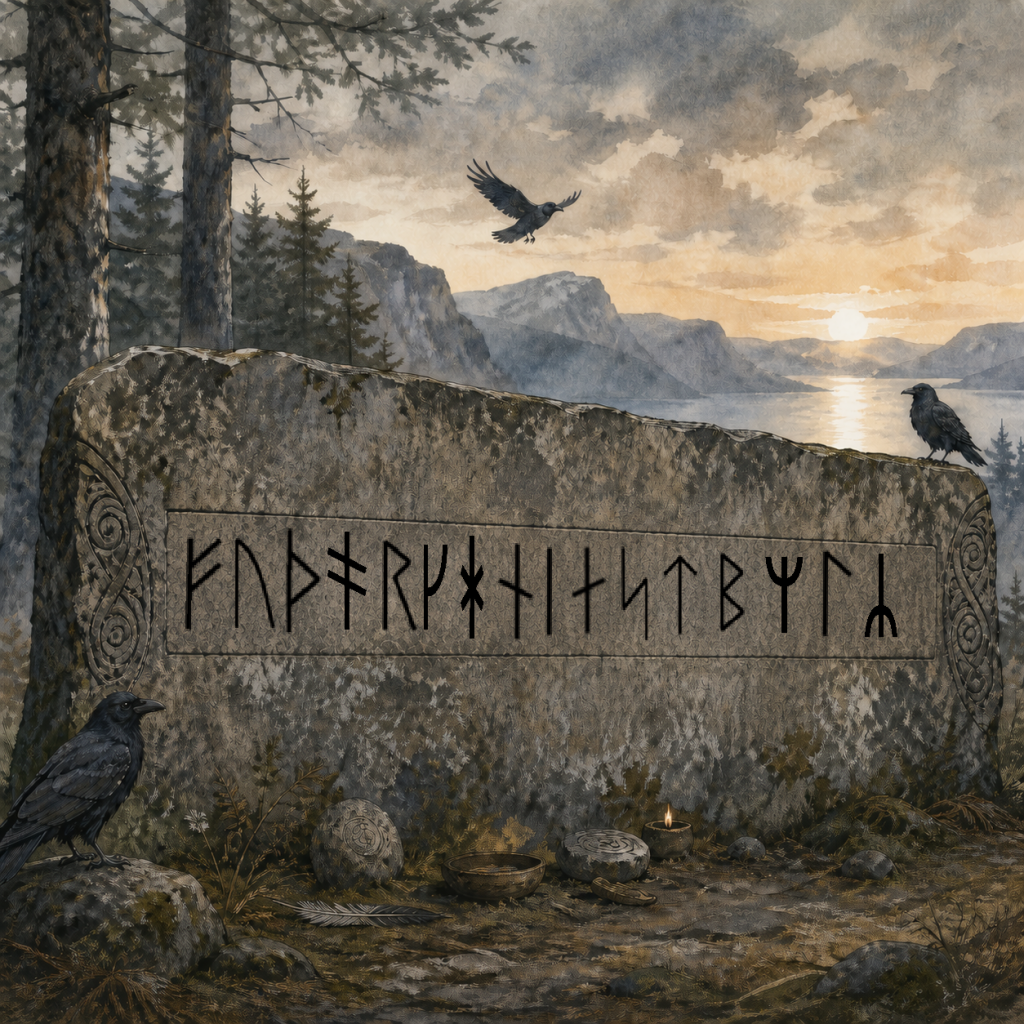
When many people think of “Norse runes,” they often picture the Elder Futhark — the 24-rune system most commonly used in modern rune sets, divination books, and spiritual artwork.
But if we are talking about the Viking Age itself, the rune row most closely connected with the Norse-speaking world is actually the Younger Futhark.
That surprises a lot of people at first. It certainly feels a bit backwards. Surely the Vikings, with their sea journeys, sagas, gods, battles, trade routes, and all that glorious chaos, would have wanted more runes, not fewer. But history, as usual, likes to wander off in its own boots.
The Younger Futhark developed from the older 24-rune Elder Futhark and became the main runic writing system in Scandinavia during the Viking Age. It had only 16 runes, yet it was used to write Old Norse across stones, memorial inscriptions, objects, tools, weapons, wood, bone, and everyday messages. The National Museum of Denmark describes runes as a Germanic writing system developed in the centuries after the birth of Christ, and Viking Age sources show that different forms of the futhark were used at different times and in different regions. (National Museum of Denmark)
This article looks at where the Younger Futhark came from, how it differs from the Elder Futhark, and what each of its sixteen runes can teach us.
From Elder to Younger: Why Did the Rune Row Change?
The Elder Futhark is the older 24-rune system, used broadly across early Germanic-speaking areas. Over time, as language changed, especially in Scandinavia, the rune row changed too.
By the Viking Age, the spoken language had developed into Old Norse, but instead of adding more runes to represent new sounds, the Scandinavian rune row was reduced from 24 runes to 16. This means one rune often had to do several jobs. A single rune might represent more than one sound, depending on the word and context. The Viking Ship Museum notes that Viking Age runic writing was based on sound rather than modern spelling, so names and words were written as they were pronounced. (vikingeskibsmuseet.dk)
This is one of the biggest differences between the Elder and Younger Futhark:
The Elder Futhark has 24 runes and is often associated with earlier Germanic languages.
The Younger Futhark has 16 runes and is the main rune row of Viking Age Scandinavia.
The Anglo-Saxon Futhorc developed in another direction and expanded rather than reduced, eventually having more runes to suit Old English sounds.
So, while modern Norse Pagan spaces often use the Elder Futhark for divination and spiritual work, the Younger Futhark is the alphabet most closely tied to the historical Viking Age Norse world.
The Two Main Styles of Younger Futhark
There was not just one neat, tidy version of the Younger Futhark. Apparently, the ancestors did not feel the need to make things convenient for modern learners with notebooks and highlighters.
The two main styles are usually called:
Long-branch runes, often associated with Denmark.
Short-twig runes, often associated with Sweden and Norway.
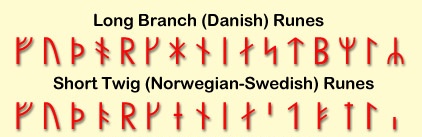
Both systems used the same sixteen-rune structure, but some of the shapes looked different. Later, other variations also appeared, including staveless runes and medieval runes. The University of Copenhagen notes that Viking Age runes are also known as the Younger Futhark, and major databases of Danish runic inscriptions are still used for runological research today. (nors.ku.dk)
For this article, we will focus mainly on the standard Younger Futhark rune row and the meanings attached to the rune names, especially as preserved through the Icelandic and Norwegian rune poems. The Icelandic and Norwegian rune poems list the sixteen Younger Futhark runes and give poetic descriptions for each one. Bruce Dickins’ Runic and Heroic Poems of the Old Teutonic Peoples remains a commonly cited public-domain source for these rune poem translations. (Internet Archive)
A Note on Rune Meanings
Before we dive into the individual runes, it is worth saying this clearly: runes were first and foremost letters. They were used for writing.
That does not mean they had no spiritual or symbolic importance. In Norse literature, runes can be connected with wisdom, speech, memory, carving, healing, protection, charms, and sacred knowledge. But historically, they were not simply little “good luck symbols” slapped onto things like ancient fridge magnets.
Each rune had a name, and those names carried meaning. Those meanings were remembered in rune poems, which gives us a valuable doorway into how later medieval Norse-speaking cultures understood them. From there, modern spiritual interpretation can grow — but it should grow from the roots, not float off into fantasy land wearing a horned helmet.
And we all know how we feel about horned helmets.
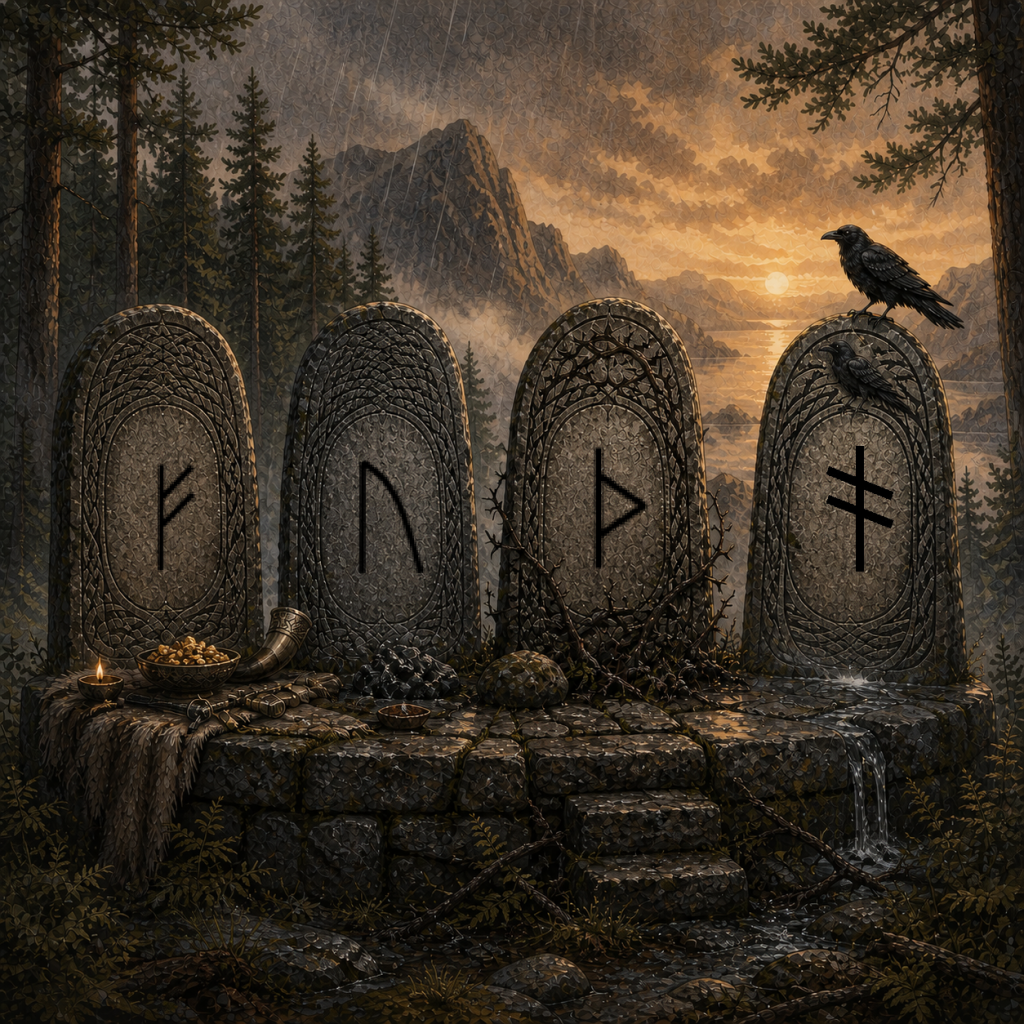
The Sixteen Younger Futhark Runes
ᚠ Fé — Wealth, Cattle, Resources
Sound value: F / V
Basic meaning: Wealth, cattle, movable property, prosperity
Fé is the rune of wealth, but not in the modern “giant bank account and a suspiciously shiny sports car” sense. In older Germanic and Norse contexts, wealth was often measured in livestock, especially cattle. Cattle meant food, survival, trade, status, and the ability to support a household.
But the rune poems also remind us that wealth can cause conflict. In the Icelandic Rune Poem, fé is called a source of discord among kinsmen. That gives this rune a very important edge. Wealth is useful, necessary, and powerful, but it can also divide people when greed, inheritance, jealousy, or unfairness enter the picture.
Spiritually, Fé can speak of resources, abundance, income, value, generosity, and responsibility. It asks: what do you have, how do you use it, and does it support the wider hearth?
At its best, Fé is not hoarding. It is circulation. Wealth should feed the home, strengthen the community, and support life.
ᚢ Úr — Rain, Dross, Primal Force
Sound value: U / O / V / W sounds depending on context
Basic meaning: Rain, dross, raw material, primal shaping force
Úr is one of the Younger Futhark runes whose meaning can feel a little slippery. In the Elder Futhark, the related rune is often connected with the aurochs. In the Younger Futhark rune poems, however, úr appears with meanings such as rain or dross/slag, depending on the source tradition. Scholars have discussed the variation in meaning, especially between the Icelandic and Norwegian material. (Uppsala University Diva Portal)
This gives Úr a fascinating feeling. It is not neat, polished, or finished. It is raw substance. Rain falls whether we are ready or not. Dross is what remains when metal is worked and refined. Both images speak of process.
Spiritually, Úr can represent the forces that shape us before we become anything polished. It is the wet weather, the hard lesson, the raw ore, the messy beginning. Not glamorous, perhaps, but deeply necessary.
Úr asks us to look at what is still unformed in our lives. What needs refining? What needs patience? What is uncomfortable now but may become useful later?
ᚦ Þurs — Giant, Thorn, Powerful Opposition
Sound value: TH, as in “thorn”
Basic meaning: Giant, thurs, dangerous force, challenge
Þurs is a rune with teeth.
The word þurs refers to a giant or powerful being, often connected with the dangerous, chaotic, or destructive forces outside ordinary human control. This does not always mean “evil” in a simple way. The giants of Norse myth are complicated. They can be hostile, wise, ancient, beautiful, monstrous, necessary, or all of the above before breakfast.
Þurs is the rune of forces that must be respected. It can speak of conflict, disruption, challenge, defence, and boundaries. It may show where something is too wild to handle carelessly.
In spiritual reflection, Þurs asks: what force am I dealing with, and am I approaching it with awareness?
This is not a rune for panic. It is a rune for caution, protection, and clear thinking. Sometimes the thorn protects the hedge. Sometimes it pricks the hand because we grabbed without looking.
ᚬ Áss / Óss — God, Divine Speech, Ancestral Power
Sound value: A / O nasal or related vowel sounds, depending on period and spelling
Basic meaning: A god, divine being; in some traditions, estuary or mouth
This rune has some variation in name and meaning. In Icelandic tradition it is often linked with Áss, meaning one of the Æsir, a god. In Norwegian tradition, related forms can be associated with óss, meaning estuary or river mouth. This is one of those places where the sources do not hand us one perfectly tidy answer with a bow on it.
As Áss, the rune naturally points toward divine power, sacred order, inspiration, and the presence of the gods. As Óss, it can also suggest the mouth of a river — a place where waters meet, move, and speak into something larger.
Spiritually, this rune can be approached through speech, inspiration, prayer, breath, divine communication, and the meeting point between human and sacred understanding.
It asks us to consider the words we speak. Are they empty noise, or do they carry weight? Are we listening as well as talking? Are we speaking from ego, or from wisdom?
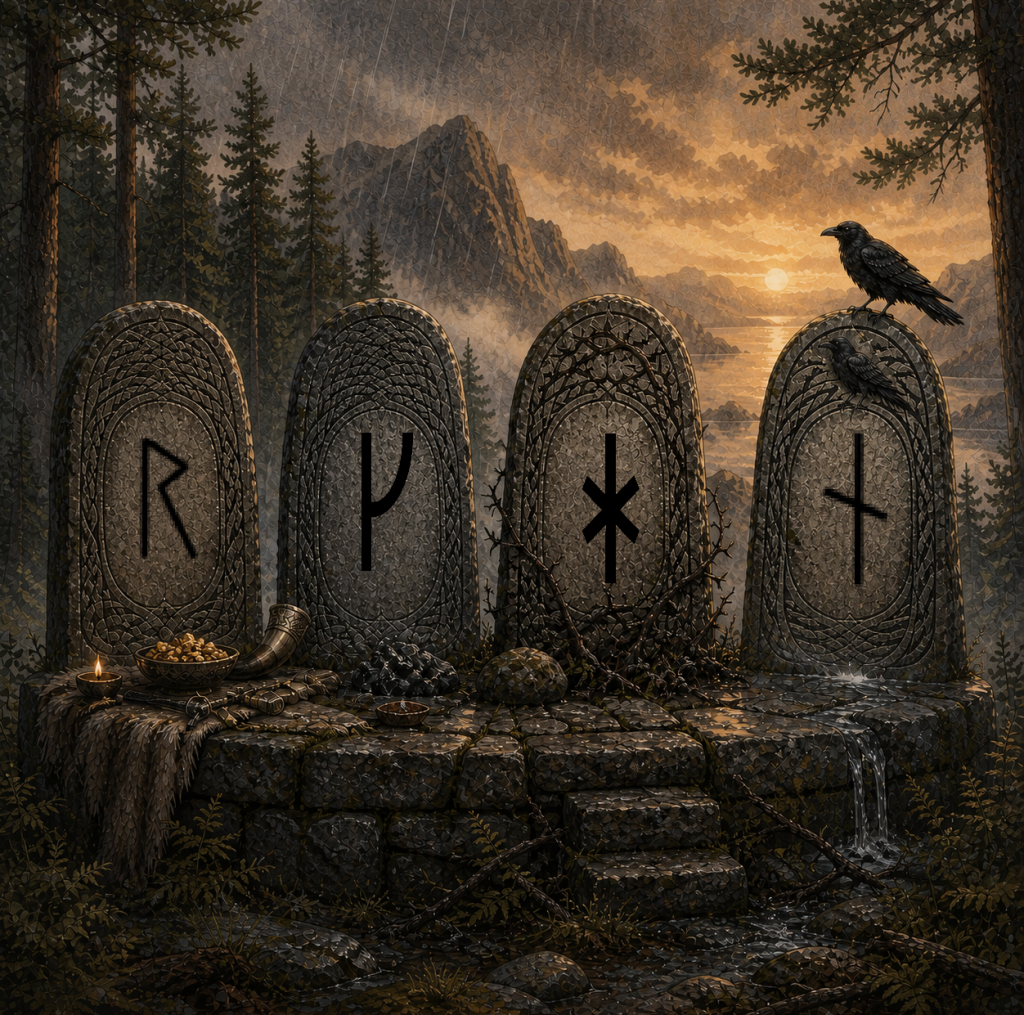
ᚱ Reið — Riding, Journey, Movement
Sound value: R
Basic meaning: Riding, journey, travel, movement
Reið is the rune of riding, travel, and movement. In a Viking Age world, travel was not casual. A journey could mean trade, raiding, settlement, pilgrimage, exile, marriage, kinship duty, or survival. Movement carried risk.
The rune poems describe riding as something that may look easy from the hall but feels very different once horse, road, weather, and distance become real. That is a wonderfully human observation. Planning a journey from the comfort of the hearth is one thing. Actually making it is another.
Spiritually, Reið speaks of movement with purpose. It can represent travel, rhythm, progress, right timing, and the discipline needed to stay on course.
It asks: where am I going, and am I prepared for the road?
Reið is not just “movement for movement’s sake.” It is the journey that teaches you who you are once the familiar walls are behind you.
ᚴ Kaun — Ulcer, Wound, Painful Truth
Sound value: K / G
Basic meaning: Ulcer, sore, wound, illness, painful place
Kaun is not exactly the rune everyone wants embroidered on a cushion.
Its meaning in the Younger Futhark rune poems is connected with ulcer, sickness, or a painful sore. This is quite different from the Anglo-Saxon rune poem’s related rune, which is associated with torchlight. Here, in the Scandinavian material, Kaun is much more uncomfortable. It points to the wound, the infection, the thing that cannot simply be ignored. (Wikipedia)
But uncomfortable does not mean useless.
Kaun can speak of pain that reveals what needs attention. It may show where something has become inflamed, neglected, or harmful. It can represent illness, emotional soreness, conflict, shame, or an old wound that needs care.
Spiritually, Kaun asks us to stop pretending something is fine when it is not. Healing often begins with honest recognition.
This rune does not say, “Everything is awful.” It says, “Look here. This needs tending.”
ᚼ Hagall — Hail, Disruption, Pattern
Sound value: H
Basic meaning: Hail, sudden disruption, natural force
Hagall means hail. Hail is sudden, hard, damaging, and beyond human control. It can flatten crops, batter roofs, and turn a peaceful sky into a small personal attack from the clouds.
But hail is also temporary. It falls, it strikes, it melts.
Hagall is often interpreted as disruption, crisis, or forces outside our control. Historically, the rune poem imagery is very much rooted in weather and survival. For people living close to the land, hail was not just an inconvenience. It could threaten food and livelihood.
Spiritually, Hagall can show the storm that interrupts our plans. It may represent sudden change, external pressure, or a pattern breaking apart.
Yet there is another layer: hail is structured ice. It has form. So Hagall can also remind us that even chaos may have pattern within it, though we may not see it while being pelted in the forehead.
A very ancestral lesson, really.
ᚾ Nauðr — Need, Constraint, Necessity
Sound value: N
Basic meaning: Need, hardship, necessity, constraint
Nauðr is the rune of need. Not passing want. Not “I need another book,” though honestly, sometimes we do. This is deeper need: hunger, lack, pressure, survival, obligation, the hard edge of necessity.
In the rune poems, need is often presented as difficult but also formative. It can be oppressive, but it can also force action, discipline, and growth.
Spiritually, Nauðr asks us to look at what is truly necessary. What must be done? What cannot be avoided? What pressure is shaping us?
This rune can feel heavy, but it is not without hope. Need teaches resourcefulness. Constraint can create focus. When life narrows the path, Nauðr asks us to walk with awareness rather than resentment.
It is not always pleasant, but it is honest.
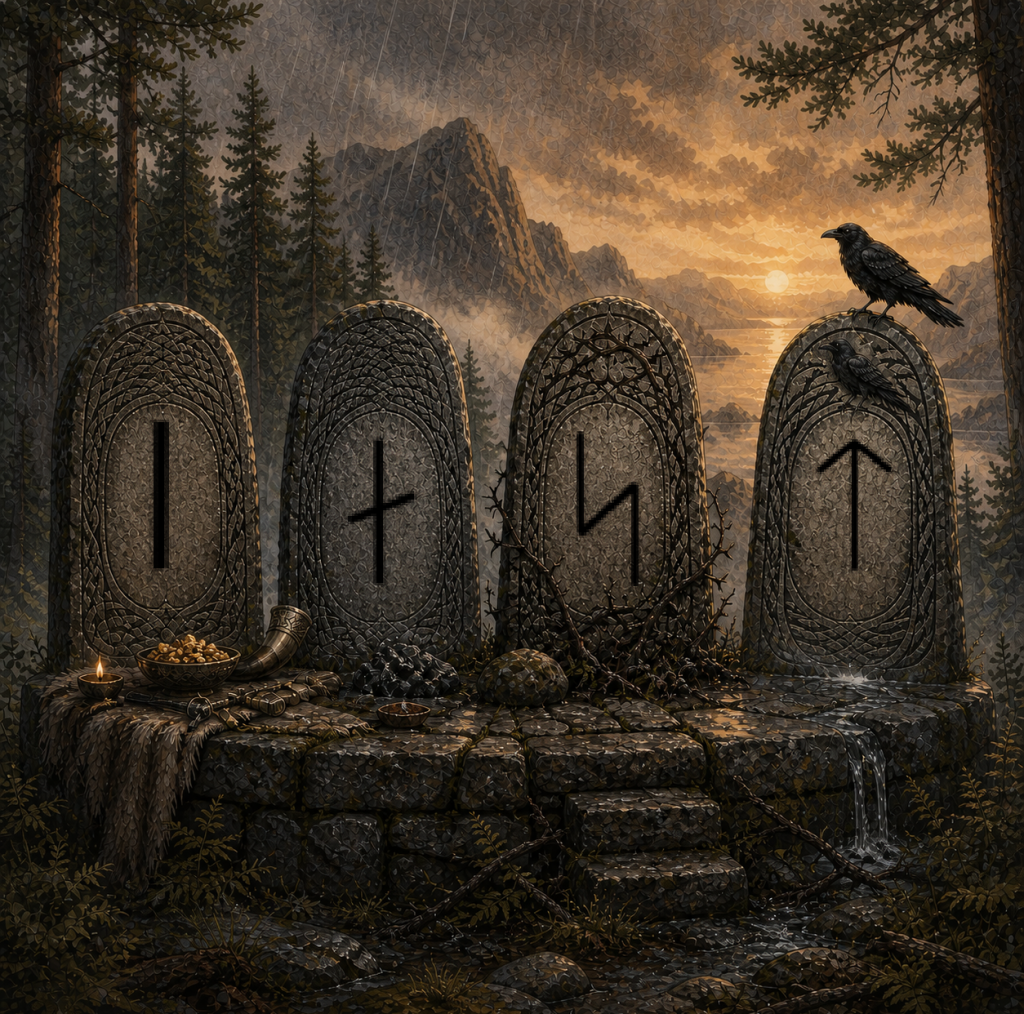
ᛁ Íss — Ice, Stillness, Danger, Clarity
Sound value: I / E
Basic meaning: Ice, stillness, cold, beauty, danger
Íss means ice. In the rune poems, ice is described as cold, slippery, beautiful, and dangerous. The Old Icelandic poem calls ice the bark of rivers and the roof of waves, while the Norwegian poem calls it a broad bridge where the blind must be led. (Wikipedia)
That gives us a beautifully layered rune.
Ice can preserve. It can stop movement. It can create a path. It can also cause a person to fall flat on their backside with absolutely no dignity whatsoever.
Spiritually, Íss speaks of stillness, delay, clarity, and caution. It can represent frozen emotions, blocked movement, or a need to pause before acting. Sometimes stillness is protection. Sometimes it is stagnation.
Íss asks: is this pause helping me see clearly, or am I frozen in fear?
It is a rune of beauty and danger together.
ᛅ Ár — Year, Harvest, Plenty
Sound value: A / Æ
Basic meaning: Year, harvest, plenty, good season
Ár is one of the gentler runes in the Younger Futhark. It is connected with the year, harvest, good season, and prosperity that comes through right timing and natural cycles.
This is not sudden wealth. It is the result of patience, labour, weather, luck, and seasonal rhythm. Ár reminds us that not everything grows on command. Some blessings arrive because the ground was prepared long before the harvest appeared.
Spiritually, Ár speaks of cycles, reward, ripening, and the turning of the year. It can suggest that something is coming into its season.
It asks: what have I tended, and what is ready to bear fruit?
Ár is a lovely rune for remembering that growth is not always dramatic. Sometimes it is quiet, steady, and rooted in daily work.
ᛋ Sól — Sun, Guidance, Vitality
Sound value: S
Basic meaning: Sun, light, guidance, life-force
Sól means sun. In Norse myth, Sól is also personified as the sun goddess who drives the sun’s course through the sky. The rune carries warmth, visibility, guidance, energy, and the life-giving power of light.
In the northern world, the sun was not taken for granted. Its return, strength, and presence mattered deeply. Sól is the light that reveals the path, warms the body, and marks the rhythm of time.
Spiritually, Sól can represent vitality, success, hope, direction, and illumination. It may show where truth is becoming visible or where energy is returning.
But sunlight also exposes. It shows what has been hidden in corners.
Sól asks: what is being brought into the light?
ᛏ Týr — The God Týr, Justice, Courage, Sacrifice
Sound value: T / D
Basic meaning: Týr, justice, honour, courage, sacrifice
Týr is named for the god Týr, best known in surviving mythology for placing his hand in the mouth of Fenrir so the gods could bind the wolf. When Fenrir realised he had been tricked, Týr lost his hand.
Because of this, Týr is often connected with courage, honour, law, sacrifice, and doing what must be done even when there is a cost.
This is not flashy heroism. It is not boasting in the hall after three horns too many. Týr is the courage that understands consequence.
Spiritually, this rune asks us to consider integrity. What do we stand for? What promises have we made? What are we willing to risk for what is right?
Týr can also speak of justice, but not always comfortable justice. Sometimes honour requires loss. Sometimes doing the right thing is not the easy thing.
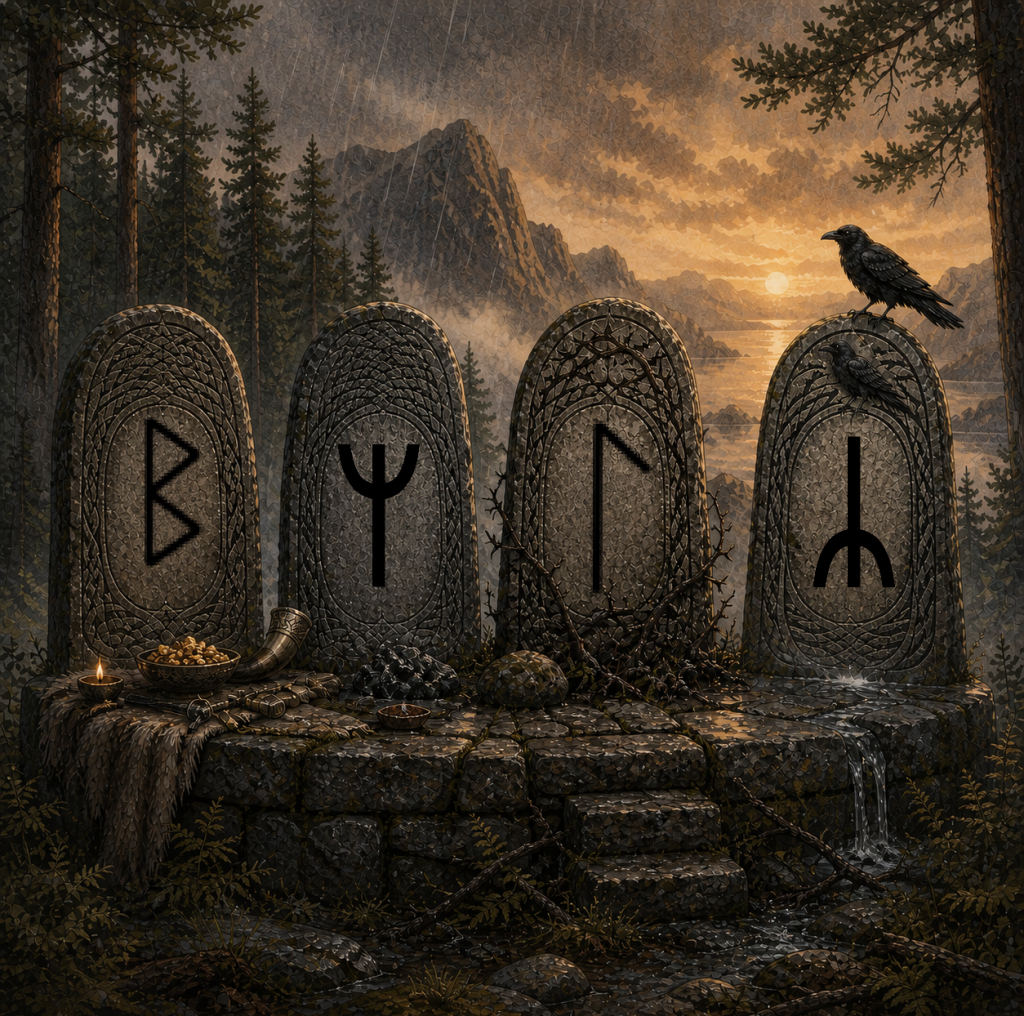
ᛒ Bjarkan — Birch, Growth, Renewal
Sound value: B / P
Basic meaning: Birch, growth, renewal, beginnings
Bjarkan means birch. Birch is often one of the first trees to return after disturbance, and it carries strong associations with renewal, new growth, fertility, cleansing, and beginnings.
This rune has a softer feeling than some of the others, but softness should not be mistaken for weakness. Birch is resilient. It grows where the land has been cleared, burned, opened, or changed.
Spiritually, Bjarkan can speak of birth, healing, family, protection, and the quiet strength of new life. It may appear when something is beginning again after difficulty.
It asks: what new growth is trying to emerge?
Bjarkan is the green shoot after the hard season. Small, perhaps, but very much alive.
ᛘ Maðr — Humanity, The Self, Community
Sound value: M
Basic meaning: Human being, person, mankind
Maðr means human or person. This rune places us firmly in the human world: kinship, community, identity, mortality, intelligence, relationship, and responsibility.
The rune poems remind us that humans are shaped by joy, sorrow, dust, speech, and relationship. We are not isolated creatures. We exist within family lines, communities, obligations, stories, and memory.
Spiritually, Maðr can represent the self, humanity, social bonds, awareness, and the role we play within the wider web. It asks us to look at who we are, not just privately, but in relation to others.
Who are you at the hearth?
Who are you in the clan?
Who are you when no one is watching?
Maðr reminds us that being human is both a gift and a responsibility.
ᛚ Lögr — Water, Sea, Depth
Sound value: L
Basic meaning: Water, sea, lake, depth
Lögr means water. It can refer to sea, lake, or flowing water. For the Norse world, water was road, boundary, danger, food source, and mystery. The sea carried traders, raiders, settlers, stories, and the dead.
Water is never just one thing. It can cleanse, drown, nourish, divide, reflect, and carry.
Spiritually, Lögr speaks of emotion, intuition, movement, depth, and the unknown. It can suggest a journey through feeling or a need to trust deeper currents.
It asks: am I resisting the flow, or am I being swept away by it?
Lögr is not shallow water. It invites us beneath the surface.
ᛦ Ýr — Yew, Bow, Ending and Endurance
Sound value: Often transliterated as ʀ, connected with a final R-like sound in Old Norse
Basic meaning: Yew, bow, endurance, death, transformation
Ýr is one of the more complex Younger Futhark runes. It is often associated with yew or with the bow made from yew wood. It also represents a sound that does not map neatly onto modern English, often written by scholars as ʀ.
Symbolically, yew is a powerful tree. It is long-lived, evergreen, poisonous in parts, and associated in many northern European contexts with death, endurance, and continuity. A bow adds another layer: focus, tension, aim, hunting, defence, and release.
Spiritually, Ýr can speak of endings, resilience, ancestral memory, and the power held in tension. It may point to something old, deep-rooted, or close to the boundary between life and death.
It asks: what must be released, and what endures?
Ýr is not a simple rune, but it is a profound one. It stands at the end of the rune row like a quiet reminder that all journeys move toward transformation.
Younger Futhark and Modern Practice
For modern Norse Pagans, the Younger Futhark offers a more historically Viking Age rune row than the Elder Futhark. That does not mean everyone must stop using the Elder Futhark. Many modern practitioners have meaningful relationships with the Elder runes, especially through divination, meditation, and spiritual study.
But it is helpful to know the difference.
If we are talking about early Germanic runic tradition, the Elder Futhark matters.
If we are talking specifically about Viking Age Scandinavia, memorial stones, Old Norse inscriptions, and the rune row used by Norse-speaking people, the Younger Futhark becomes especially important.
The Younger Futhark may look smaller at first glance, but it is not lesser. It is compact, adaptable, and deeply rooted in the Viking Age world. Its sixteen runes carry weather, gods, wounds, wealth, ice, harvest, humanity, water, and the long memory of the North.
Not bad for a “shorter” alphabet.
The Younger Futhark reminds us that history is rarely as tidy as modern books and rune charts make it appear. The runes changed because language changed. People adapted their writing to suit their world, their speech, their tools, and their needs.
These sixteen runes are more than symbols on a chart. They are pieces of a living historical tradition: carved into stone, scratched into wood, carried across seas, used in memory, trade, prayer, grief, ownership, and everyday life.
To study them is to step closer to the Viking Age mind — not through fantasy, but through language, landscape, and the marks people left behind.
And sometimes, those marks still speak.
Reference List
Bruce Dickins, Runic and Heroic Poems of the Old Teutonic Peoples, Cambridge University Press, 1915. Public domain edition available through Internet Archive. (Internet Archive)
National Museum of Denmark, “Runes.” (National Museum of Denmark)
The British Museum, Vikings educational resource, discussion of the futhark and Viking Age runes. (British Museum)
Viking Ship Museum, Roskilde, “Runes – Viking Age alphabet.” (vikingeskibsmuseet.dk)
University of Copenhagen, Department of Nordic Studies and Linguistics, “Runology.” (nors.ku.dk)
Wikisource, “Rune poems,” based on Bruce Dickins’ public domain translation. (Wikisource)