In the old Icelandic and Norse calendars, the year did not begin in January. It began with Harpa, the first summer month. When Harpa arrived, winter was officially over, at least by the calendar’s reckoning, and a new year of light, work, and growth began.
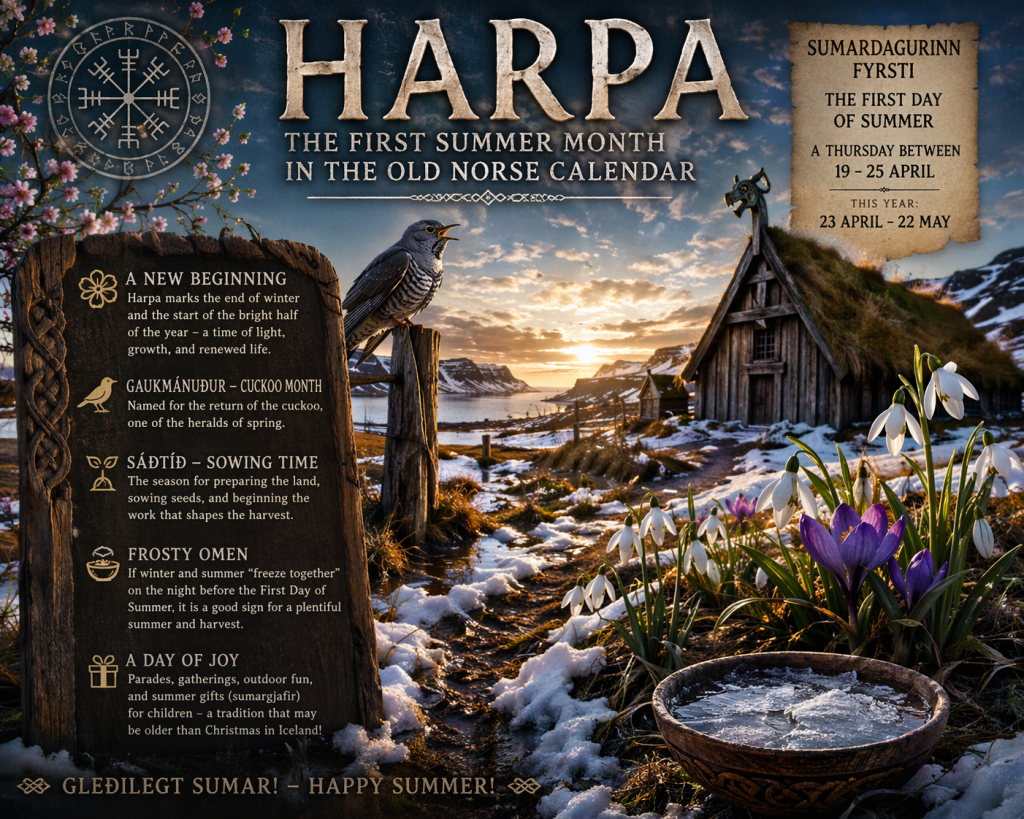
Harpa starts on a Thursday between 19 and 25 April, on the date now known in Iceland as Sumardagurinn fyrsti – the First Day of Summer. It is still a public holiday in Iceland, which is honestly one of the most cheerful acts of seasonal defiance I know. To look at an April day in the North and say, with confidence, “Yes, summer starts now,” is a kind of stubborn optimism I deeply respect. This year, Harpa begins on 23 April and runs until 22 May.
Of course, the weather does not always cooperate. It can still be cold, windy, and thoroughly unimpressed by the calendar’s enthusiasm. But that is part of what makes Harpa so interesting. Whether the skies agree or not, it marks a real shift. The darkest stretch of the year is behind, and the bright half begins.
Names, Meanings, and Etymology
The name Harpa is a bit of a mystery, and scholars do not entirely agree on where it comes from.
In later Icelandic sources, Harpa is linked to the word for harp, which gives it a beautiful poetic feel, as though spring is beginning to tune itself after winter’s long grumble. Some historians have suggested Harpa may originally have been a female name, perhaps even connected to a forgotten local goddess or mythic maiden of spring.
Then there is the less romantic theory, though probably a very believable one for northern April, that Harpa may connect to herpingur, a word associated with hardship or harsh conditions. That fits well enough too, because early spring in the North was not always blossom, birdsong, and gently glowing meadows. Sometimes it was more like frozen fingers, sideways rain, and trying not to lose your dignity in ankle-deep mud.
In older texts, the month also appears under a few different names:
Hörpumánuður – “harp month”
Hörputungl – “harp moon”
In Snorri’s Edda, it is also called Gaukmánuður (“cuckoo month”) and Sáðtíð (“sowing time”).
Those names tell us quite a lot. The cuckoo was one of the classic signs that spring had returned, while Sáðtíð points directly to the practical business of sowing. So whether Harpa is heard as music, remembered as a name, or linked with harsher weather, it clearly belongs to that threshold when life begins to stir, and the land starts calling people outward again.
Harpa in the Old Icelandic Calendar
In the old Icelandic system, the year was divided into just two great seasons:
Winter – the short days (skammdegi)
Summer – the season of long light (nóttleysa)
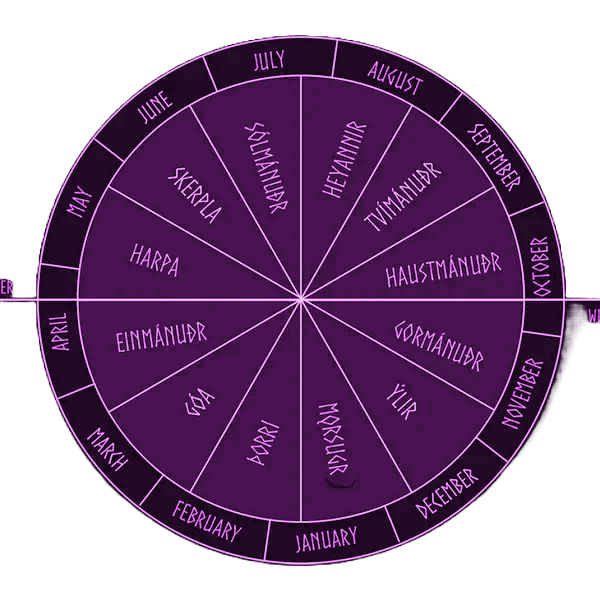
Harpa roughly corresponds to mid-April to mid-May in the modern calendar. It opened the bright half of the year, a time for travel, trade, farming, movement, and outward life after winter’s quieter, more inward pull.
That tells us something important about how the old year was understood. Summer did not begin only when the weather felt warm. It began when the rhythm of life changed.
The First Day of Summer – A Unique Holiday
The first day of Harpa is Sumardagurinn fyrsti, the First Day of Summer. It always falls on the first Thursday after 18 April, somewhere between the 19th and 25th.
Historically, this day held a special place. It was not rooted in a Christian feast day, but in the old calendar itself. By the nineteenth century, folktales and records suggest it was one of the biggest celebrations of the year after Christmas, marked by food, drink, visiting, and social gatherings.
It was also known as Yngismeyjardagur – Maiden’s Day – when special courtesy was shown to young women. Other opening days in the old calendar were associated with husbands, wives, or lads, but Harpa’s opening day belonged to the maidens.
Even now, the day is celebrated with parades, outdoor activities, family gatherings, and small summer gifts, or sumargjafir, especially for children. There is something wonderfully charming about the whole thing. An entire country looks at an April day that may still feel half-frozen and says, “Happy summer,” and everyone just commits to it.
Weather, Omens, and Summer Magic
Harpa sits right on that awkward threshold where the calendar insists it is summer, but the weather may still be acting like winter’s grumpier younger sibling.
Out of that tension grew one of Harpa’s best-known folk beliefs:
If winter and summer “freeze together” – meaning the temperature drops below freezing on the night before the First Day of Summer – it is taken as an omen of a good summer and a generous harvest. People would put a bowl of water outside overnight and hope to wake to a skin of ice.
So a frosty night before Harpa’s dawn was not seen as a bad sign at all. It was welcomed as a blessing. The old idea seems to have been that if the seasons met properly, summer would settle in well. Which is a much nicer way of looking at the weather than glaring out of the window and saying, “Honestly, make up your mind.”
Work, Renewal, and Everyday Life in Harpa
Harpa carried symbolic weight, but it was also a very practical month. This was not just a season for admiring the returning light. It was a season for getting on with things.
Traditionally, Harpa was a time for spring cleaning and repair after winter storms: mending tools, patching damage, tidying farmyards, and sorting out what had been worn down by the hard season. Fields had to be prepared, sowing planned, livestock and land tended to, and people began gathering outdoors again for games, sports, and social life as the days lengthened.
The alternative name Sáðtíð, “sowing time,” says a great deal on its own. Harpa was when the coming harvest truly began. What was done in this month could shape the prosperity of the whole year.
Blót, Summer Sacrifices, and Mythic Echoes
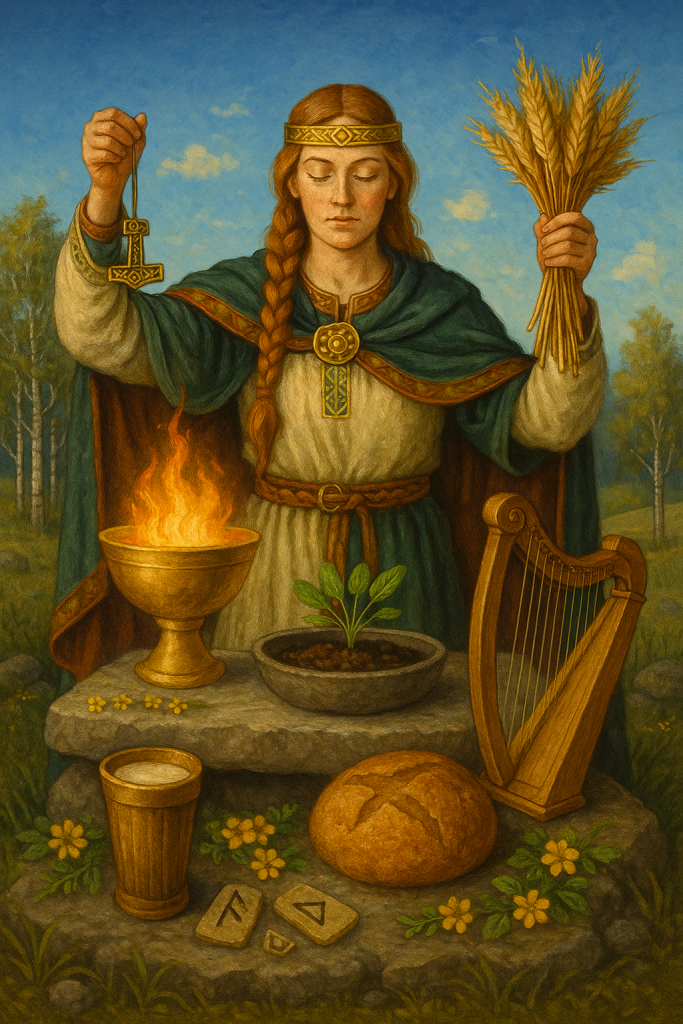
Although detailed descriptions are scarce, the sagas do suggest that the beginning of summer was sacred. In Ynglinga saga, we hear of sumarblót – rites held toward the start of summer to ask for victory, fertility, and good fortune in the months ahead.
Modern Heathen and Ásatrú communities often connect Harpa with Sigrblót or summer blót, a rite of victory and summer-tide at the opening of the bright season, along with offerings for fertility, good weather, safe travel, and successful harvests.
Some contemporary Heathens also honour Eostre or Ostara during this period, especially when focusing on the name Gaukmánuður and its links to returning birds and rising light. That is a modern devotional layer rather than something directly preserved from medieval Icelandic sources, but it sits naturally enough alongside Harpa’s themes of renewal and awakening.
Harpa in Modern Iceland
Today, Harpa survives most visibly through Sumardagurinn fyrsti. On the First Day of Summer you may still see parades, marching bands, children out with balloons and flags, families exchanging summer gifts, and people greeting one another with “Gleðilegt sumar!” – “Happy summer!”
Even though most Icelanders now use the Gregorian calendar in daily life, this holiday still ties modern Iceland back to the older rhythm of the year, when winter and summer were the two great halves that shaped the year.
Honouring Harpa in Your Own Practice
If you follow a Norse-inspired or Heathen path, Harpa is a lovely time to mark the shift into the bright season.
You might cleanse and refresh your home, physically and spiritually. You might make offerings to deities of growth, victory, renewal, or to local land spirits. You might bless seeds, gardening tools, or even just a few pots on a windowsill. You might hold a small blót or feast, exchange summer gifts with loved ones, or simply spend time outdoors listening for birds and noticing how the light has changed.
You do not need Icelandic weather or an ancient farmstead to honour Harpa. Wherever you live, this month can become your own threshold into the bright half of the year: the moment when life begins opening outward again, and the year moves from endurance into growth.
—