The Scribe’s Ink and the Ancestors’ Blood
Let’s be honest: if you’ve been around Norse Pagan spaces for more than five minutes, you’ve met That Guy. You know the one. He slides into the conversation like a damp sock and says, “Well actually… Snorri made most of it up. Norse mythology is basically medieval Christian fan-fiction.”
It’s a bit of a buzzkill, isn’t it? The idea that our “ancient” Lore was cooked up by a 13th-century politician with a quill, a deadline, and probably a headache.
But here’s the thing: ink can’t erase lived religion. Ink can shape what survives, sure. Ink can add a frame, a commentary, a polite Christian cough in the margin. But it cannot retroactively delete centuries of names spoken out loud, prayers muttered into the wind, and offerings sunk into lakes.
So today we’re doing two things:
- We’re taking the sceptic’s doubt seriously (because we’re not scared of questions), and
- We’re dismantling the “Christians invented our gods” claim with evidence that does not care about anybody’s opinion.
Cold, hard evidence. Preferably gold.
The Great Divide: Invention vs. Preservation
What the sceptics usually mean (and when they sometimes overreach)
The sceptical argument goes something like this:
- Iceland officially converted to Christianity around the year 1000.
- Snorri Sturluson wrote the Prose Edda in the early 1200s.
- Therefore, the myths we have must be heavily “filtered,” and maybe even invented.
And yes—filtered is the fair part. Two centuries is a long time. Christian scribes absolutely lived inside a Christian worldview. They sometimes explained things in Christian-friendly ways, or used classical “origin stories” that made educated medieval readers nod approvingly.
The sceptical case usually leans on three favourite points:
1) Euhemerism (the “they weren’t gods, they were humans” move).
Snorri’s Prologue frames the Æsir as famous people from the ancient world (including a Troy connection), not literal gods. Sceptics point to that and say, “See? He didn’t even believe it.”
2) The “Revelation problem” (especially in Völuspá).
Some scholars and readers see possible Christian influence in imagery around world renewal, a new earth, and a mighty ruler. The debate here is real—and messy.
3) The “Trinity influence” idea.
You’ll sometimes hear that groups of three (Odin/Vili/Vé, three Norns, etc.) must be Christian mimicry. That claim tends to be more internet-y than scholarly, but it shows up a lot.
So, what’s the best response?
Not “Shut up, monk-lover.”
A better response is: let’s separate the casing from the core.
Interlude: The “Trinity” Thing (Let’s Not Give It More Power Than It Deserves)
Before we march onward, we should deal with one of the internet’s favourite party tricks: spotting anything that comes in threes and declaring, “Aha! Christian influence!”
Yes, Christianity has the Trinity. But a triad is not automatically a Trinity. Humans love three because it’s memorable, rhythmic, and it sticks in an oral culture like burrs in a wool cloak. You’ll find “threes” everywhere — in stories, in ritual structures, in symbols — because it’s a human pattern, not a Christian copyright.
Also, the Trinity is a very specific theological claim (one God in three persons, one essence). Odin, Vili, and Ve aren’t “three persons of one Odin,” and the Norns aren’t “three faces of a single cosmic being.” They’re distinct figures doing a shared job. That’s mythic structure — not a medieval church trying to sneak doctrine into your Lore.
Right. With that little mosquito swatted, let’s talk about evidence that doesn’t care what anybody wants to be true.
Snorri: Creator… or Curator?
Here’s the framing that actually fits what we see:
Snorri wasn’t forging gods in a scriptorium like some medieval Marvel writer. He was trying to preserve (and teach) a poetic tradition where the poetry makes no sense without the myth.
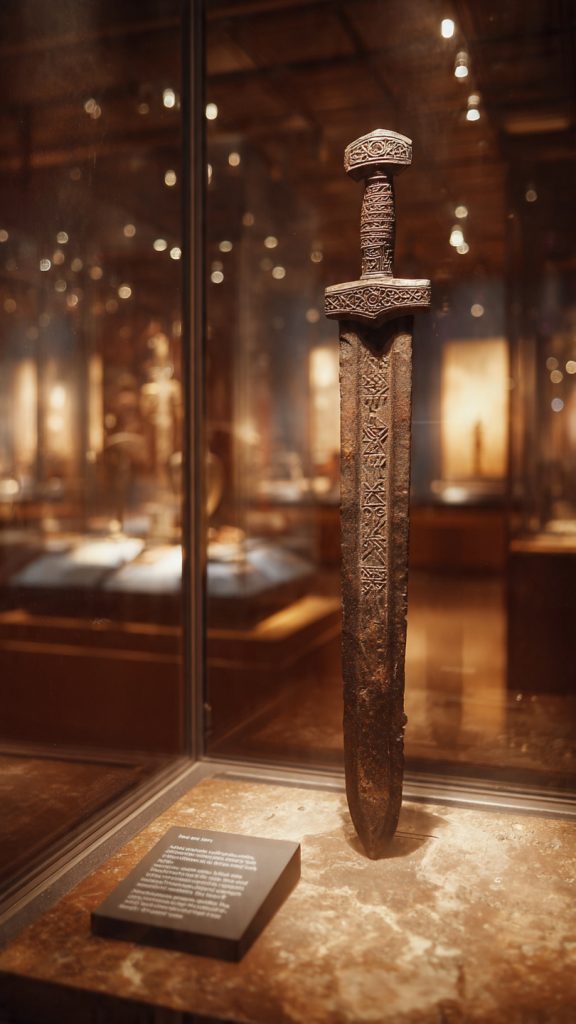
Think of him like a museum curator.
A curator might:
- Put an ancient sword in a modern glass case,
- Add a label in the current language,
- Maybe even tell a tidy story about where it “came from” to make it digestible to visitors.
But the curator didn’t forge the sword.
Snorri’s Trojan prologue? That’s the glass case label.
The mythic material he records (especially what he preserves to explain kennings and poetic references)? That’s the blade.
And if you want proof that the blade existed long before Snorri picked it up, we’ve got three pillars that do not depend on trusting Snorri’s personal theology.
Pillar 1: The Linguistic Ancestry
The gods weren’t “local Icelandic characters.” They’re pan-Germanic.
If the gods were invented in 13th-century Iceland, we’d expect them to be… well… Iceland-only. A local cast. Regional fanfic. Maybe a surprise cameo from a volcano.
Instead, the names and roles of the major gods show up across the Germanic world in related forms—because they come from older shared roots, not one medieval author.
The “cognate” proof: the same gods, different branches
Across different Germanic languages, you find the same core names:
- Odin (Old Norse) ↔ Wōden (Old English) ↔ Wotan/Wuotan (Old High German)
- Thor ↔ Thunor ↔ Donar
- Týr ↔ Tīw ↔ Ziu
That’s not a coincidence. That’s historical linguistics doing what it does best: showing that these names descend from earlier forms shared before these cultures split and developed separately.
If multiple branches preserved the gods’ names in their own evolving languages, those gods were already “in the family” long before Iceland was writing anything down.
The Merseburg Charms: a pagan spell hiding in a Christian book
One of my favourite little historical acts of rebellion is the Merseburg Charms: pagan-style spells written down in Old High German, preserved in a Christian manuscript.
The second charm includes Wodan, Friia (Frigg), and Volla (Fulla), in a mythic healing scenario. In other words, the gods show up doing god-things outside Iceland, preserved because the words worked—or at least people believed they did.
That’s not “Snorri invented it.” That’s “the tradition travelled, survived, and got written down where it could.”
Days of the week: the gods hiding in plain sight
This one is almost rude in how obvious it is.
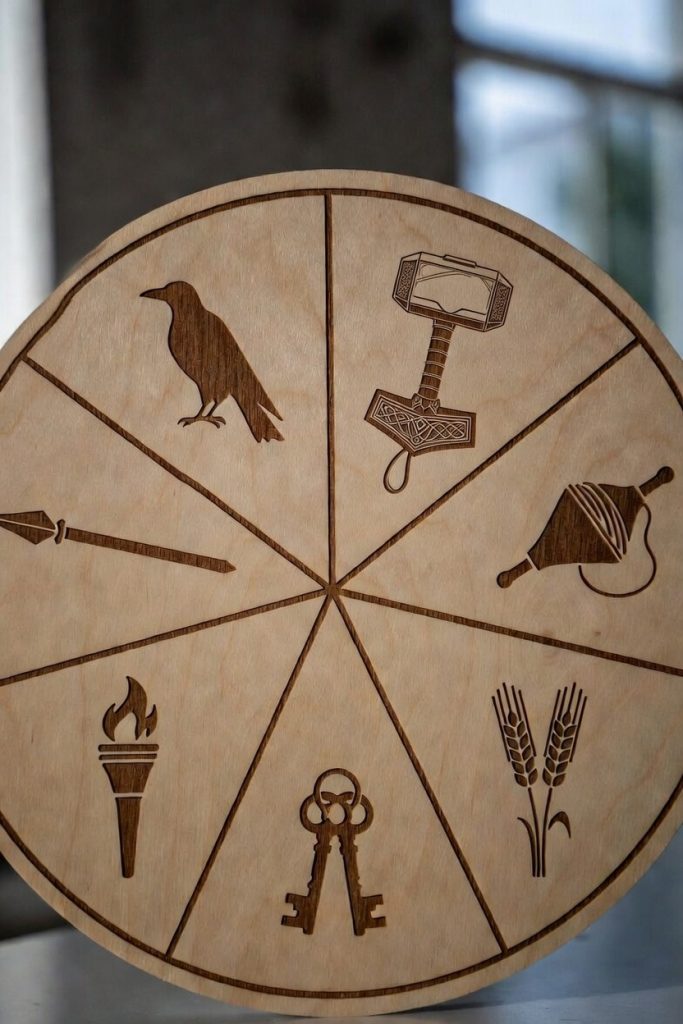
In Germanic languages, the Roman weekday system was adapted by substituting local gods for Roman ones (that whole “Mercury becomes Woden/Odin” pattern).
So we get:
- Wednesday: Woden’s day
- Thursday: Thor’s day
- Friday: Frigg’s day
(and Tuesday is tied to Týr/Tiw)
This isn’t a modern pagan invention. It’s baked into everyday language—because the gods were culturally meaningful enough to map them onto the structure of time itself.
A medieval Christian didn’t sneak Odin into your calendar in the 1200s. Odin was already there when the linguistic swap happened.
Interlude: “But didn’t Snorri say the gods were humans from Troy?”
Yep. And that’s a perfect example of what I mean by casing vs. core.
Snorri’s Prologue uses a medieval “safety filter” called euhemerism—the trick of explaining gods as famous humans from long ago. It’s not Snorri winking at the reader like, “lol none of this is real.” It’s Snorri saying, “Here is a respectable framing that lets me preserve this material in a Christian society without inviting a theological brawl.”
And here’s the practical part people forget: Snorri wasn’t writing a devotional text. He was writing a poetics manual. Skaldic poetry is packed with kennings and myth references—little shorthand phrases that only make sense if you know the stories behind them. If you don’t know why gold gets called “Sif’s hair,” the poetry becomes a locked box with no key.
So yes, Snorri puts the sword in a Christian display case. But the fact that he felt the need to preserve the sword at all tells you something important: the blade existed before he labelled it.
Alright. Let’s leave the glass case behind and go look at what the earth itself has to say.
Pillar 2: The Physical Witnesses
Archaeology is the control group for the manuscripts.
Here’s the simplest logic in the world:
If someone says “medieval Christians invented these gods,” then we should see a blank pagan record until the Middle Ages.
Instead, we find the gods’ names and images centuries earlier, in places that do not care what Snorri wrote.
Vindelev: Odin was named in the early 400s
A gold bracteate from the Vindelev hoard (Denmark), dated to the early 5th century, includes an inscription commonly translated as “He is Odin’s man.”
Let that sink in: Odin’s name on gold, tied to status/identity, in the 400s.
That’s not a literary character. That’s a god used for legitimacy and power in the Iron Age.
Ribe skull fragment: invoking Odin and “High-Týr” for healing/protection
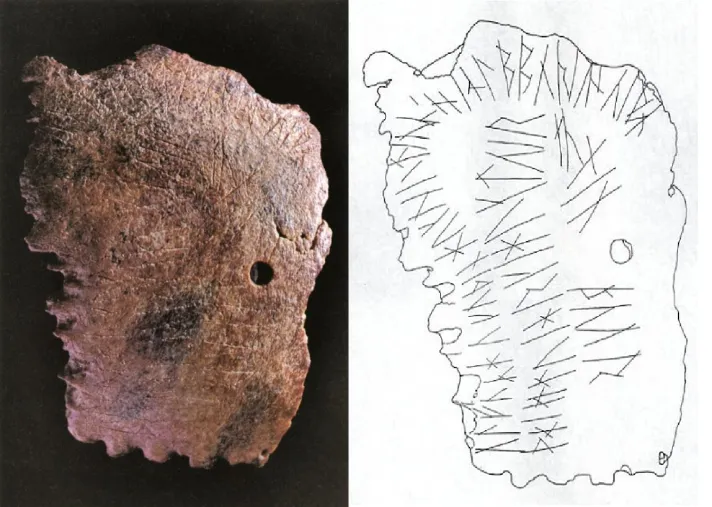
Found in Ribe (Denmark) and dated to around the early 700s, a pierced skull fragment carries a runic inscription that invokes protective forces including Odin and “High-Týr.” It’s often discussed in connection with healing or overcoming harmful forces (including a “dwarf,” which in this context is commonly interpreted as illness/pain/malevolent cause).
Again: names used ritually, not as story decoration.
Torslunda plates: a one-eyed figure long before Snorri
These helmet-die plates (Sweden, Vendel period) include imagery widely interpreted as a one-eyed figure (often identified with Odin) alongside an animal-clad warrior figure.
You don’t scratch out an eye on a ritual/elite image because you read Snorri in the 1200s.
You do it because the one-eyed spear-god was already a recognised icon.
Tissø: cult activity tied to place, power, and long practice
At Lake Tissø in Denmark—whose name is linked with Tyr—archaeology points to a major elite centre with cult activity over centuries (with occupation and activity spanning roughly the late Iron Age into the Viking Age).
This is the opposite of “random folk tales.” It’s religion embedded in landscape, tied to power, feasting, sacrifice, and social order.
Interlude: “What about oral tradition — didn’t it all get garbled over 200 years?”
This one’s sneaky, because it sounds sensible until you poke it.
Modern people often imagine oral tradition as a massive game of Telephone where one person says “Odin” and two centuries later it turns into “Kevin.” But Norse poetry isn’t freeform storytelling. It’s built on structure—metre, stress patterns, alliteration—so rigid that if you change too much, the poem stops working.
That structure acts like guardrails. It doesn’t make oral transmission flawless (nothing is), but it does make it far harder to casually “rewrite the Lore” without anyone noticing—or without the verse sounding wrong to the people who knew it.
And in cultures where poetry is status, craft, and memory all rolled into one, getting it right isn’t optional. Its reputation. Its honour. Its identity.
So no, oral tradition isn’t automatically unreliable mush. Especially not when the tradition is literally designed to be remembered.
Which brings us neatly to the part that medieval Christians would have had a very hard time faking even if they wanted to.
Pillar 3: The Unfakeable Poetry
The poems have “linguistic DNA” that’s hard to forge on purpose.
Even if we pretend a medieval writer wanted to invent pagan poems, there’s a problem:
Eddic poetry and skaldic verse are built on strict metrical and alliterative systems. They preserve archaic language features because the poetry breaks if you modernise it too much.
The “metric time machine” effect
Many eddic metres (like fornyrðislag and ljóðaháttr) are rigid enough that linguistic shifts over time show up as cracks and repairs. Scholars use metrical and linguistic evidence to argue that much of the material reflects older stages of the language than Snorri’s own writing period.
In plain English, a lot of the poetry doesn’t “naturally belong” to the 13th-century composition style. It behaves like older material that has been transmitted.
Snorri preserved myths because poetry required them
Snorri’s Prose Edda isn’t a devotional text. It’s a manual for poets. To explain kennings and poetic references, he has to recount the myths those references depend on.
If a poet calls gold “Sif’s hair,” you need the story of Sif’s hair for that to land. Snorri wasn’t evangelising Odin; he was trying to stop Icelandic poetic culture from becoming unreadable.
Accidental preservation is still preservation.
Interlude: Why Snorri Preserved More Than He “Believed”
A quick reality check: preserving a tradition is not the same thing as personally worshipping it. Snorri could be Christian, politically savvy, and still be the guy who wrote down the stories because Icelandic poetry was built on them. If the kennings and references die, the whole art form collapses into nonsense.
So even if we grant that Snorri framed things in a Christian-friendly way, that still leaves us with the awkward fact (for the sceptic): he had to preserve an older mythic skeleton for the poetry to function at all.
The worldview mismatch
The moral tone of much of the eddic corpus doesn’t behave like tidy medieval Christian teaching literature. It’s pragmatic, fate-heavy, honour-driven, and frequently unconcerned with Christian sin/redemption frameworks.
That doesn’t prove “pure pagan untouched by influence,” but it does strongly suggest these poems weren’t casually invented as church-friendly entertainment.
Interlude: “Is Völuspá just Revelation in a Viking coat?”
This is where we keep our heads and avoid two extremes:
- pretending Christian influence is impossible, or
- shouting “copy-paste!” and calling it solved.
Yes — the poems were written down in a Christian world, and Christian imagery can seep into preservation and interpretation. That’s real.
But world renewal after catastrophe is not uniquely Christian. Mythic cycles of destruction and return show up across cultures. Humans do this because… well, humans live inside cycles. Seasons, generations, winters, wars, rebuilding.
So the more honest framing is:
- Some lines or details may reflect Christian-era contact and transmission,
- While the poem still carries an older worldview engine underneath it.
Christian influence is a lens. A lens can tint the colours. It doesn’t invent the landscape.
So… did Christians “invent our gods”?
No.
Christian writers absolutely shaped how some material survived. They sometimes reframed, explained, softened, or classical-washed things. And yes, parts of the record are debated (especially where images and motifs overlap with Christian ideas—because cultures in contact share imagery, whether we like it or not).
But invention? That claim collapses under three kinds of evidence that don’t depend on trusting Snorri:
- Language: the gods’ names and functions exist across the Germanic world.
- Archaeology: the gods’ names and images show up centuries before the manuscripts.
- Poetry: the structure and linguistic behaviour of the verse points to an older tradition.
So here’s the healthier takeaway:
Snorri didn’t make the gods.
He found them mid-journey—already ancient, already rooted—then boxed them up in the best medieval packaging he had available.
And our job today isn’t to throw out the box in a rage. It’s to learn how to tell the difference between the box and what’s inside it.
The evidence is clear: our gods were not created in a medieval scriptorium. They were found there, captured in transit from an ancient world that refused to be forgotten.
The Christian “filter” we see in the Eddas—the stories of Troy or the echoes of the Bible—is just a layer of dust on an ancient mirror. Our job is to polish that mirror until the true, indigenous face of the Æsir and Vanir shines through once more.
We don’t follow a medieval invention. We follow an unbroken thread that stretches back through the mist of time. The Lore is our inheritance—ancient, authentic, and very, very real.
References
(Links are here so you’ve got receipts if anyone gets spicy.)
- Vindelev bracteate / “He is Odin’s man”
Coverage of the find and its significance, including the early 5th-century dating and the “Odin’s man” reading. (via.ritzau.dk) - Ribe skull fragment (c. 725 CE)
Background, dating, and discussion of the inscription and scholarly interpretation issues. (Wikipedia) - Torslunda plates (Vendel period) and the one-eyed figure interpretation
Overview and discussion of the missing-eye detail and Odin identification arguments. (Wikipedia) - Tissø and cult activity at the magnate centre
National Museum of Denmark materials on the site as an elite residence with cult activity across the period. (National Museum of Denmark) - Merseburg Charms (especially Charm II: Wodan/Friia/Volla)
Text and translation context; also a quick overview of the charms and their form. (mimisbrunnr.info) - Weekday names and interpretatio germanica (Woden/Thor/Frigg/Týr)
Background on the Germanic adaptation of Roman weekday naming. (vikingeskibsmuseet.dk) - Old Norse metre (fornyrðislag, etc.) and technical references
Useful starting points for metrical structure and eddic metres. (skaldic.org) - Völuspá and Christian influence debates
An accessible overview of how contested the question is (and why). (commons.princeton.edu)
Further Reading
If you want the deeper dive (the good kind of rabbit hole):
- Neil Price — Children of Ash and Elm (archaeology-rich context for Viking Age worldview)
- Hilda Ellis Davidson — Gods and Myths of Northern Europe (classic comparative work)
- Lotte Hedeager — Iron Age Myth and Materiality (material culture anchoring mythic themes)
- Rudolf Simek — Dictionary of Northern Mythology (excellent reference work for pan-Germanic reach)