Quick note before we start: this isn’t a “which version is the correct paganism?” article. It’s a “why did related Germanic cultures end up with different emphases, gods-in-the-spotlight, and ritual styles?” piece. Think of it as comparing siblings who grew up in different towns — same family resemblance, wildly different accents.
“Germanic paganism” isn’t one single religion with one fixed myth-set — it’s a whole family of related traditions that evolved differently depending on where people lived and when they lived there. Continental Germanic practice (closest to Rome) leans toward groves and sacred landscapes, Anglo-Saxon religion in Britain shows up through place names, poetry, and field charms, and Viking-age Scandinavia (pagan the longest) preserves the most detailed myths — but that doesn’t automatically make it the “original template.” Same roots, different priorities: kingship, farming survival, seafaring identity, fate, and community rituals like blót all take different shapes across the branches.
Introduction: Beyond the Viking (and the One-Note Odin Yell)
If your mental picture of Germanic paganism is “Viking screams at sky,” we’re about to add about 900 years of missing context.
To the modern eye, the paganism of the ancient Germanic world is often reduced to a single image: a Viking warrior shouting to Odin. Yet, this North-centric view ignores a rich, millennium-long evolution of belief that spanned from the dense oak forests of central Germany to the misty hills of Anglo-Saxon England.
While these groups — the Continental Germans, the Anglo-Saxons, and the Scandinavians — shared common linguistic and spiritual roots, their gods were not frozen in stone. As tribes migrated, farmed, traded, and fought, religion adapted to surroundings and circumstances. One community’s terrifying forest goddess in the first century could become another community’s gentler “Mother Earth” in a later charm. To understand the differences between these groups is to understand how a people’s faith is shaped by the land they walk upon, the neighbours they bargain with, and the enemies they’re forced to face.
It also helps us stop arguing about “what the Germans really believed,” as if the whole Germanic world were one village with one set of house rules. It wasn’t. It was a family of related cultures — recognisable, but not identical — each with its own accents, priorities, and sacred habits.
Because when you’re trying to keep livestock alive through winter, settle a boundary dispute without starting a feud, and figure out whether the storm that just flattened your roof was “bad luck” or “someone up there sending feedback”… religion isn’t abstract. It’s local.
The Time & Place Reality Check
Same family tree, different centuries — and the timeline matters more than people think.
A common mistake is to picture these groups existing simultaneously in the same “pagan state.” They didn’t. Their religions evolved on different timelines and under very different pressures.
Continental Germanic (approx. 100 BCE – 500 CE)
Tribes across the Continent lived closest to Rome. That meant trade, diplomacy, war, and being watched — and described — by an empire with a very loud pen. Their paganism was the first to be recorded (mostly by Roman outsiders), the first to be influenced by Roman ideas, and the first to face sustained Christian pressure.
Anglo-Saxon (approx. 450 CE – 700 CE)
Anglo-Saxon belief in Britain developed from Continental migrant roots, then localised quickly. It was shaped by a new landscape, contact with Romano-British remnants, and conversion-era writing by Christian historians. That’s one reason so much of what we “see” here is indirect: place names, poetry, and charms rather than big myth collections.
Scandinavian / Norse (approx. 700 CE – 1100 CE)
This is the Viking Age window most people picture. Scandinavia remained openly pagan longer than the other branches, which is part of why Norse mythology is the most “fleshed out” in later records (the Eddas and saga material). But that can be a trap: it doesn’t automatically mean Norse material is the “original template” for everything Germanic — it’s the branch that survived into a time and place where more was written down.
The Source Bias Problem (aka: who’s doing the talking?)
A lot of what we know isn’t “pagans speaking directly,” but pagans filtered through whoever held the pen:
- Continental Germanic: Roman outsiders describing people they didn’t fully understand (and sometimes didn’t want to).
- Anglo-Saxon: conversion-era Christian writers, plus poetry and landscape evidence.
- Scandinavian: later Christian-era writers preserving older material — sometimes carefully, sometimes creatively, sometimes with a side-eye.
So rather than treating any one branch as “pure” and the others as “corrupted,” it’s more honest to treat them as cousins — not clones.
A Continental snapshot in one quote (Tacitus, Germania)
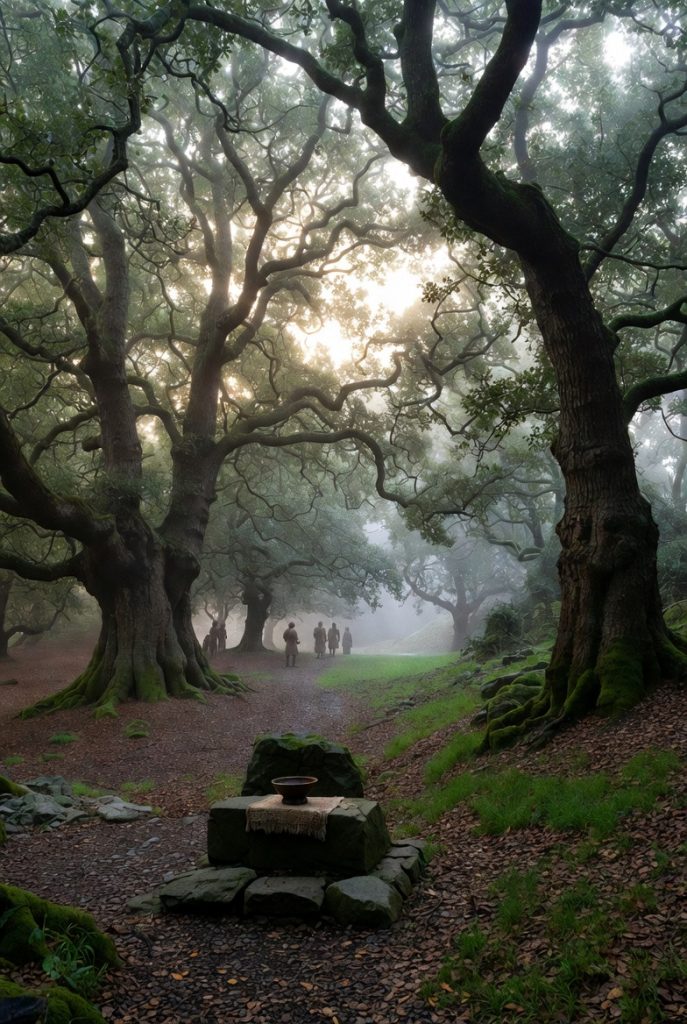
This line captures early Continental worship beautifully: sacred nature, no “church buildings,” and awe that doesn’t need idols to feel real.
“The Germans do not consider it consistent with the grandeur of celestial beings to confine the gods within walls, or to liken them to the form of any human countenance. They consecrate woods and groves, and they apply the names of deities to that abstraction which they see only with the eye of purity.”
Keep that in your back pocket — we’ll come back to it when we reach Viking-age halls and cult houses.
Key Differences at a Glance
Same roots, different priorities — and that changes everything.
- Same foundations: related languages, related deity names, related ideas (reciprocity, honour, fate).
- Different emphasis: kingship here, farming rhythm there, seafaring identity somewhere else.
- Different evidence: Romans for early Continental, conversion-era writing/poetry/charms for Anglo-Saxon, and later literary preservation for Norse.
Now let’s look at how those differences show up in gods, landscapes, fate, and the rituals that kept communities stitched together.
Divergence 1: Gods — Shared Names, Shifting Jobs
The gods didn’t change because people were “confused” — they changed because life demanded it.
Germanic gods aren’t static job titles. Names travel. Roles stretch. Emphasis shifts.
Woden/Wodan/Óðinn: “Royal ancestor” vs “complex myth machine”
- Continental Germanic: Wodan appears in later reconstructions and in Roman-era discussions of Germanic religion, but he doesn’t always appear to be the centre of everyday life in the surviving picture. He reads as elite-linked power — king-connected, dangerous, often associated with war and status.
- Anglo-Saxon: In England, Woden becomes a practical political asset: progenitor of royal lineages. Woden is less “distant sky god” and more “founding father with receipts.”
- Scandinavian (Viking Age): Óðinn becomes highly complex in surviving mythic poetry, encompassing war, wisdom, death, sacrifice, and magical knowledge. That richness doesn’t necessarily mean earlier branches lacked stories — it means we don’t have them preserved in the same way. (History is rude like that.)
Donar/Thunor/Thórr: protector force → landscape presence → mythic folk hero
- Continental Donar: weather power, community protection, sacred oaks/groves, the stability of the Thing.
- Anglo-Saxon Thunor: less preserved as a “myth character,” more present as a force woven into landscape and memory.
- Norse Thórr: fully “on-screen” character — furious, brave, hungry enough to bankrupt a farm, and fiercely devoted to defending human space from chaos.
And Norse myth doesn’t just preserve the drama — it preserves the personality:
“Then the son of Odin said, the bold of heart: ‘Me the gods will call a womanish thing if I let the bridal veil be bound on me!’”
— Þrymskviða (Poetic Edda)
Divergence 2: Sacred Landscapes — Groves, Hills, and Halls
Where you meet the gods tells you a lot about what kind of world you live in.
Continental Germanic: the forest is the “temple”
Outdoor holy places dominate: woods, groves, springs, bogs, clearings. If your “cathedral” is a grove, religion becomes big in atmosphere and hard to reduce to neat descriptions later.
Anglo-Saxon: the sacred is stitched into the land (and the calendar)
In England, the sacred appears through named places, boundary memory, and practical rites that treat the land as a living participant.
The Æcerbot (“field remedy”) invokes the earth as Mother Earth while also calling on the Christian God — a transitional religion often working on the principle of: call everyone you know and see who picks up.
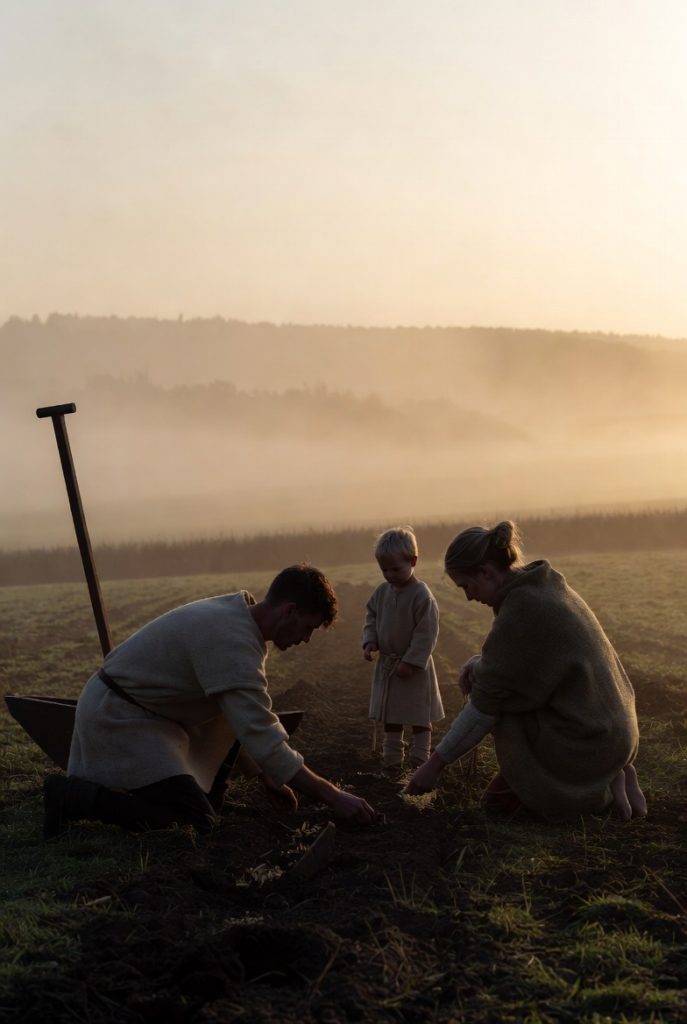
“Erce, Erce, Erce, eorþan modor… Geunne þe se almihtiga, ece drihten, æcera wexendra and wriðendra.”
(Erce… Mother of Earth… May the Almighty, Eternal Lord grant you fields growing and flourishing.)
— Æcerbot (Old English Field Remedy)
Scandinavian (Viking Age): cult houses, great feasts, and visible ritual spaces
By the Viking Age, we’re more likely to see evidence for hofs/cult houses, chieftain halls, and communal feasts that publicly declare identity. It’s also where status, oath-making, and survival all pile into the same room — usually with ale.
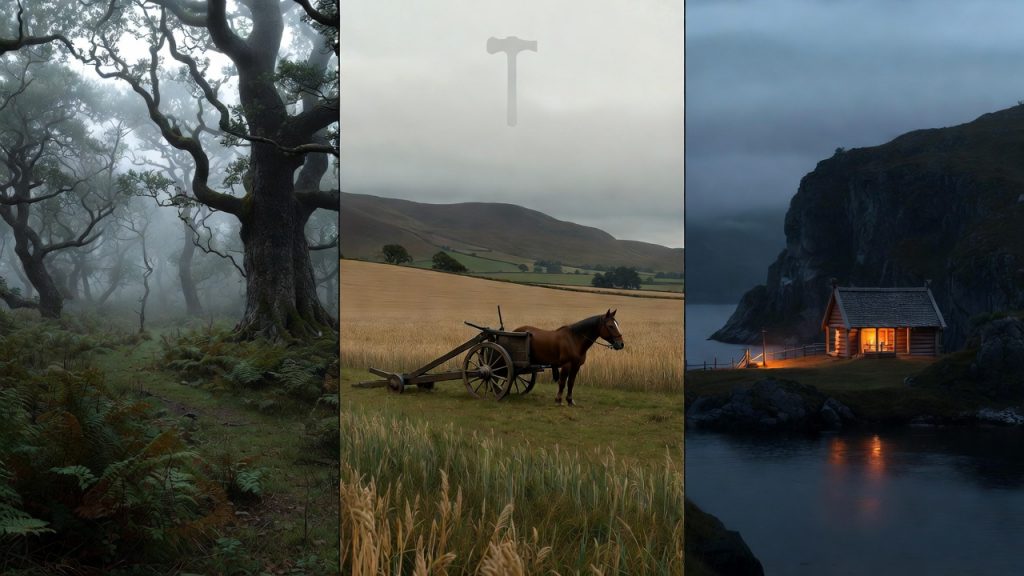
Feature: The Shifting Hammer — Thor Across Three Worlds
Same thunder, different mood: from sacred force to folk hero you can quote at the feast.
Continental Germanic: Donar the Lawgiver and Protector
For early Continental communities, Donar is the god you want on your side when the weather threatens survival, the law must hold, and pressure from neighbouring powers is constant. His worship is linked to great trees and groves — the spiritual centre isn’t a building; it’s a living pillar of the land.
Anglo-Saxon: Thunor of the landscape (and the working people)
In England, Thunor’s biggest fingerprint is often geographical rather than literary: he’s present through landscape memory and local naming. He fits as the power that guards the free farmer and household life, while Woden becomes the ancestral figure for kings.
Scandinavian (Viking Age): Thórr the giant-slayer — and the most human god in the room
By the Viking Age, Thor becomes the defender of Midgard against chaos in a fully mythic way. He’s still the protector — but now he’s also the hero of stories people retell. That human relatability is part of why he’s so beloved: he feels like the kind of force you’d want in your corner when life turns feral.
Divergence 3: Ritual Leadership — Who Held the Sacred Authority?
If you’re looking for one universal priesthood, you’re going to be disappointed — and that’s historically correct.
Scandinavian: the Goði (Chieftain-Priest)
In Viking-age Scandinavia (especially Iceland), sacred duty is inseparable from leadership. A Goði hosts feasts, maintains cult obligations, and leads rites as part of political authority. No central priesthood means local variety.
Anglo-Saxon: the priest with rules (and taboos)
Bede gives us a vivid taboo-bound priesthood — and a dramatic conversion story:
“It is not lawful for a priest to carry arms, or to ride on anything but a mare… [Coifi] girded on a sword, and taking a spear in his hand, he mounted the King’s stallion and set out to the idols.”
— Bede, Ecclesiastical History of the English People
(Subtlety was not invited to that ceremony.)
Continental Germanic: elders, groves, and prophetess authority
Continental evidence emphasises outdoor sacred space and tribal authority. Roman writers also record women with religious authority among some groups. Whether every tribe shared the same structure is difficult to prove, but the contrast remains useful.
The Blót: A Legal Contract and a Family Dinner Rolled Into One
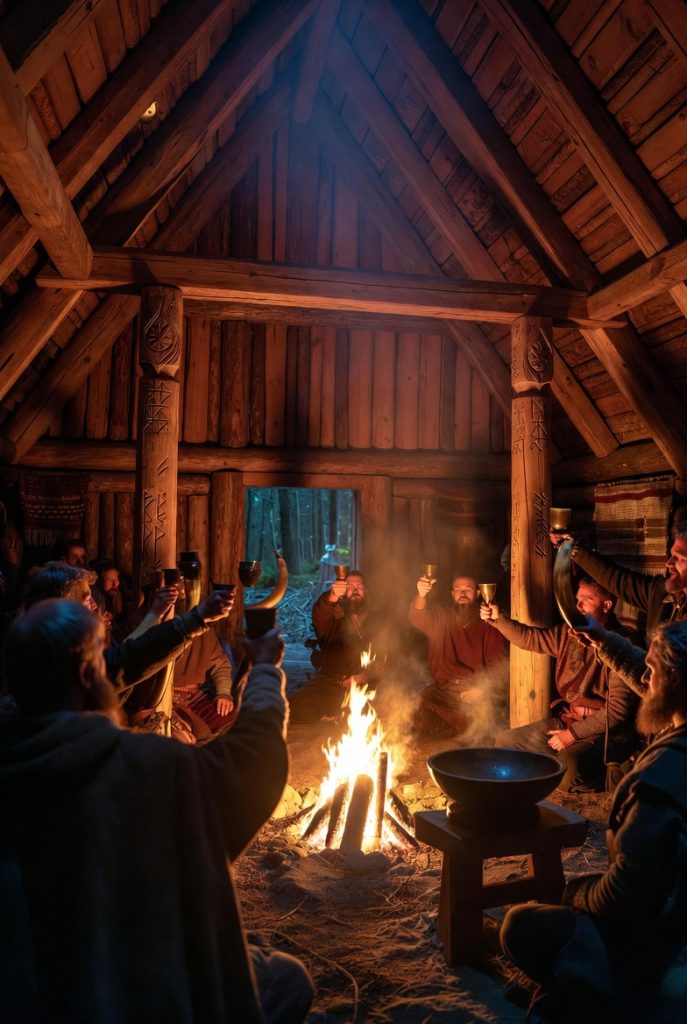
Religion here isn’t a private hobby — it’s a communal survival strategy with sacred rules.
Blót isn’t “begging for mercy from a grumpy god.” It’s gift for gift — offerings and honour given, luck and order returned. Religion isn’t separate from survival. It is survival guided by sacred logic.
Across the Germanic world, you see the same core shape:
- offering/sacrifice (usually animal)
- hallowing
- communal feast
- public bonding (toasts, vows, law, status — depending on the culture)
Continental Germanic: grove-based, solemn, sometimes war-linked
Early Continental blót is framed as communal and outdoor, held in sacred groves. Roman sources sometimes mention extreme rites, but those references likely represent exceptional circumstances and are filtered through outsider perspectives.
Anglo-Saxon: blót as sacred practicality
In England, sacrifice and seasonal slaughter are tied to the rhythm of survival. Turning necessary autumn slaughter into a sacred offering is one of the most human expressions of this religion: community, gratitude, fear, and winter planning all in one.
Scandinavian (Viking Age): hall feasts, hlaut, and ritual structure
Hákon the Good’s saga describes:
“It was an old custom… that all the householders should come to the place where the temple was, and bring there all the food they had need of while the feast should last… The flesh was boiled and eaten; and the blood was called ‘hlaut’.”
— Hákon the Good’s Saga (Heimskringla)
In this setting, blót encompasses worship, politics, oath-bonding, community cohesion, and public identity—performed in the hall, where status and survival intersect.
Fate & Wyrd — The Loom, the Law, and the Valhalla Myth
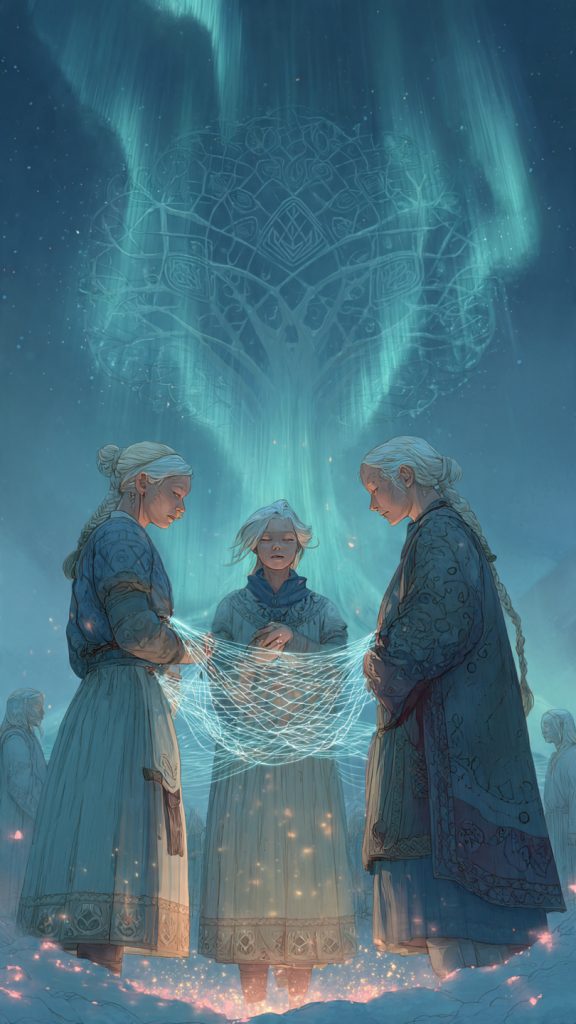
Not “destiny vibes.” More like: the universe has rules, and you still have to live bravely inside them.
In Anglo-Saxon writing, Wyrd isn’t gentle:
“Wyrd bið ful aræd!”
— The Wanderer
(Often rendered along the lines of “Fate is fully relentless.”)
Even in Christian-era texts, that concept still carries emotional weight.
The afterlife: not everyone wants Valhalla
The modern idea that “Germanic pagan afterlife = everybody wants Valhalla” is basically modern myth-making. For most of Germanic history, the picture of the afterlife is quieter and more local: ancestral continuity, the presence of burial mounds, the “hidden” realm.
Even within Norse belief, Valhǫll is selective — tied to Odin and warrior ideology — while Hel is the broad expectation for ordinary people. And crucially: Hel is not “Christian Hell.” It’s “hidden,” not automatically punitive.
The Earth Mother — From Veiled Sovereign to Field-Force to Mythic Ancestor
If Thor is the shout, the Earth Mother is the ground that answers.
Continental Germanic: Nerthus, the veiled queen
Tacitus gives a vivid glimpse of Nerthus:
“…the chariot, the vestments, and (believe it if you will) the goddess herself, are cleansed in a secluded lake. This service is performed by slaves who are immediately afterwards drowned in the lake.”
— Tacitus, Germania
Sovereignty, secrecy, taboo — and real fear.
Anglo-Saxon: Erce, Mother of Earth
In the Æcerbot charm:
“Erce, Erce, Erce, eorþan modor…”
— Æcerbot (Old English Field Remedy)
And it sits alongside Christian invocation, showing blending in practice.
Scandinavian: Jörð and the mythic mothers
In Norse myth, Jörð is the personified Earth and the mother of Thor. The Earth becomes ancestry and foundation — present, powerful, often backgrounded in surviving stories. Other fertile powers are strongly associated with figures like Freyja.
Transition & Conflict: Conversion as a Slow Burn
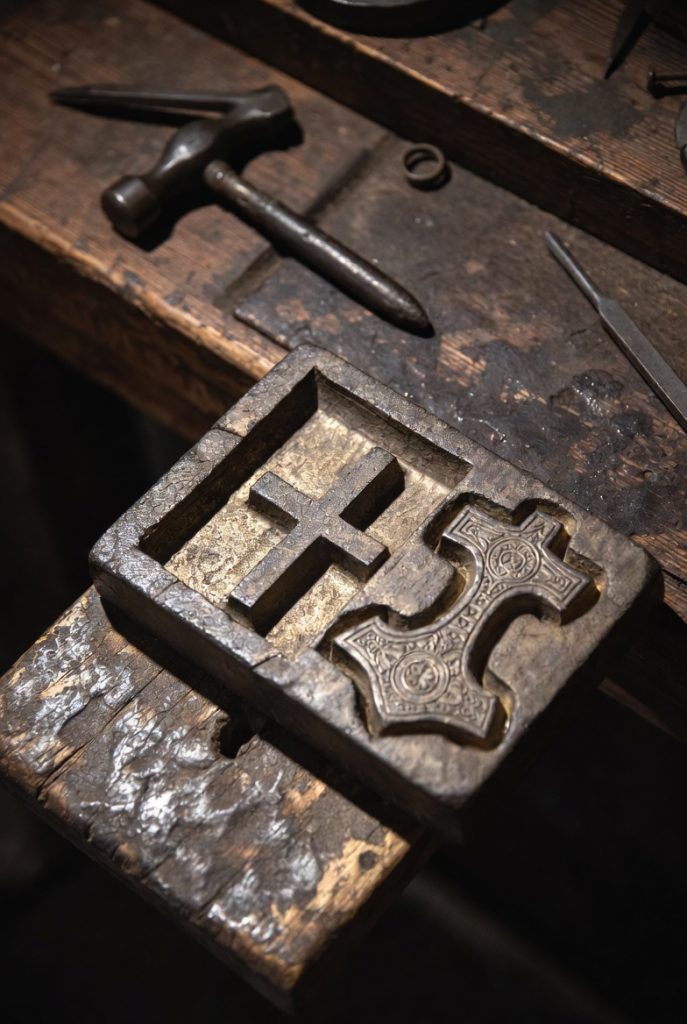
Less “light switch,” more “long awkward dimmer”.
Conversion was uneven and local: political decisions, household habits, public declarations, private continuities. Sometimes it looked like taboo-breaking theatre. Sometimes it looked like blended charms and renamed feasts. Sometimes it looked like carrying both symbols for a while because uncertainty is human, and winter is long.
Major Debates (aka: where historians earn their mead)
If you want certainty, this is where it goes to die — but in a useful way.
The Snorri Problem
Snorri is invaluable — and a filter. He preserves a great deal of myth, but through Christian-era context and audience expectations.
Continuity vs Evolution
Names and deep concepts travel; practice and emphasis evolve.
The role of magic and taboos
Social stigma around certain magical practices appears clearly in later Scandinavian material; mapping it back onto earlier Continental contexts is harder to prove.
Quick Comparison Table
If your brain wants a tidy grid, here you go.
| Feature | Continental Germanic | Anglo-Saxon | Scandinavian (Norse) |
|---|---|---|---|
| Timeline focus | c. 100 BCE–500 CE | c. 450–700 CE | c. 700–1100 CE |
| “Royal” emphasis | Wodan (elite/war/kingly) | Woden (royal ancestor) | Óðinn (complex myth figure) |
| Thunder god | Donar | Thunor | Thórr |
| Ritual landscape | Sacred groves/trees | Hearg/weoh + landscape memory | Halls/hofs + public feasts |
| Afterlife “default” | ancestral/local | barrows/ancestral continuity | Hel for most; Valhǫll for some |
| Main sources | Roman outsiders | Christian writers + charms + poetry | Eddas + sagas (later recording) |
Myth-Busting: Common Misconceptions
The fastest way to improve Germanic history conversations is to delete these assumptions.
- “All Germanic pagans were Vikings.” Nope.
- “Everyone wanted Valhalla.” Nope.
- “Pagan worship means temples like churches.” Usually not.
- “Each god has one neat job.” Also not.
- “Conversion was a clean replacement.” It was often blended and gradual.
- “Human sacrifice was constant.” Evidence exists, but it’s not “daily life.”
Closing: The Echo of the Old Ways
The old ways didn’t vanish. They moved.
The conversion of the Germanic peoples to Christianity was rarely a clean break. It was a centuries-long blending — where the old gods didn’t so much disappear as they retreated into folklore, the landscape, and habit.
Continental tribes left behind sacred groves and tree-centred worship that Christian missionaries targeted as spiritual strongholds. Anglo-Saxon England preserved older religious language in charms and seasonal practice, even while Christian writers shaped the official story. Scandinavia, pagan the longest, preserved a late literary bloom of myth that still captivates us — even if it doesn’t perfectly represent what earlier Continental Germans or early Anglo-Saxons believed.
Ultimately, the differences between these groups remind us that paganism wasn’t a rigid scripture. It was a living relationship with the world — shaped by climate, politics, migration, and daily reality. These weren’t “pagans” as a modern identity label first; they were farmers, oath-keepers, law-speakers, parents, craftspeople — people trying to live with courage in a world governed by forces that felt older than the gods themselves.
And here’s the best part: we’re still learning. New archaeology and modern methods keep sharpening the picture, so the “Germanic world” is becoming clearer now than it has been for a very long time.
The hammer is still shifting. We’re just finally getting better at seeing the dents.
Mini Glossary (for newer folks — and for the rest of us before coffee)
Blót — A ritual of offering/sacrifice + hallowing + communal feasting; fundamentally about reciprocity (“gift for gift”).
Wyrd — Old English concept of fate as what becomes/what happens; relentless causality more than “a plan.”
Urðr / Norns — Norse personifications of fate; often framed as forces who shape or set the course of lives (even gods aren’t exempt).
Ørlög — “Primal law” or foundational fate; the deep patterns laid down before individual lives unfold.
Hel / hel — “Hidden” realm/condition; not automatically punitive like Christian Hell, but a broad destination for ordinary dead in Norse framing.
Thing — Assembly and legal gathering; law, dispute-settlement, and social order (and yes, it matters religiously too).
Hof — A Norse cult building/temple (often tied to feasting and community rites in later contexts).
Vé — A sacred enclosure/holy place in Norse contexts.
Hearg — Old English term often associated with a sacred site, sometimes linked with elevated ground (hilltop “holy place” vibe).
Weoh — Old English term for a shrine/holy place, often associated with smaller local sacred sites.
Sources and References
Primary Sources (Ancient & Medieval)
- Tacitus, Germania (c. 98 CE)
- Bede, Historia ecclesiastica gentis Anglorum (c. 731 CE)
- Snorri Sturluson, Prose Edda (c. 1220 CE)
- Poetic Edda (anonymous, preserved in 13th-century manuscripts)
- Heimskringla (incl. Hákon the Good’s Saga)
- Heliand (c. 830 CE)
Secondary Sources (Modern Academic Research)
- H. R. Ellis Davidson, Gods and Myths of Northern Europe
- Richard North, Heathen Gods in Old English Literature
- Rudolf Simek, Dictionary of Northern Mythology
- Neil Price, The Children of Ash and Elm
- Ronald Hutton, The Pagan Religions of the Ancient British Isles
Archaeological References
- Sutton Hoo Ship Burial (British Museum)
- Torslunda Plates (Sweden)