If you’ve been exploring the Norse month of Þorri, you’ve probably felt it already: this isn’t “winter” as a background season. Þorri is winter with personality. Winter with a temper. Winter that can be bargained with, flattered, toasted, and—if you’re sensible—respected from a safe distance while you’re wrapped in wool and pretending fermented shark is a totally normal Tuesday dinner.
Here’s the twist: in the old sources, Þorri doesn’t just drift in as a bit of winter weather. He arrives as part of a world where seasons and natural forces are people with names, stories, and family trees. Kings, ancestors, powers—each one explaining why a place is called what it is, why a month has its name, and why certain rituals stick around.
And then there’s the other layer: the long-running argument that Þorrablót was “really” about Þórr (Thor), and that Þorri is either a shadow of Thor, a later folk explanation, or a post-Christian reshaping of older ideas.
Let’s walk through the sources, one by one, and see why the stories refuse to line up tidily. This is medieval Icelandic material, after all. It loves a good tangle.
Where Þorri Appears in the Medieval Texts
The Origin Legend
First thing to know: when Þorri shows up in the old texts, it’s not as a neat little myth about a winter god. He’s tangled up in origin stories and family trees—the kind that tell you how Norway got settled, why places have the names they do, and how legendary ancestors are woven right into the land.
These stories drop us into a mythic-history zone where the elements themselves become ancestors. It’s a roll-call of nature: sea, fire, wind, frost, snow—and then, right there, Þorri.
Orkneyinga Saga: Þorri as the Midwinter Sacrificer
In the prologue to Orkneyinga saga, Þorri lands in a family tree full of primal figures and elemental powers. The saga plants him out in the far north and east—think Finland and Kvenland, as the medieval mind pictured them. He’s the one who holds a yearly midwinter sacrifice, a feast named for him, and the month gets its name from that very ritual.
So here, Þorri isn’t just a month on the calendar. The month exists because there was Þorri’s sacrifice—a ritual that comes around every midwinter, year after year.
This is classic medieval storytelling: take a word everyone knows—the month name—and spin it into an origin story that makes it feel ancient, important, and tied to legendary times.
Hversu Noregr byggðist: “The Kvens Sacrificed to Þorri”
Another big one: Hversu Noregr byggðist, or “How Norway was settled,” tucked away in Flateyjarbók. Here, too, Þorri steps in as a legendary king, right in the middle of that mythic family tree.
But this version throws in a detail that always gets modern readers’ attention, which is that Þorri rules over Gotland, Kvenland, and Finnland (as medieval sources imagined them). The Kvens (a Finnic-speaking people in the saga’s conceptual geography) are said to perform a midwinter sacrifice to Þorri.
The reason is refreshingly blunt: they sacrifice to make sure there’s enough snow for good travel on skis or snowshoes. That’s their harvest—snow, not grain.
That one line says it all: winter isn’t just something you put up with. It’s something you bargain with. If your life depends on snow and safe travel, then winter becomes a force you need to keep on your good side.

So… is Þorri a God?
Here’s where things heat up—not with Brennivín, but with scholarship.
In the medieval texts, Þorri is called a king and a great blót-man—a person tied to sacrifice and ritual. He’s also part of a family tree crowded with personified forces of nature. That starts to look a lot like divinity. It definitely reads as personification: frost, snow, wind, fire, sea—all with names, family ties, and their own agendas.
But here’s the catch: folklore scholars warn us that the evidence is thin and sits in odd places. One careful argument you’ll see is that the word þorrablót does appear in medieval stories, but it often feels like the writer is explaining an old term rather than describing a big, living, all-Icelandic tradition.
Solid, ongoing medieval proof that Þorri was a widely worshipped winter god? Pretty scarce.
It’s in much later sources that Þorri really comes to life—as a winter spirit you greet, fear, welcome, and sometimes beg for mercy.
So, the medieval texts hand us the origin story and the ritual name. Later tradition gives us the personality.
The Later “Þorri as Winter” Tradition
By the early modern era, Þorri steps out of the shadows and into Icelandic folk tradition—especially in Þorri-poems and the custom of greeting Þorri.
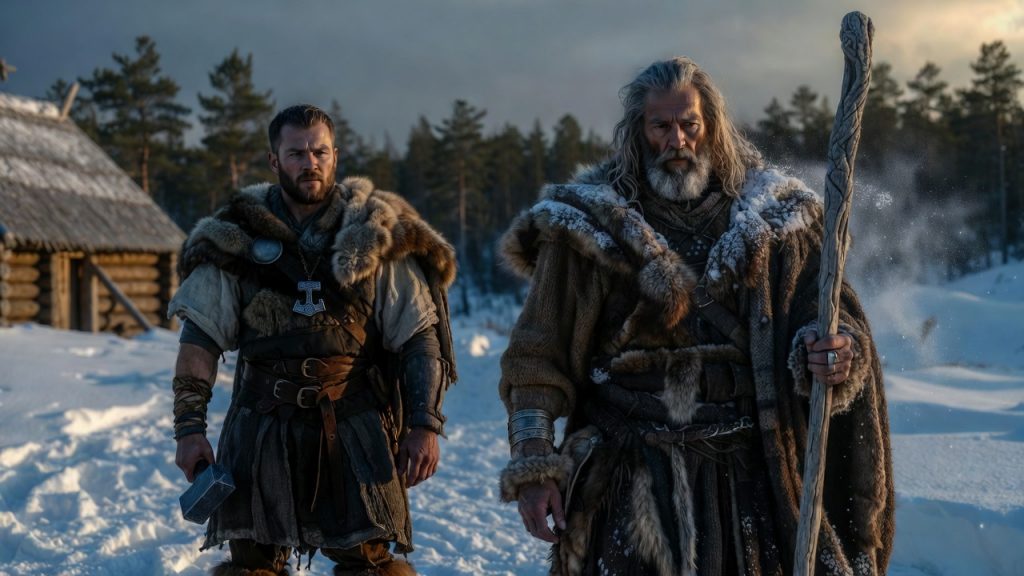
Here, Þorri might show up as an old, grey-bearded figure, a chieftain, or even a living force of ice. The mood is always the same: greet him with respect, and maybe slip in a quiet plea—please, go easy on us this year.
So, medieval texts give us the name and the origin story. Later folklore hands us the personality—and the relationship.
The Thor Argument: Þorri vs Þórr, and Why People Argue About It

Now, to the big dispute we often see: was Þorrablót actually for Thor? There are a few reasons this debate won’t die:
The names are close enough to cause trouble
- Þórr (Thor) is one of the most prominent gods in the Norse world.
- Þorri looks and sounds like it could be connected.
- Once you have Þorrablót (“Þorri-blót”), it’s easy for later readers (or later celebrants) to assume it means “Thor-blót” in spirit, if not in grammar.
Etiological storytelling: “We forgot the meaning, so we made a story”
A common scholarly suspicion is that Þorri may function as an explanatory figure: a person invented (or sharpened) by tradition to explain the month-name and the feast-name. In that model:
- People knew the word Þorri as a month-name.
- People knew there was (or had been) something called Þorrablót.
- The saga-writer supplies a legend: “There was a king called Þorri, and the blót was named after him.”
That doesn’t prove it’s false, but it does tell you what kind of narrative move is happening.
Modern revival culture strongly associates Þorrablót with Thor
The modern Þorrablót celebration is largely a 19th-century revival that later became a popular social feast tradition. In modern explanations (and modern practice), it’s very common to see people say the blót was “originally for Thor,” or to include a toast to Thor as part of the celebration.
That modern custom can easily get projected backwards—especially online—until it starts sounding like an established medieval fact.
“Þorri is a post-Christian version of Thor”
This is the boldest version of the argument, and a safer way to look at it is that some interpretations treat Þorri as an Icelandic personification shaped after conversion, possibly influenced by folk etymology and the cultural memory of Thor’s importance.
But the old texts don’t come right out and say Þorri is Thor. Instead, they give Þorri his own origin story, and later tradition turns him into the face of winter.
So: are Þorri and Thor “the same”?
Historically, it’s tough to prove. But in modern pagan circles, it’s easy to see why the two get linked: one is winter with a face, the other is the protector-god who stands for endurance and keeping the home safe.
My take: Þorri can be winter’s face. Thor can be the one you toast for getting through it. Not identical — but it’s easy to see why they end up sharing the same table.
What Our Ancestors Might Have Felt in the Month of Þorri
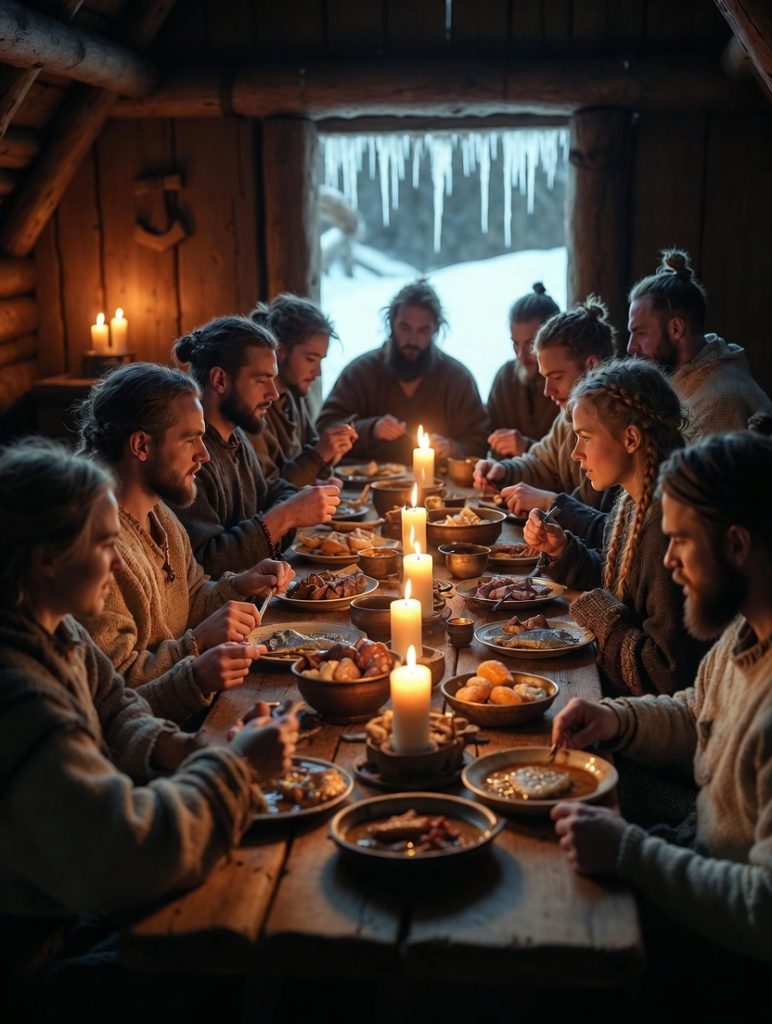
Whether Þorri started as a cult figure, a legendary king, or just a way to explain the month, the feeling behind him is clear. Midwinter isn’t an idea—it’s the season that decides if your animals live, if your food lasts, if you can travel, if people get sick, if storms trap you, and if you make it to spring.
So it’s no wonder midwinter turns personal—something you can greet, bargain with, or plead your case to. That’s the heart of Þorri: winter that listens. Even if the medieval evidence is spotty, the logic holds up. When survival depends on the weather, the season becomes someone you have to reckon with.
If we see Þorri as winter with a name and a face, we don’t have to pick sides in the Thor debate. The real story is in the layers:
- Medieval texts preserve a tradition of “Þorri’s sacrifice” at midwinter and link it to the month-name.
- Another medieval origin text adds the very practical detail: sacrifices for snow and good travel.
- Later folklore gives Þorri a fuller personality (in poems, greetings, and winter-as-a-being).
- Modern revival often pulls Thor into the story — sometimes as belief, sometimes as symbolism, sometimes as a proud cultural toast.
That’s not a contradiction. That’s just history doing its thing—meanings piling up like snowdrifts. Þorri is winter made personal, a name you can call out when the cold stops being just weather and starts feeling like someone in the room.
As always, I’ve added the list of reference material, some links to downloadable or online PDFs for anyone who wants to dive in!
References
Primary sources and translations
- Orkneyinga saga (prologue material; English translation hosted at Sacred Texts Archive). (Internet Sacred Text Archive)
- Hversu Noregr byggðist (“How Norway was Settled”), in Flateyjarbók; translation by George W. Dasent (1894), excerpt. germanicmythology.com
Scholarship and analysis
- Schram, Kristinn H. M. (2011). Borealism: Folkloristic Perspectives on Transnational Performances and the Exoticism of the North (PhD thesis, University of Edinburgh). Discussion of þorrablót references, scarcity of medieval evidence for “godly Þorri,” and later Þorri-poems/customs. (era.ed.ac.uk) https://era.ed.ac.uk/bitstreams/dd68d009-98bf-46f0-8cf9-23fe3d460cf8/download
- Heikkilä, Mikko (2012). “On the Etymology of Certain Names in Finnic Mythology.” SKY Journal of Linguistics (PDF). Includes discussion/quotations of Þorri material in connection with Kvenland/Finnland traditions. https://tinyurl.com/yz9cf6bh
- Allport, Benjamin (2022). “The Prehistory of Frá Fornjóti ok hans ættmönnum…” Neophilologus (Springer). Useful for understanding how these origin materials relate to one another and how motifs move between texts. https://link.springer.com/article/10.1007/s11061-021-09723-4
Background on modern Þorrablót revival and popular practice
- Icelandic Canadian Cultural/Community material on Þorrablót history and modern observance (ICCT). https://www.icct.info/history-of-thorrablot
- Local Icelandic tourism/community overview, noting the modern association with honouring Thor. https://www.hvolsvollur.is/en/inhabitants/inhabitants/news-and-announcement/thorrablot-what-are-they-and-where-do-they-take-place
- General overview of Þorrablót and the month Þorri (useful for dates and modern revival context; treat as a starting point, not a final authority. There are some good reference points there as well). https://en.wikipedia.org/wiki/%C3%9Eorrabl%C3%B3t?