Honoring the Ancestors of Hearth and Home
The 21st of December brings the Winter Solstice — but the 20th belongs to Mother’s Night, Modraniht (Old English), a tradition with deep roots in Germanic and Northern Solstice customs. This is the night we turn toward the maternal line, the women who held families together through hard winters, hard choices, and hard years — and the sacred feminine powers that still guard the home, the land, and the people.
Mother’s Night is most often kept on the eve of the Solstice (many modern Heathens observe it around December 20th), and it’s a time to honor the ancestral mothers: mothers, grandmothers, foster-mothers, aunties, and the “hearth women” whose love and labor shaped the clan.
Traditionally, this night is closely tied to Frigg — mistress of home and hearth, queenly keeper of peace within the household, and a steady presence when life feels uncertain. Many also honor the dísir (female ancestral spirits and guardians connected to family, luck, protection, and the well-being of the homestead). In modern practice, Freyja as Vanadís is often acknowledged as a powerful leader among them — a reminder that the dísir are not only gentle guardians, but fierce protectors too. They are remembered in connection with childbirth and family fortune, but also with the strength that carries people through crisis — even into battle and back again.
Candlelight for the dísir
A simple, beautiful custom for Mother’s Night is candlelight at dusk. A single candle, a small cluster, or a full wreath works — the point isn’t fancy, it’s intention.
Light candles as night falls to welcome the dísir and the mothers.
Speak their names if you know them. If you don’t, speak from the heart: “To the women of my line, known and unknown…”
At dawn (or before bed if you’re keeping it simple), extinguish the flame with thanks.
Some families include a four-candle Yule wreath, an evergreen tree or boughs, sun wheels, and the lighting of the Yule Log — symbols of the returning Sun and the turning of the year.
Stories that keep the dead alive
Mother’s Night is also a night for family stories. Not the polished versions — the real ones. Who survived what. Who kept going. Who loved fiercely. Who made the hard call. This is how we keep our ancestors close: by remembering them as people, not just names.
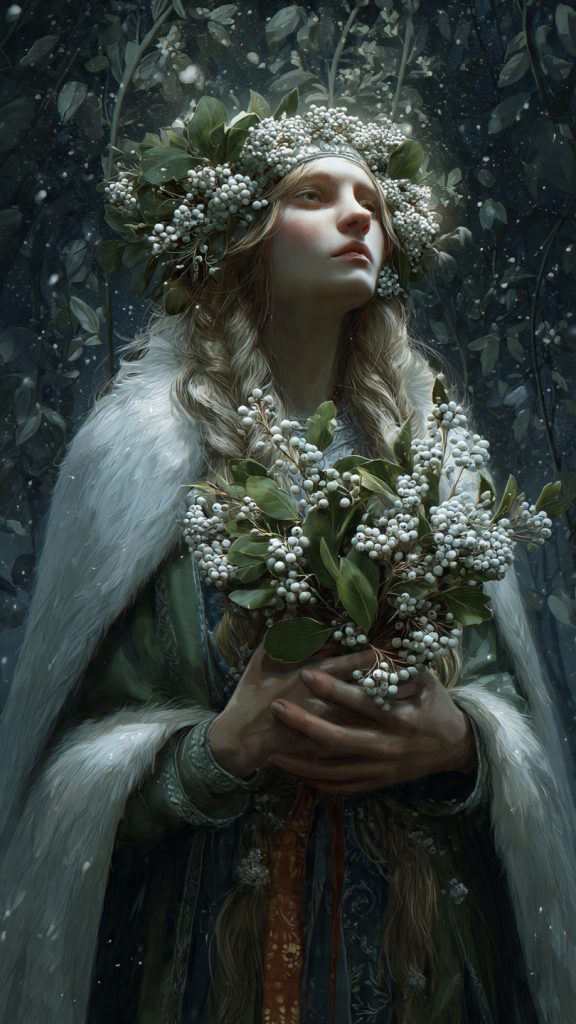
And if you want a mythic thread to stitch into the night, the story of Baldr and the mistletoe fits beautifully here: Frigg’s desperate love, her attempt to protect what she cherishes most, and the one small thing overlooked. In later folklore, Frigg’s tears become the mistletoe’s white berries — a symbol of love, grief, and the strange holiness of what we can’t fully prevent.
A note on “when Yule begins”
Many Heathens today treat Mother’s Night as the opening of the Twelve Nights of Yule, especially in modern practice. Historically, timing could vary by region and tradition — and in parts of Scandinavia, seasonal observances like Winter Nights (which included rites connected to the dísir) held major weight as well. Going further back into ancient Germania, we also find the “matrons” (sometimes linked with the Idis/Idises) — another echo of the long-standing reverence for female powers tied to protection, fate, and the continuity of the people.
So however you count your days, this night still lands the same way: the hearth becomes sacred space, and the mothers are invited home.
Mother’s Night and the virtue of Industriousness
This night also pairs well with the virtue of Industriousness — not in a grind-yourself-into-dust way, but in the old sense: work done with care, pride, and purpose. The mothers of the line didn’t survive on wishes. They survived on steady hands, brave hearts, and the kind of effort that becomes devotion.
Let Mother’s Night remind you: if you want your life to change, your gifts to grow, or your faith to take root in the world — you build it. One faithful action at a time.
A Mother’s Night Prayer
Tonight we honor our Mothers, who through joy and suffering endured so that their children, and their children’s children might not just survive, but thrive.
I call to our mothers, the light and the life bringers who have guided us from darkness onto the paths our ancestors have traveled, and now the paths we walk down.
All-mother Frigga I hail thee, and I thank thee. For the immeasurable blessings, your guidance and your wisdom. You see all things, even if I may not know them. May your counsel follow me into the year ahead and be the compass from which I navigate.
May the blessings of the disir be upon you all.
May your Mother’s Night be warm, protected, and full of that quiet, steady power that only the ancestors bring.
Tags: #OldNorseCalendar #VikingTraditions #NorseFestivals #Heathenry #NorseMythology #Yule #Midsummer #WinterNights #PaganHeritage #LunarCalendar #NorsePaganism #EarthSpiritTarot