When the long darkness of winter closed in on the North, the Norse did what humans everywhere have always done: they lit fires, gathered in warm halls, and told stories to push back the cold. Jól (Yule) was one of the most important of these winter festivals—a sacred, liminal time that blended survival, magic, and community.
More than just “pagan Christmas,” Jól was a powerful turning point in the year. It marked the deep midwinter and the slow return of the sun, a time to honour gods and ancestors, renew oaths, and ask for peace and prosperity in the year to come.
The Heart of Jól: Light in the Dark
Winter Solstice in the North was not just a date on the calendar—it was a matter of survival. The old Norse used this time to prepare for the coming year and to reaffirm their bonds with gods, kin, and land.
Jól (or Yule) was traditionally:
- A midwinter festival of light and renewal
Celebrated during the darkest days, Jól marked the turning of the tide: from lengthening nights back toward the growing light. It held the hope of future fertility and the earth’s rebirth in spring. - A multi-day feast
Sources suggest that pre-Christian Jól lasted at least three days, and in some traditions, as long as the ale held out. Later, we see a more formalised 12-day celebration, echoed in both later folk customs and modern pagan practice. - Ending with Jólablót (Yule Sacrifice)
The end of the Norse holiday season was said to fall around January 12th, known as Jólablót, or the Yule Sacrifice—a final offering and closing of the festive period.
While scholars debate exact dates and meanings, Jól clearly functioned as a New Year and renewal festival, a sacred pause between the dying old year and the unfolding new one.
Odin and the Spirits of Midwinter
Jól was more than just feasting and fire—it was a deeply spiritual and sometimes eerie time.
Odin as Jólnir
The god Odin is closely linked to Jól. One of his bynames is Jólnir, meaning “the Yule figure” or “the Yule one.” During this season he was not only a god of wisdom and kingship, but also:
- Leader of the Wild Hunt
A ghostly procession of riders and spirits sweeping through the winter sky. To see or cross the path of the Hunt was dangerous; one might be swept away to the Otherworld or marked by misfortune. - Bringer of omens and insight
With his long white beard, hood or wide-brimmed hat, and cloak, Odin moved between worlds, gathering souls, seeking knowledge, and overseeing the great turning of the year.
Spirits, Ancestors, and the Otherworld
In Norse tradition, Yule was a liminal time—the veil between the worlds was thin:
- Ancestors and land spirits (vættir) were honoured with offerings of food, drink, and ritual.
- Household spirits and guardians might be fed or appeased to ensure protection for the coming year.
- The dead were believed to travel to the Otherworld, completing their journey away from the realm of the living.
Because of this, it was considered dangerous to wander alone on Yule nights. One risked crossing paths with the Wild Hunt or being pulled prematurely toward the realm of the dead. The festival carried a sacred, sometimes unsettling charge: it was a time to show respect, keep to the firelight, and honour both gods and spirits properly.
Oaths, Peace, and Prosperity
Jól was not only about the unseen—there were very practical, social, and magical purposes too.
Blót – Sacrifice and Sacred Feasting
Central to the festival were blót, or ritual sacrifices:
- Offerings of meat, ale, and other goods were made to gods, ancestors, and land spirits.
- Gods like Njörðr and Freyr were honoured for fertility, peace, and good harvests in the year to come.
- A sacrificial boar (the sónargöltr) sometimes played a key role. Attendees would place their hands upon its back and swear holy oaths.
Heitstrenging – Binding Oaths
The oaths taken at Jól were especially binding:
- People swore heitstrenging, solemn vows made during the feast.
- These might concern future deeds, vengeance, marriage, alliances, or personal goals.
- To break an oath sworn at Jól was not just dishonourable—it risked spiritual consequences.
The social aspect of Jól—feasting, storytelling, settling disputes, renewing bonds—was vital. In a world where winter could easily turn deadly, social unity was as important as any material resource.
Traditions and Symbols of Yule
Many of the practices we now associate with Christmas have roots in older Yule customs. Among them:
Feasting and Drinking
- Great midwinter feasts were held in longhouses and halls.
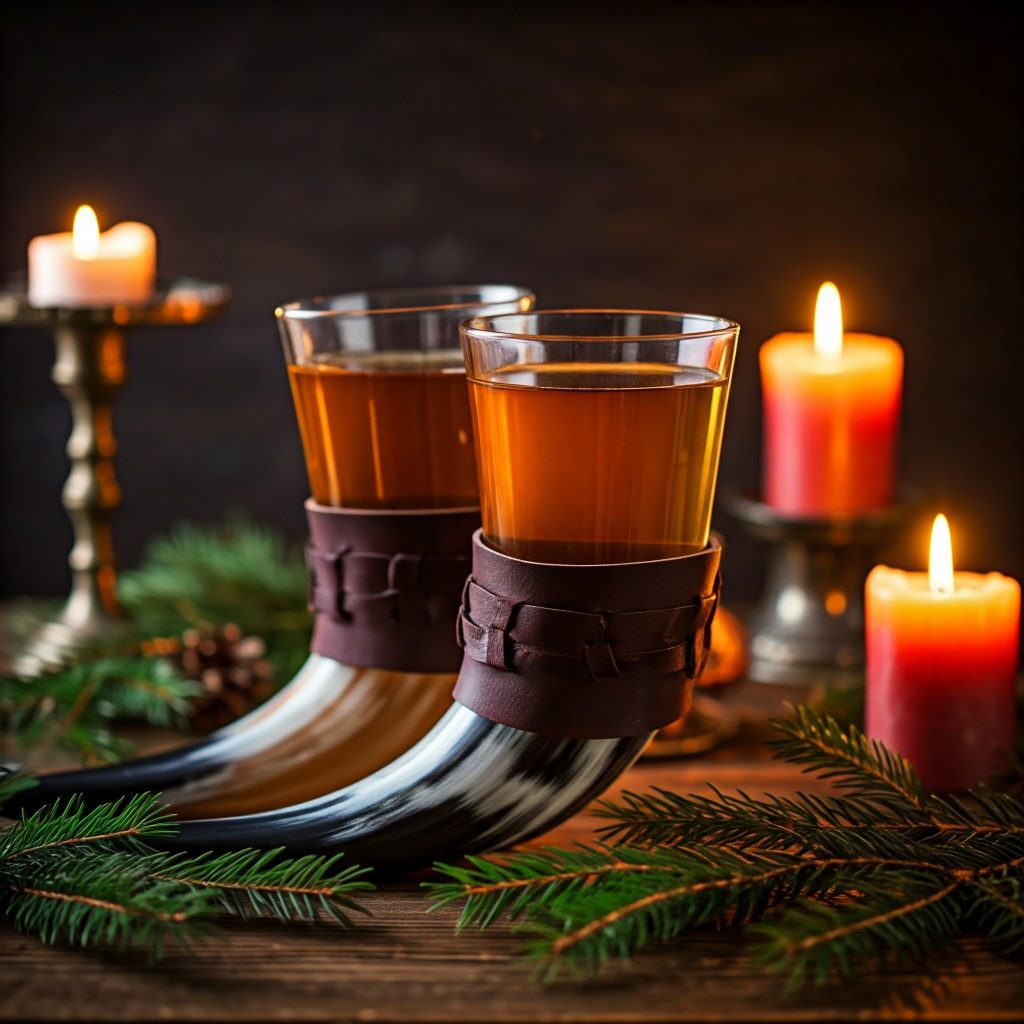
- People shared roasts, bread, ale, mead, and other preserved foods.
- Storytelling, boasting, poetry, and song turned the night into a celebration of identity, honour, and memory.
The Yule Log (Jól Log)
- A large log, often oak, was brought into the hall and kept burning through the festival.
- It symbolised light, warmth, and the sun’s strength returning.
- Sometimes runes or symbols were carved on the log for protection and blessing.
- Letting the fire go out was considered a bad omen. A piece of the log was sometimes saved to light the next year’s Yule fire, carrying the blessing forward.
Evergreen Decorations
- Evergreen branches and trees were brought indoors as symbols of enduring life in the midst of death and cold.
- They expressed faith that the earth would bloom again, even when the landscape lay frozen and bare.
Yule and the Celtic Midwinter
While the Norse and Celtic cultures had their own distinct traditions, there are shared themes at midwinter.
Yule in Norse Tradition
- A liminal, spirit-filled time when the dead journeyed on to the Otherworld.
- The living honoured them with feasts, offerings, and remembrance.
- The focus was on survival, renewal, and the blessings of the gods during the harshest season.
Yule in Celtic Tradition
- Yule (or the Winter Solstice) celebrated the rebirth of the sun and the promise of a new year.
- The burning of a Yule log symbolised the return of light.
- Gift-giving honoured the gods and asked for their blessings in the turning year.
- The emphasis was on cyclical time—death and rebirth, darkness and returning light.
Across both traditions, we see the same core message: light returns, life continues, and community matters.
From Yule to Christmas: Familiar Echoes
As Christianity spread through Scandinavia and Europe, many Yule customs were woven into the new festival of Christmas, making the transition smoother and more acceptable to local populations.
Some clear links include:
The Yule Wreath
- Originally, the Norse are said to have rolled a flaming wheel down a hill to honour the sun’s return—a symbol of the turning year.
- Over time, this idea evolved into the Yule wreath, a circular sign of eternity and the cycle of the seasons, now commonly hung on doors during Christmas.
Mistletoe and Baldr
- Mistletoe plays a central role in the Norse tale of Baldr’s death and eventual rebirth, connecting it with themes of sacrifice, sorrow, and hope.
- Its white (or red-tinted) berries symbolise life, healing, and renewal, themes that still cling to mistletoe as a plant of blessing and promise.
The Yule Goat
- Linked to Thor’s goats, Tanngrisnir and Tanngnjóstr, who pulled his chariot.
- In Indo-European tradition, the last sheaf of grain from the harvest was kept as the “spirit of the harvest” and was sometimes reshaped into a goat figure for Yule.
- Today, the Yule goat survives as a straw decoration in Scandinavian countries and has also been associated with gift-bringing.
The Sacrificial Boar and Christmas Ham
- The ritual Jól boar, connected to Freyr, symbolised fertility and blessing.
- Sworn oaths on the boar and sacrifices in its honour echo in the continued tradition of eating ham at Christmas feasts in many cultures.
The Yule Log and Modern Customs
- The original burning Yule log has transformed in some places into:
- A log burned in the hearth on Christmas Eve, or
- A Yule log cake (bûche de Noël) decorated like a wooden log, keeping the symbolism alive in sweet form.
Old Man Winter and the Making of Santa
One of the most intriguing connections between Yule and Christmas is the figure we now call Santa Claus.
Odin as Old Man Winter
- In Scandinavian traditions, a white-bearded figure in a hooded fur coat—an echo of Odin—would move through the community during Jól.
- This “Old Man Winter” joined celebrations, bringing luck or blessings, and quietly watching over the people.
Brought to the British Isles and blended with local customs, this figure evolved into Father Christmas, and, through further cultural fusion, into modern Santa Claus.
Odin and Santa: Shared Threads
Consider the parallels:
- Odin rides the night sky on Sleipnir, his eight-legged horse.
- Santa rides through the sky in a sleigh pulled by eight reindeer.
- Odin is a gift-bringer of wisdom and fate, while Santa brings gifts to children.
- Norse households once left food, oats, and hay out for the Wild Hunt’s riders and Odin’s horse—offerings that echo in today’s cookies, milk, and carrots for reindeer.
While Santa today is wrapped in red velvet and commercial cheer, some of his bones are ancient: a winter wanderer, long-bearded, moving through the darkest nights with mystery and gifts.
Yule Today: A Living Tradition
During the Christianization of Scandinavia, many Yule customs were adopted into Christmas, and the language reflects this merging:
- English still uses “Yule”,
- Scandinavian tongues use “Jul” to mean Christmas or the entire winter holiday season.
In modern times:
- Heathens, Ásatrúar, Germanic Pagans, and other Neo-Pagans continue to celebrate Yule as a sacred festival.
- Many observe a 12-day period starting from the Winter Solstice (around December 21st).
- Practices may include:
- Rituals honouring gods, ancestors, and land spirits
- Feasting, toasting, storytelling, and gift-giving
- Lighting candles, burning symbolic logs, and decorating with evergreens
- Reflecting on the past year and setting intentions for the one to come
Despite all the changes over the centuries, Yule’s core themes remain: renewal, connection, and the victory of light over darkness.
Jól: A Celebration of Renewal and Unity
In the end, both Yule and Christmas circle around the same eternal truth:
during the darkest time of the year, we look for light, warmth, and hope.
Jól reminds us:
- That nature moves in cycles, and even the deepest winter contains the seed of spring.
- That ancestors, gods, and spirits are never far away, especially at turning points of the year.
- That community, hospitality, and shared fires are as sacred as any ritual.
As the sun rises after the longest night, we are invited to honour the legacy of Yule by living its values—rebirth, unity, generosity, and reverence for the natural world.
Happy Jól.
May this season bring warmth, light, and blessings to you and yours.
Jól Ritual – A Norse-Inspired Yule Blót for Darkness and Returning Light
A hearth rite for honouring gods, ancestors, and the rebirth of the sun.
Intention & Timing
This ritual is designed for:
- Jól / Yule, anytime between
- the winter solstice,
- and Twelfth Night (the traditional Yuletide span),
- Or the main Yule gathering you personally mark as the heart of the season.
Themes:
- Welcoming and blessing the turning of the light
- Honouring Odin and the gods of Jól,
- Remembering ancestors and beloved dead,
- Strengthening hearth, kin, and community.
Suitable for a solitary practitioner or a small group; feel free to adapt the language for “we” instead of “I”.
What You’ll Need
Use what you have; this doesn’t need to be fancy.
On your altar / table:
- 3 candles:
- 1 dark / winter-toned (deep blue, black, or dark green) – Winter Candle
- 1 gold, white, or bright red – Sun / Light Candle
- 1 any colour set aside for ancestors – Ancestor Candle
- A small evergreen branch, sprig of holly/ivy, or winter greenery
- A bowl or plate of food for offerings
- e.g. bread, cakes, roasted veg, meat, or whatever feels festive for you
- A cup of drink (ale, cider, wine, mead, or juice) for toasts
- Optional but lovely:
- A small log or candle to serve as your personal Yule log
- Symbols for Odin, Frigg, Thor, Freyr, Freyja, Sunna/Sól, or your main Yule deities
- Photos or tokens of ancestors / beloved dead
- Runes for Jera (ᛃ), Sowilo (ᛋ), or Algiz (ᛉ)
1. Opening the Jól Hearth
Arrange your altar. Place the Winter Candle and Sun Candle centrally, with the Ancestor Candle slightly to one side near any photos or ancestor items.
Light only the Winter Candle to begin.
Take three slow breaths, really feeling the season: dark, cold, quiet.
Say:
“Night is long and winter deep.
This is Jól, the turning of the year,
when the old sun sinks low
and the new light is born.
I kindle this fire in the dark
to honour gods and kin,
the hidden powers of land and sky,
and all those who walked before me.”
2. Hallowing the Space
If you use a hammer sign, trace a small T-shape over the altar or into the air.
“By hammer’s ward and holy will,
may this stead be hallowed.
Let this be a hof of heart and home,
a place between worlds
where gods, wights, and ancestors
may be rightly honoured at Jól.”
Pause, letting the sense of “ritual space” settle around you.
3. Calling the Powers of Jól
Adapt to the deities and spirits you work with. Here’s a flexible framework:
Gods and Goddesses
“Odin, Allfather, rider of the Wild Hunt,
wanderer in storm and snow,
be welcome at this fire.
May your wisdom guide me through the winter’s dark.
Hail Odin.”
“Frigg, Lady of hearth and home,
who knows the fates of all,
guard this house and all within it
as the cold presses in.
Hail Frigg.”
“Freyr and Freyja,
Vanir of fertility, peace, and plenty,
thank you for the harvest now resting in our stores.
Stand with us as we feast in your honour.
Hail Freyr, hail Freyja.”
“Sól, shining sun,
wheel of fire that turns the year,
we await your strengthening light.
Hail Sól.”
(You can shorten or swap names as you like.)
Landvættir and House-Wights
Place your hand on the table or floor.
“Landvættir of this place,
house-wights of wall, beam, and stone,
you who feel the cold first and last,
be welcome to share this Yule fire.
Hail the wights of land and home.”
4. Ancestors and Beloved Dead
Light the Ancestor Candle.
“At Jól, when the year turns
and the nights stand at their longest,
I remember my dead.
Forebears of blood,
forebears of spirit,
friends and companions gone before,
I welcome you to this light.
Sit with me awhile,
share in food, warmth, and memory.”
If you wish, name specific ancestors or quietly think of them.
Place a small portion of the food near the Ancestor Candle as their share of the feast.
5. The Turning from Dark to Light
Now turn your attention to the Sun Candle.
Hold the evergreen sprig or winter greenery in your hands.
“The old year grows thin;
the sun stands still and turns again.
In this deepest dark,
I call back the light.”
Light the Sun Candle from the Winter Candle’s flame and say:
“From night, light is reborn.
From cold, warmth returns.
From endings, new beginnings.
As the sun strengthens from this night on,
may hope strengthen in me.
May courage, kindness, and wisdom grow
as the light grows.”
If you have a Yule log (a decorated candle or small log), you can light it from the Sun Candle now and let it burn throughout the rite.
Place the greenery on the altar around the candles.
6. Three Rounds of Toasts (Sumbel Style)
If you’re with others, go round the group; if alone, do this yourself but you can still speak aloud.
Pour some drink into your cup.
First Toast – To the Gods
Raise the cup:
“First I drink to the gods and goddesses,
holy powers of Aesir and Vanir,
who guard the worlds and turn the year.
Hail the gods of Jól!
May they bless this house and all within it
in the winter to come.”
Take a sip and, if you like, pour a small portion into a separate bowl for later offering outdoors.
Second Toast – To Ancestors and Dísir
Refill if needed.
“Second I drink to the ancestors,
and to the dísir and alfar who ward this line.
To those whose blood I bear,
to those whose stories carry me,
and to those who watch over me unseen –
hail, and thank you.
Sit at my table in spirit
and be honoured this Yule.”
Sip, and offer a little to the separate bowl.
Third Toast – To Ourselves and the Coming Year
Refill once more.
“Third I drink to the living:
to myself, my kin, my friends,
and all those I walk beside in this world.
May we have strength to face what comes,
joy where we can find it,
and love enough to share.
To the year that is ending,
with thanks for all its lessons,
and to the year that begins,
with hope for better days.
Hail!”
Drink, and again share a little to the offering bowl if you wish.
7. Simple Divination or Reflection (Optional)
If you like working with runes or cards, you can draw:
- Three runes / cards for the new year:
- What I should leave in the old year
- What I should carry through winter
- What is being born with the returning light
Note these down as your “Jól omens.”
If you prefer something quieter, simply sit for a few moments, watching the candles and letting any images, words, or feelings rise and pass.
8. Sharing the Yule Feast
Now is the time to eat and enjoy some of the food you’ve prepared.
As you take the first bite, say:
“I share this Jól feast
with gods, wights, and kin.
May all be blessed who eat and drink here,
in body and in spirit.”
Eat slowly and mindfully for a moment, really tasting the richness of the season.
9. Closing the Jól Rite
When you feel complete, it’s time to thank and close.
“Odin, Frigg, and all gods and goddesses of Jól –
thank you for your presence and your blessings.
Landvættir and house-wights –
thank you for your watch and your patience.
Ancestors, dísir, and beloved dead –
thank you for walking with me through another turning of the year.
Go if you must, stay if you will,
always in peace and good will between us.”
Blow out the Winter Candle first:
“The old year passes.”
Blow out the Ancestor Candle:
“The dead are not forgotten.”
Leave the Sun Candle burning a little longer if it’s safe to do so, or blow it out last with:
“The light returns.
Jól is blessed.
So may it be.”
Take the offering bowl (and, if you like, a piece of the greenery or a crust of bread) outside later and leave it at the root of a tree, a stone, or in your garden with a final quiet:
Tags: #OldNorseCalendar #VikingTraditions #NorseFestivals #Heathenry #NorseMythology #Yule #Midsummer #WinterNights #PaganHeritage #LunarCalendar #NorsePaganism #EarthSpiritTarot, Norse Mythology, Norse Pagan“For gods, wights, and kin.
Thank you, and blessed Jól.”