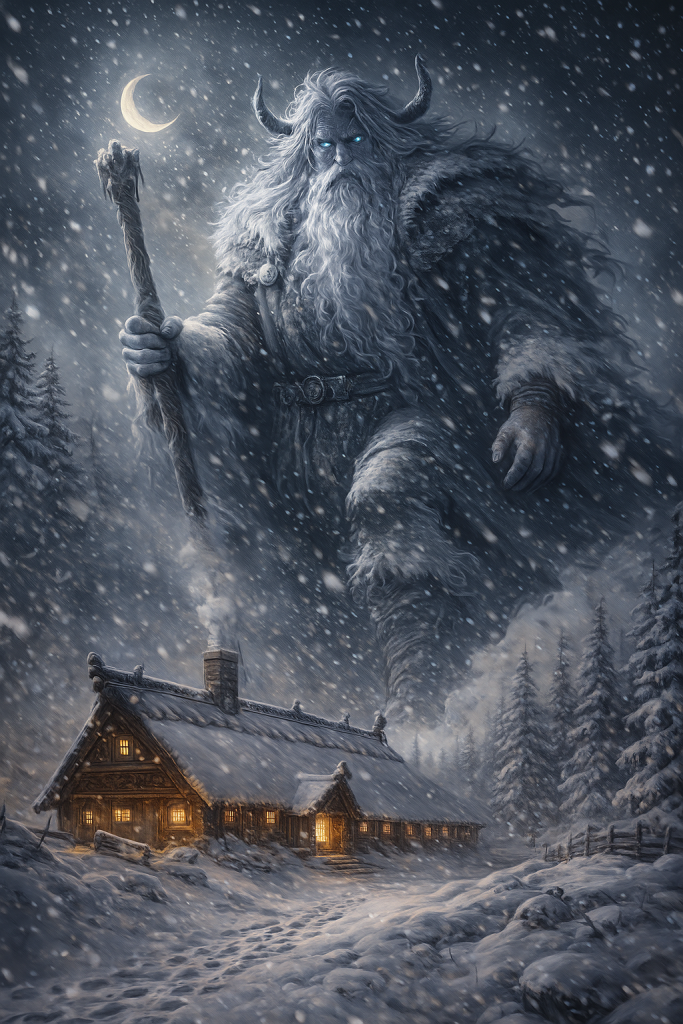
If winter had a personality, Þorri would be the bit where it stops being “festive” and starts being serious.
In the old Icelandic calendar, Þorri is the fourth winter month, landing roughly mid-January to mid-February — the deep stretch of winter where the ground stays hard, the nights feel endless, and you really find out what your planning (and your patience) is made of.
And yet… Þorri isn’t only about hardship. It’s also about the things that get people through hardship: food that keeps, stories that warm the bones, and that very Icelandic attitude of, “Right then. Let’s eat, laugh, and survive this properly.”
When does Þorri begin?
Þorri begins on Bóndadagur (“Husband’s Day” / “Farmer’s Day”), which falls on a Friday between 19–25 January (it shifts year to year).
The old Icelandic year was traditionally counted in two halves — summer and winter — and Þorri sits firmly in that winter half, after the earlier winter months and before Góa (which begins with Konudagur, “Women’s Day”).
Bóndadagur: welcoming Þorri in (and honouring the one who holds the line)
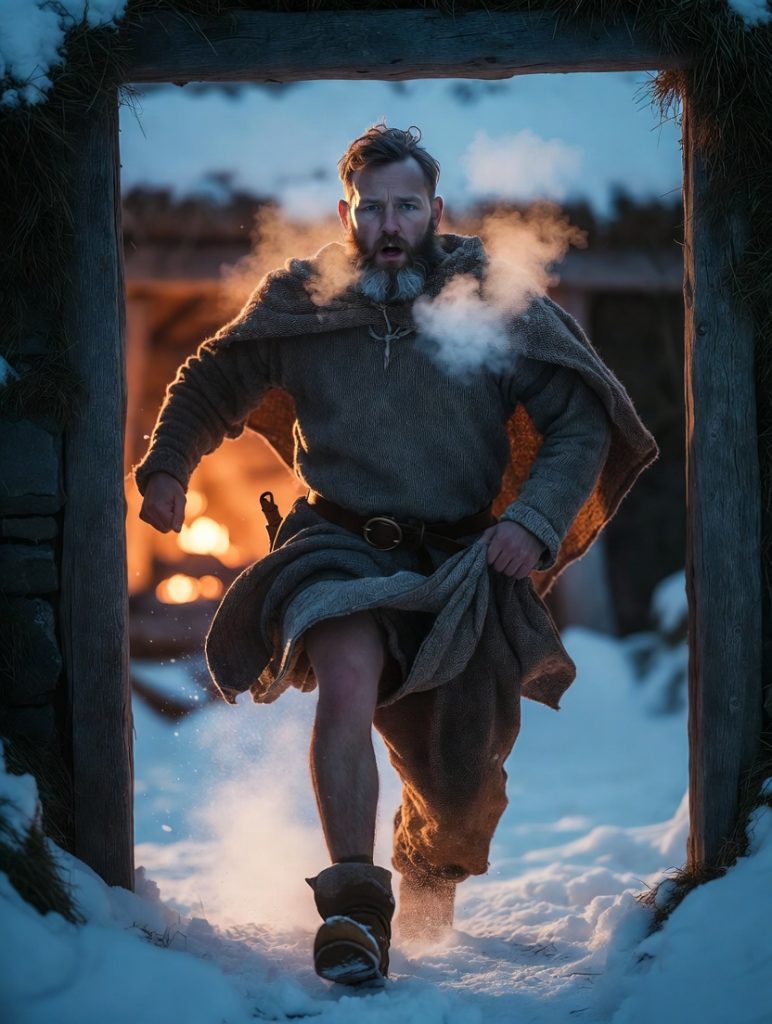
Traditionally, the bóndi (the farmer/householder — often translated as “husband”) would rise early and “welcome Þorri in”: a symbolic way of facing the hardest stretch of winter with courage and a bit of stubborn pride.
A quick (and honestly important) historical note: you’ll sometimes hear a very specific “one trouser-leg / hopping around the house” version of this custom. Modern Icelandic folklorists have pointed out that this particular detail seems to come from a single humorous 19th-century anecdote rather than being an old, well-attested practice — so I treat it the way I treat a lot of seasonal lore: as playful folklore, not firm ancient ritual.
In modern Iceland, Bóndadagur is often a warm, practical day: partners honour husbands/partners with a meal, a small gift, or simple appreciation for what they carry through the dark months.
If you want to keep the spirit of it without the gender-boxing, here’s the heart of Bóndadagur in one line:
Honour the one who keeps things running when it’s cold and hard — whether that’s your partner, your family, or you.
Þorrablót: the midwinter feast of Þorri
During Þorri, Icelanders celebrate Þorrablót, a midwinter feast/festival season that’s become a cultural “we’re still here” tradition — often secular today, but still carrying the older shape of blót as “a communal feast with offerings.”
It’s also worth being clear about the timeline. While the idea of midwinter feasting is ancient across the North, what most people recognise as modern Þorrablót is strongly tied to a 19th-century revival, with early modern celebrations often traced to Icelandic students in Copenhagen in 1873. In other words: it’s tradition and reinvention — which is kind of the Icelandic speciality.
So… is it on the first full moon?
In Iceland, Þorrablót isn’t one fixed moon-night for everyone — it’s commonly celebrated across Þorri, with different groups choosing different weekends.
But in modern pagan/heathen practice, many people like anchoring a Þorrablót-style rite to the first full moon that falls during Þorri, because it feels right: bright moon, hard winter, hearth-warmth, and the sense of the year beginning to turn.
What’s on the table: þorramatur and the no-waste winter mindset
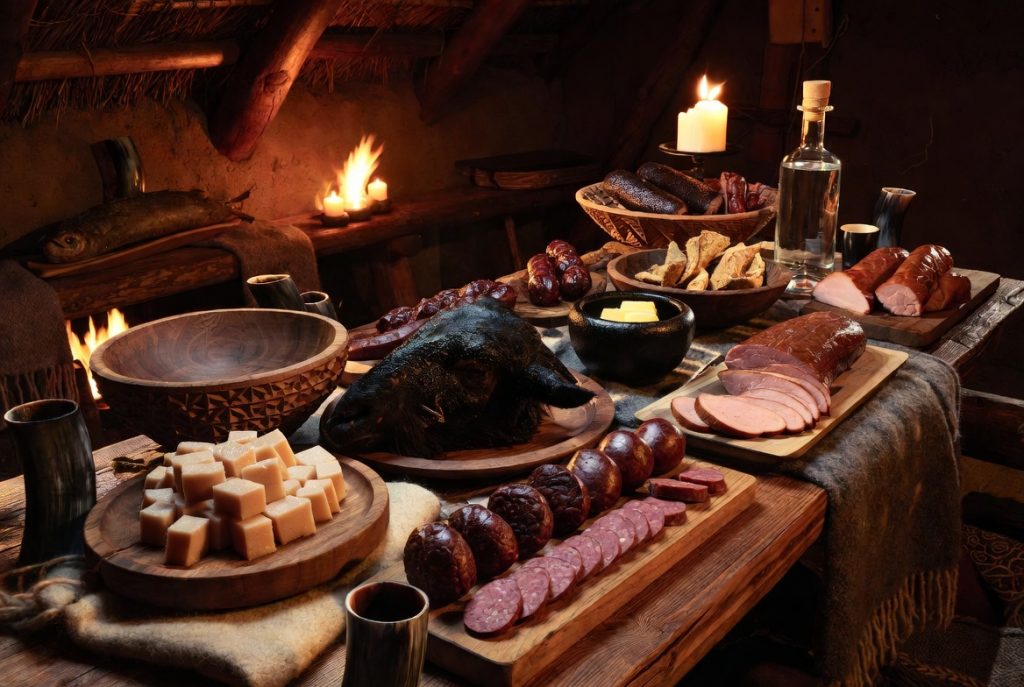
Þorri is famous for þorramatur — traditional preserved foods that basically say, “We are eating what we stored, because winter does not care about your preferences.” You’ll often see things like:
- fermented shark (hákarl)
- singed sheep’s head (svið)
- cured/pressed ram’s testicles (hrútspungar)
- blood pudding and liver sausage
- dried fish with butter
- smoked lamb (hangikjöt)
- and often Brennivín alongside it
Even if you never touch the more intense dishes, the deeper meaning is simple and honestly quite moving:
Nothing wasted. Skills mattered. Community mattered. And food was survival made tangible.
Þorri in the texts: what we actually know historically
Here’s the bit that makes Þorri extra interesting if you like tracing where things come from.
In medieval Icelandic writing, Þorri shows up not as a god in the Eddas, but in legendary origin material and genealogies — the kind of “mythic history” that explains peoples, places, and lineages.
One key source is a text preserved in the great manuscript compilation Flateyjarbók called Hversu Noregr byggðist (“How Norway was settled/built”). In that story, Þorri appears as a legendary king in the far north/east, connected to a family-line of “elemental” figures (snow, frost, wind). The text even gives an origin-story flavour for naming the month of Þorri and links it to a midwinter blót.
Related versions of this legendary origin material also show up alongside the opening material of Orkneyinga saga (sometimes treated as connected origin-text material). The vibe is the same: not “strict history,” but a medieval Icelandic way of explaining why things are called what they’re called — and where the people of the North “came from” in story-terms.
So when we talk about Þorri as a personification of winter — a frost-figure you can greet, bargain with, or blame — that idea has deep roots in Icelandic storytelling, even if it isn’t “Viking Age documentation” in the modern academic sense.
Þorri isn’t just weather — it’s endurance with teeth
In lore and folk tradition, Þorri becomes a figure you can name, negotiate with, and stubbornly meet eye-to-eye.
That’s why Þorri works so well spiritually: he’s the season that teaches:
- do what you can,
- store what you need,
- lean on your people,
- and keep going (even if you’re doing it with dramatic sighing and a hot drink).
A warmer, simpler Þorrablót night you can actually do
Here’s a more personal, low-fuss way to blend Bóndadagur + Þorri + your full-moon Þorrablót idea without turning it into a massive formal script.
Set the tone
Pick one evening in Þorri — Bóndadagur, the first full moon during Þorri, or any night you can genuinely show up for. Light one candle. Put out a small plate of winter food (anything preserved/hearty counts: rye bread, cheese, pickles, smoked fish, stew, roasted roots — whatever matches your life).
Welcome Þorri in
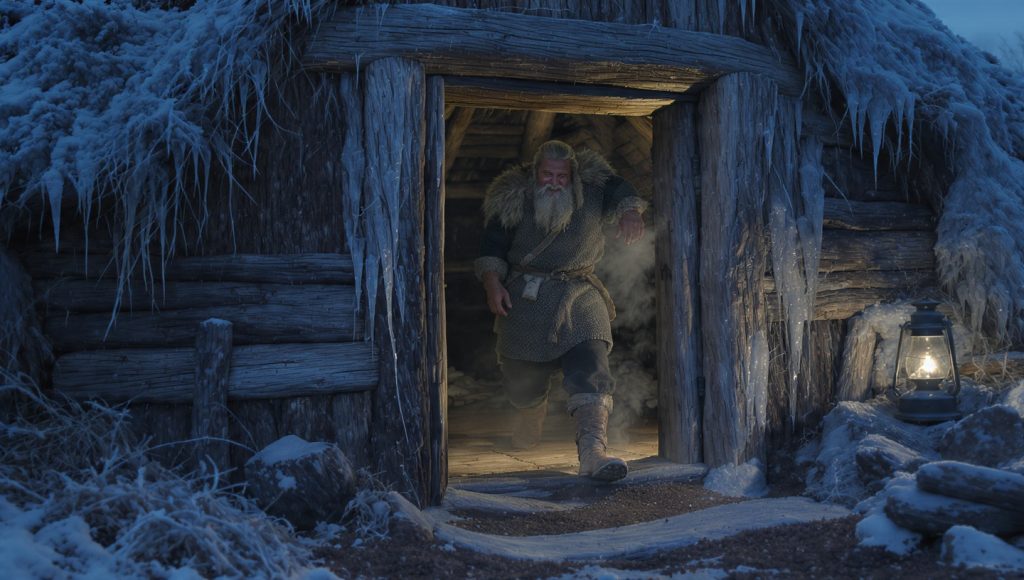
Stand at your door (or just by your window) and say something plain and real:
“Þorri is here. Winter is doing what winter does.
You’re welcome to pass through — but you’re not taking my spirit with you.”
(It’s okay to be a bit cheeky. Þorri can handle it.)
Honour the “bóndi”
Take a moment for appreciation — for your partner, your household, your ancestors, your community… and also for you, if you’re the one carrying the load. Say thank you out loud. It lands differently when it’s spoken.
Three toasts (simple sumbel-style)
One sip/raise of the cup for each:
- To the Powers you trust (Thor for protection, Freyr for the turning year, whoever’s in your practice)
- To ancestors and the tough ones (blood, spirit, chosen family — all of it)
- To the living (health, warmth, enough food, enough help, and a bit of laughter)
Eat, talk, tell stories
This is the heart of it. If you’re solo, read something that makes you feel connected (a saga passage, a poem, even your own journal entry about what you’ve endured). If you’re with others, trade stories — not just the polished ones. Þorri respects the honest version.
Close it gently
Blow out the candle and end with:
“Winter continues, but so do I.
And the light is already on its way back.”
References and further reading
- Hversu Noregr byggðist (“How Norway was settled/built”), preserved in Flateyjarbók (Old Norse text). (Heimskringla)
- Hversu Noregr byggdist (‘How Norway was inhabited’), Appendix A in The Orkneyingers Saga (Icelandic Sagas, and other historical documents relating to the settlements and descents of the Northmen on the British Isles, Volume III): Translator George W. Dasent (1894).
- Árni Björnsson (Vísindavefurinn, 17 Jan 2008): discussion of the “one trouser-leg / hopping” Bóndadagur story as a late, humorous anecdote rather than a deeply attested old custom. (Vísindavefurinn) https://www.visindavefur.is/svar.php?id=7012&utm#
- Icelandic Folktales and Fairy Tales . New edition. I-VI. Rev. 1954-1961. Edited by Árni Böðvarsson and Bjarni Vilhjálmsson. II, 550-551.
- Árni Björnsson. Þorrablót . Rvk. 2008, 18, 26-29.
- On the Old Icelandic calendar and Þorri’s start-date window (Friday between ~19–25 Jan), plus modern Þorrablót season framing. (https://yourfriendinreykjavik.com/the-old-icelandic-calendar-it-is-still-in-use/)
- On the 19th-century revival and the commonly cited 1873 Copenhagen student celebration as an early modern Þorrablót marker. Ólafur Davíðsson in Íslenskar gátur, skemmtanir, víkivakar og þulur (1887–1903, Copenhagen: Bókmenntafélagið): “Þorrablót was begun by Icelandic students in Copenhagen, or at least they did hold a Þorrablót in 1873. I’ve heard it said that Dr. Bjorn Olsen presented the best performance with his poem “the cup of Thor”. In 1880, the Archaeological Society of Reykjavik held a Þorrablót. […] We drank remembrance to the gods, of Odin allfather, of Thor, of Freyr and Njord for the year-blessing” Þorrablótin eiga upptök sín að rekja til íslenskra stúdenta í Kaupmannahöfn, eða að minnsta kosti héldu þeir þorrablót 1873. Ég hef heyrt sagt, að doktor Björn Ólsen hafi gengist mest fyrir því og eftir hann er veislukvæðið, Full Þórs. 1880 mun Fornleifafélagið í Reykjavík hafa haldið þorrablót […] Við samdrykkjuna á eftir var guðanna minnst, Óðins alföður, Þórs, Freys og Njarðar til ársældar […]