I have always loved wolves.
There is something about them that has spoken to me for as long as I can remember — their loyalty, intelligence, adaptability, protectiveness, and that deep sense of pack. They are fierce, yes, but they are not mindless. They know their own. They endure. They survive. They move with purpose. So it is probably no surprise that the Úlfhéðnar have always fascinated me.
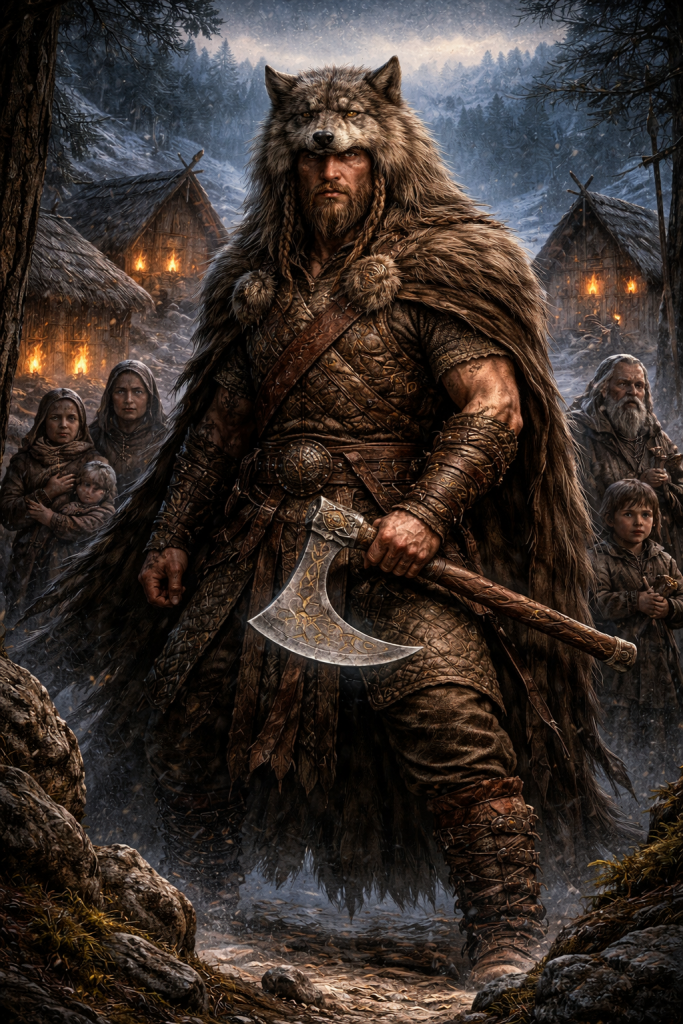
For me, the fascination has never just been about the dramatic image, though let’s be honest, a warrior in a wolf pelt is certainly memorable. It is about what they represented. Loyalty. Courage. Sacred fury. Protection. The willingness to stand between one’s people and danger and meet it with teeth bared if necessary. There is something deeply powerful in that.
That is why I have so much respect for the Úlfhéðnar. They were not simply wild men from exciting old tales. They were remembered as elite warriors, tied to Odin, feared in battle, and honoured for what they were willing to become in service to king, clan, and oath. They stood in that liminal place between man and beast, devotion and death, discipline and frenzy. That alone is enough to make them unforgettable.
And, admittedly, if you are going to make your mark in old Norse tradition, “wolf-coated warrior of Odin” is a fairly dramatic way to go about it.
Who Were the Úlfhéðnar?
The word Úlfhéðinn is usually understood to mean something like “wolf-coat” or “wolf-skin wearer,” with Úlfhéðnar as the plural. These were warriors associated with wolf pelts, wolf symbolism, and a fierce martial identity that connected them closely to Odin. They are often grouped with berserkers, and sometimes the old sources blur the line between the two, but many modern interpretations see the Úlfhéðnar as carrying a more distinctly wolf-like character.
And I can understand why.
The wolf is not just a symbol of aggression. It is a symbol of instinct, endurance, strategy, loyalty, and pack-bond. So when I think of the Úlfhéðnar, I do not picture random chaos with an axe and poor decision-making. I picture elite warriors who took on the qualities of the wolf in both spirit and role. If the berserker is often imagined as a crashing storm of brute force, the Úlfhéðinn feels more like the hunter — focused, relentless, and bound to something larger than himself.
Whether the old sources always spell that out as neatly as modern readers would like is another matter. Medieval writers, rather annoyingly, did not leave us tidy footnotes explaining every distinction for future pagan nerds. But symbolically, it fits beautifully.
More Than Rage and Noise
One thing I think is worth saying straight away is that the Úlfhéðnar deserve better than being reduced to the usual shallow image of “mad Viking screaming and hitting things.”
Yes, battle-fury is part of the picture. Yes, they are linked to trance-like states, terrifying ferocity, and a kind of uncanny violence in combat. But that is not the whole story. The traditions remember them as elite men, often associated with kings and with Odin himself. That puts them in a very different category from the lazy modern stereotype.
These were not just warriors who happened to be savage. They were men whose ferocity had meaning.
That matters to me because there is a difference between chaos and purpose. The Úlfhéðnar may have inspired fear, but they were not merely feared because they were violent. They were feared because they seemed transformed by the role they carried. Their fury was not simply temper. It was something ritual, spiritual, and deeply unsettling. It placed them on the edge of the human world without quite stepping beyond it.
That edge is where so many powerful Norse figures seem to live, really — in that space where things are never entirely tidy, safe, or easy to explain.
Odin’s Men
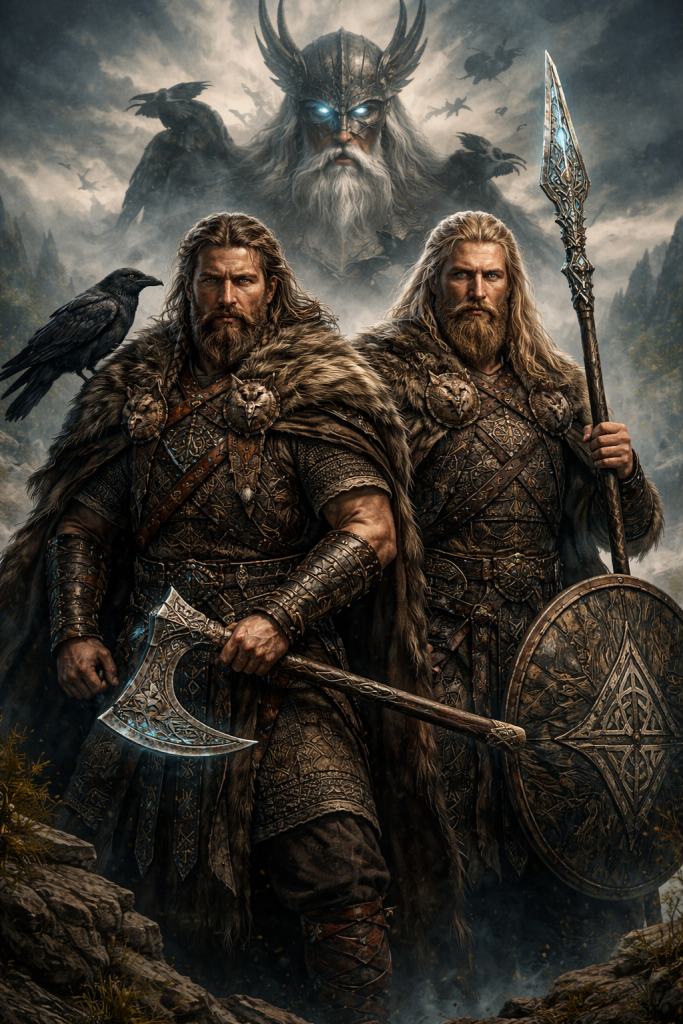
You cannot really speak of the Úlfhéðnar without speaking of Odin.
That connection is central. Odin is a god of war, kingship, cunning, frenzy, sacrifice, death, wisdom, initiation, and ecstatic states. He is not a gentle, easy deity, and I mean that with the greatest respect. There is sharpness in him. Mystery in him. Hunger in him. He is a god who strips away illusion, and the men tied to him were never going to be mild.
So when the Úlfhéðnar are remembered as Odin’s warriors, that tells us something important. It suggests they were seen as more than merely skilled fighters. They were men aligned with a god whose power touched not only battle, but also altered consciousness, fate, and the strange sacredness of extremity.
In later tradition, Odin’s warriors are described as going into battle without ordinary fear, biting their shields, roaring like beasts, and seeming almost untouched by pain. Whether every detail was meant literally, poetically, or somewhere in between, the meaning comes through clearly enough: these were men believed to have crossed into a state beyond ordinary fighting.
And I think that is part of why they still stir such respect. The Úlfhéðnar were not simply dangerous because they fought well. They were dangerous because they carried the sense that something greater and more terrible had entered the battle with them.
The Wolf-Skin and the Warrior
The wolf pelt mattered.
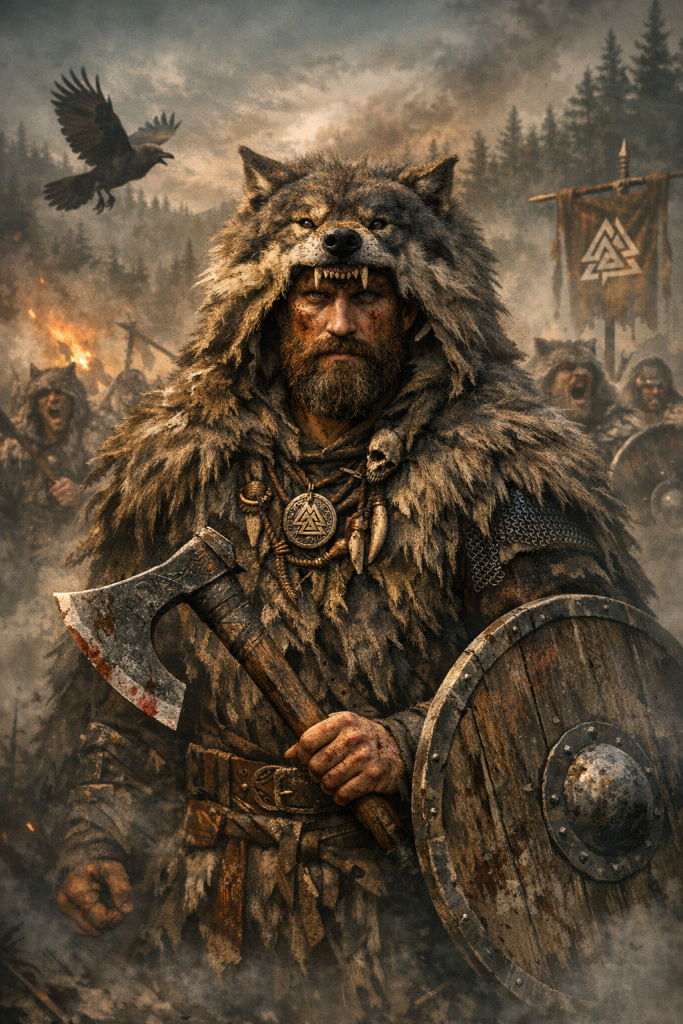
It was not just for show, and I do not think it should be treated as a costume in the dismissive modern sense. The wearing of the wolf skin seems to have marked identity, status, and transformation. It signalled that the warrior was stepping into the nature of the wolf, taking on its attributes, and perhaps crossing into a ritual role meant to reshape the self.
That idea is not at all out of place in Norse tradition. The old world these stories come from is one in which spirit, identity, shape, and state of being are not always fixed as neatly as we modern people prefer. In legendary material such as the Völsunga Saga, wolf skins are directly tied to transformation. Men take them on and become something other.
Now, do I think that means every historical Úlfhéðinn was literally thought to become a wolf? Not necessarily. But I do think it tells us that the bond between warrior and wolf ran deep — symbolically, spiritually, and culturally.
And really, that makes perfect sense. To wear the wolf was to declare something powerful. I am no longer simply a man standing on my own. I stand in the spirit of the pack, in the skin of the hunter, in the shadow of something ancient, feared, and fiercely loyal to its own.
That is not a small thing.
Battle Fury and Sacred Trance
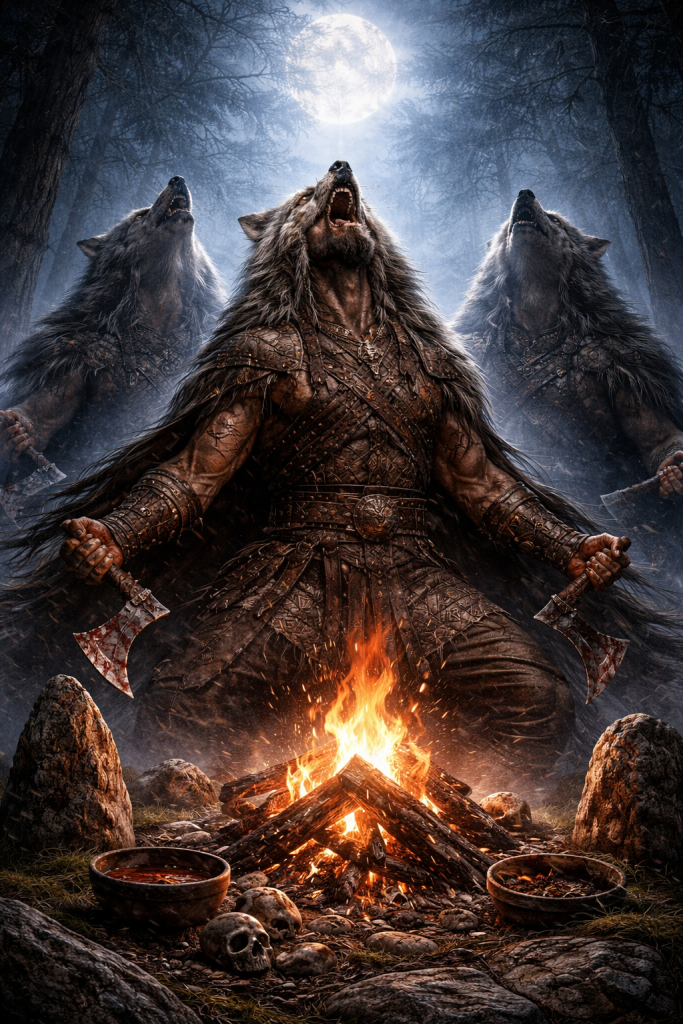
The battle-fury associated with berserkers and wolf-warriors has fascinated people for generations, and I understand why. The descriptions are vivid: shield-biting, roaring, apparent insensitivity to pain, bursts of unnatural strength, and a terrifying disregard for injury. It grips the imagination immediately.
But I think it is important not to cheapen it.
This was not just theatrical rage or some sort of dramatic masculine performance for the sake of it. It was remembered as a threshold-state, an altered condition in which the warrior stepped beyond ordinary fear and ordinary human limits. Whether that was ritual trance, psychological conditioning, religious ecstasy, collective adrenaline, literary exaggeration, or some mixture of all of those, the old tradition presents it as something extraordinary.
Of course, modern debates often drift toward herbs and mushrooms because apparently, humanity cannot resist asking, “Yes, but was there a mysterious plant involved?” Henbane is often mentioned, and fly agaric turns up in older theories, too. There are reasons those ideas keep resurfacing, but the evidence is far from conclusive. Personally, I think people sometimes get so excited about the possibility of battle mushrooms that they miss the much more obvious point: ritual, belief, group psychology, chanting, training, adrenaline, and expectation can do a great deal all by themselves without anyone having to sprint into battle off their face on questionable fungi.
Sometimes the old mysteries are still mysterious, which I realise is deeply inconvenient for people who like everything labelled and filed away neatly.
Were They Different from Berserkers?
This is one of those places where history and interpretation sit beside each other, occasionally giving each other side-eye.
A lot of modern writing presents a distinction between berserkers and Úlfhéðnar: bear-warriors as brute force, wolf-warriors as disciplined, cunning, pack-oriented fighters. It is an appealing idea, and in symbolic terms, I think it fits very well. Bears and wolves do not carry the same energy, and neither do the warriors linked with them.
But the medieval sources do not always draw that line as clearly as modern readers would like. Sometimes the terms overlap. Sometimes they appear together. Sometimes, later writers seem far more interested in presenting them as fearsome elite warriors than in giving us a neatly organised tactical handbook.
So I think the fairest thing to say is this: the “pack-oriented wolf-warrior” idea is meaningful and compelling, but it remains an interpretation. What the sources do support is that the Úlfhéðnar were remembered as exceptional, dangerous, prestigious warriors with a wolf-linked identity and strong Odinic associations.
And honestly, that is powerful enough without trying to force every piece into a perfectly labelled little box.
Their Importance in the Clan
For me, this is where the heart of it really lies.
The Úlfhéðnar matter not only because they were fierce, but because of what that fierceness was for. In a Norse world, strength was not an abstract performance. It served the survival of the people. A clan, a household, a king’s following — these endured because someone stood at the edge between safety and threat. Someone took on the dangerous role. Someone faced what others feared.
That is where the Úlfhéðnar carry such importance.
If they served as elite warriors, royal guards, shock troops, or chosen fighters within a war-band, then their place was not ornamental. They were part of the shield around the community. They were the men sent where danger was thickest. They were trusted to stand fast when things could easily fall apart.
And that, to me, is worthy of real honour.
The wolf symbolism deepens this even more. Wolves are not only hunters. They are social animals built around loyalty, structure, protectiveness, and the strength of the pack. So when I think of the Úlfhéðnar, I do not just think of aggression or violence. I think of devotion. I think of men whose strength was tied to service, whose fearsome reputation existed because they stood for something beyond themselves.
That is what gives them dignity.
That is what makes them matter.
History, Legend, and the Distance Between Them
As with so much in Norse history, the Úlfhéðnar come to us through a blend of early poetry, later saga material, and archaeological interpretation. That means we have to hold respect and caution together.
Some references are early and compelling, especially in skaldic poetry connected with Harald Fairhair. Others come through saga material written down centuries later in a Christian context. That does not make them worthless — not at all — but it does mean we should not treat every dramatic detail as if someone had been taking careful battlefield notes for the benefit of future historians and very curious pagans.
The archaeology matters here because it supports the depth of the tradition. The Torslunda plates, for example, are often interpreted as showing a wolf-warrior beside an Odinic figure, suggesting that this warrior-animal symbolism was already meaningful long before later Icelandic texts preserved it in writing.
So while the exact historical structure of the Úlfhéðnar is still debated, the broader pattern is hard to dismiss. The image of the wolf-warrior is old, serious, and woven into a much deeper northern martial tradition.
Which, if nothing else, is a useful reminder that not everything powerful begins in the late saga period just because that is where many people first meet it.
From Sacred Warrior to Monstrous Figure
One of the most striking shifts over time is the change in how figures like these were remembered.
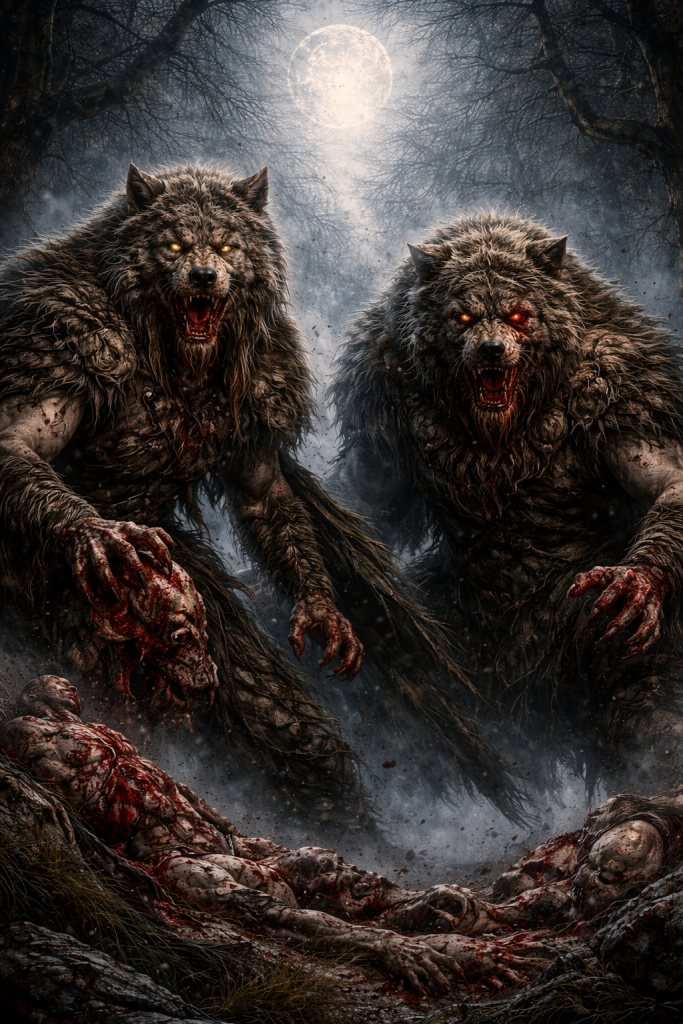
In earlier traditions, the wolf-warrior could be honoured, elite, and sacred in a dangerous sort of way. In later Christianised contexts, those same qualities could be recast as monstrous, lawless, or demonic. The man once marked by Odin becomes the frightening outsider. Sacred battle-fury becomes madness. The animal-linked warrior becomes the cursed shape-shifter.
You can see how this helped lay the groundwork for later werewolf traditions.
The path is not hard to trace: wolf skins, altered states, transformation, violent loss of ordinary humanity, fear of the boundary between man and beast. Over time, what was once a feared but honoured warrior role could be reworked into folklore about the werewolf as a monster.
That shift tells us a great deal about changing values, changing faiths, and the way older sacred things are often recast by those who no longer understand them. And if I am honest, I think there is something a bit sad in that too.
Why the Úlfhéðnar Still Matter
The Úlfhéðnar still matter because they carry something powerful that has never really gone quiet.
They stand at the crossroads of history, devotion, mythology, and the old understanding that sometimes those who guard the people must themselves become fearsome. They remind us that the Norse world did not separate the spiritual from the martial as neatly as modern people often do. Battle could be sacred. Transformation could be ritualised. Animal symbolism could be lived, not just admired from a comfortable distance.
And perhaps that is why they continue to stir such deep respect.
For me, the Úlfhéðnar are not compelling simply because they were dramatic, though they certainly were that. They are important because they represent loyalty, ferocity in service to others, and the willingness to walk into danger wearing the skin of something feared.
The wolf is not tame. It is not decorative. It does not exist to make anyone comfortable. But it knows its own, and it protects them with everything it has.
That is why the Úlfhéðnar deserve reverence.
Not as caricatures. Not as shallow fantasy. Not as edgy nonsense for people who think shouting is the same thing as strength. But as they are remembered at their best: elite wolf-coated warriors of Odin, fierce in battle, bound by loyalty, and vital to the protection of king, clan, and oath.
And perhaps that is part of why they still resonate so strongly now. Because beneath all the old poetry, all the saga memory, all the awe and fear, there is something deeply human there too: the one who becomes fearsome so that others may be safe.
That is not something I can help but respect.
Historical references and further reading
Primary and early medieval sources used for this article:
- Haraldskvæði / Hrafnsmál — one of the earliest references to wolf-skins in a martial setting, in connection with Harald Fairhair. The Skaldic Poetry of the Scandinavian Middle Ages project preserves the verse describing berserks bellowing and wolf-skins howling with iron spears. (skaldic.org)
- Ynglinga Saga in Heimskringla — the famous description of Odin’s men going into battle “mad as dogs or wolves,” biting shields, and being so fierce that “neither fire nor iron” harmed them. (Internet Sacred Text Archive)
- Völsunga Saga — important for the wolf-skin and transformation motifs that help show how warrior-animal symbolism could move toward shape-shifting legend. This is especially relevant when looking at later werewolf development. Supported in modern scholarship discussing Old Norse animal-men traditions. (ResearchGate)
Archaeology and historical interpretation:
- Torslunda plates — widely interpreted as depicting a wolf-warrior alongside an Odinic or Odin-like figure, and often linked to weapon-dance or warrior ritual imagery. (ResearchGate)
- Gutenstein scabbard — often cited as evidence of a wider Germanic wolf-warrior tradition beyond later Icelandic texts. (ResearchGate)
- The Cult of Óðinn in the Early Scandinavian Warrior Aristocracy by Joshua Rood — useful for the wider connection between Odin, kingship, and elite warrior identity. (Cambridge University Press & Assessment)
- A seeress from Fyrkat? from the National Museum of Denmark — relevant to the henbane discussion, though it does not prove wolf-warriors used it in battle; it simply shows that henbane appears in a notable Viking Age ritual context. (National Museum of Denmark)
A few careful notes for balance:
- The idea that Úlfhéðnar always fought as disciplined “packs” while berserkers fought only as solitary chaotic fighters is a modern scholarly interpretation, not something the medieval sources spell out neatly. (Academia)
- Claims about mushrooms, herbs, or other intoxicants as the cause of battle-fury remain debated and unproven. The surviving evidence is suggestive in places, but not definitive. (National Museum of Denmark)
- The image of wolf-warriors almost certainly has deep roots, but the exact historical organisation of the Úlfhéðnar as a distinct formal institution is still debated. (Cambridge University Press & Assessment)