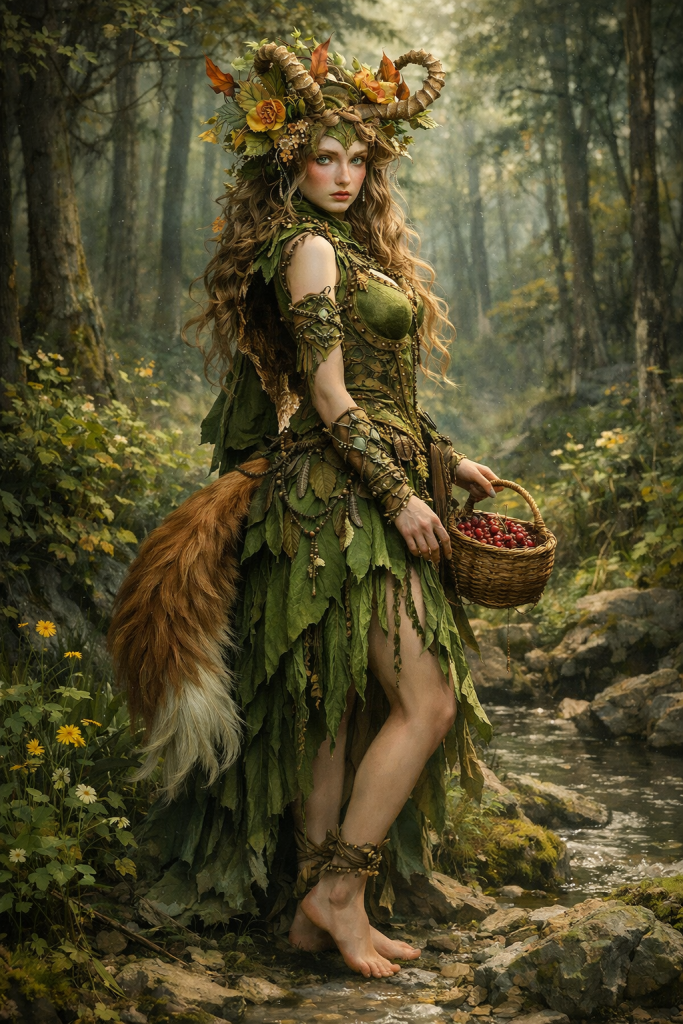
The Huldra (Norwegian hulder / huldra) is one of the most famous and unsettling beings in Scandinavian folklore: beautiful, dangerous, generous, vindictive, alluring, and deeply tied to the wilderness.
She is not a “goddess” in the same sense as Freyja or Frigg in the surviving Old Norse mythological texts. She belongs instead to the world of Nordic folk belief — the landscape of local legends, cautionary tales, and lived tradition told in farming, forest, and mountain communities. In that world, she appears as a forest-being, a seducer, a protector of animals, a tester of manners, and sometimes a very efficient route into disaster if you behave badly — or simply wander off like a fool.
In Norway, she is usually called Huldra as an individual figure and is linked to the broader huldrefolk or underjordiske, the hidden or underground folk. In Sweden, closely related traditions are often grouped under skogsrå, skogsfru, or similar names — forest wardens or keeper-spirits of place.
What Her Name Means
Her name is tied to the idea of something hidden, concealed, or secret. Norwegian reference material connects hulder to Old Norse and related roots linked with hiding or concealing. That suits her perfectly: she is a being of the edges, visible when she chooses, gone when she chooses, and never fully trustworthy just because she happens to be lovely.
You can almost hear the warning built into the name: what you see in the forest is not always what it seems.
What Kind of Being is She?
This is where folklore gets fun, because the Huldra is not always the same thing everywhere. Depending on the region and the storyteller, she may appear as a solitary forest woman, one of a hidden people, a rå or keeper-spirit of the forest in Swedish tradition, or a being loosely connected in later retellings with trolls, land-spirits, or other local supernatural categories.
The important thing is not to force one neat label onto her. Folklore is gloriously untidy. People were trying to explain experiences, warn others, and make sense of the woods — not build a perfectly organised supernatural filing cabinet for future bloggers.
How to Recognise a Huldra
The Huldra’s appearance is one of the best-known Scandinavian folklore motifs: beautiful from the front, unmistakably not human from the back.
She is usually described as extraordinarily beautiful, with long hair, an enchanting voice, and striking clothing, but marked by one or more non-human traits. The two most repeated signs are these:
The tail
In Norwegian tradition, the Huldra is especially known for a cow’s tail. Swedish skogsrå variants may also include a tail, though descriptions vary by region. Some later retellings mention fox-like traits, but the cow-tail image is the classic Norwegian version.
The hollow or tree-like back
Another common feature is a hollow back, sometimes described like rotten wood, bark, or a hollowed tree trunk. Swedish traditions also preserve versions where the back is hollow or otherwise visibly non-human, and some include odd or animal-like feet.
That contrast is part of what makes her so memorable: she embodies the beauty of the forest and the warning hidden inside it.
What She Is Known For
The Huldra is not just a spooky woman standing dramatically between pine trees. She is active, relational, and bound up with the rhythms of premodern life.
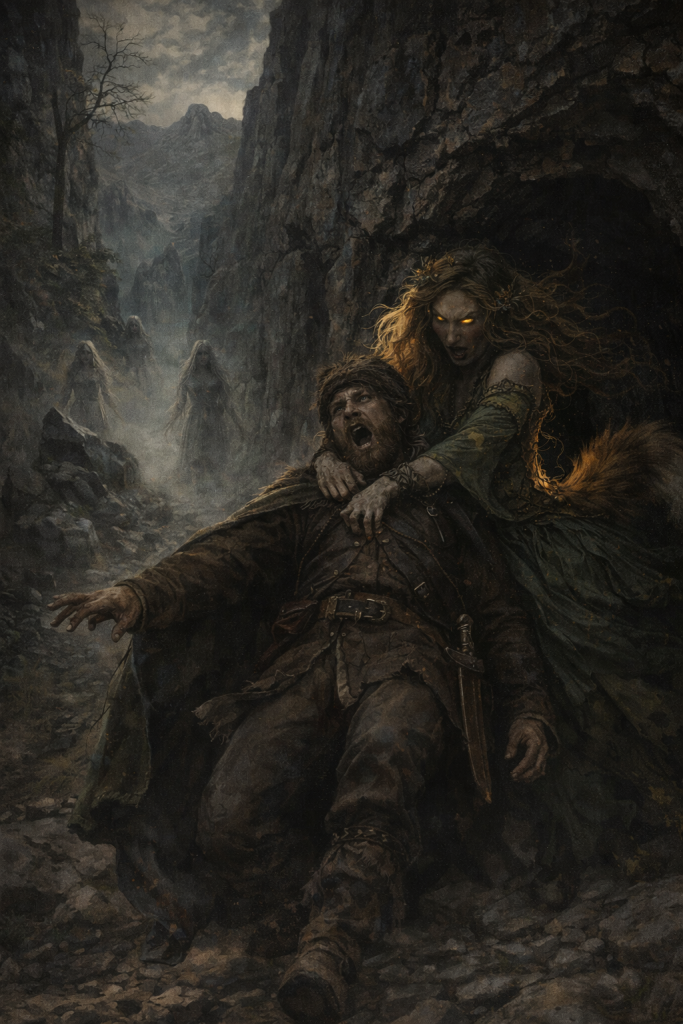
She lures people. One of the best-known motifs is seduction or enticement: she draws in lone men — hunters, herders, woodcutters, charcoal burners, travellers — through beauty, song, conversation, or kindness. Being led astray in the forest is a major theme in both Norwegian and Swedish traditions.
She can also bergta people — spirit them away into the hill, mountain, or hidden realm. In Norwegian folk belief, those who come too close may be taken and trapped. Those who return are often changed, sick, confused, or somehow no longer fully themselves.
But she is not purely malevolent. In some stories, she rewards respectful behaviour with hunting luck, help with animals, or useful knowledge. In Swedish skogsrå lore especially, a man favoured by the forest spirit may prosper, while one who insults or betrays her may be punished.
So yes, she can be generous. But she is not “safe” in the modern woodland-fairy sense. Think wild reciprocity, not Disney with antlers.
Marriage Stories and Domestication Themes
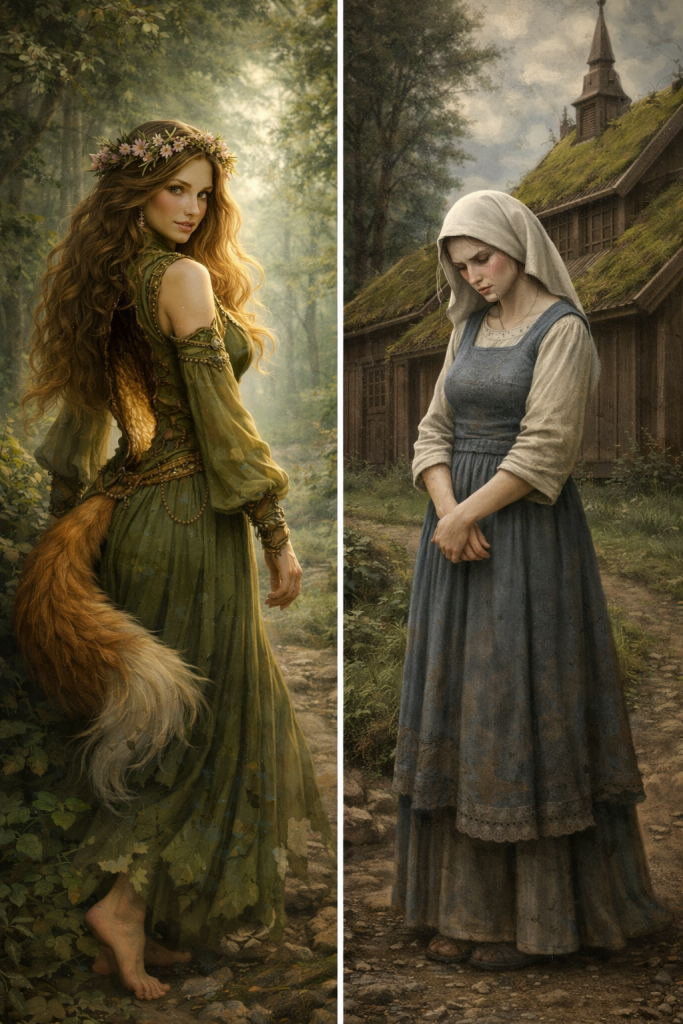
Many stories tell of a Huldra marrying a human man, or seeking marriage, and these tales often carry a strong tension between wilderness and domestication, desire and control, folk belief and Christianity.
A recurring motif is that if she is brought under Christian ritual authority — through blessing, baptism, or marriage, depending on the tale — she may lose her tail and sometimes her supernatural nature. In some versions, she becomes fully human. In other,s she loses beauty, power, or joy. The details vary, but the symbolism is striking.
This is one of the richest parts of Huldra lore: the forest made wife, the wild made domestic, the hidden made visible and changed by that visibility.
These stories can be read as Christianising folklore, as social commentary on women and marriage, as a wilderness-versus-domesticity allegory, or all three at once.
Christian Legends About Her Origin
A well-known Christian-influenced explanation says the hidden people came from children hidden from God — often by Eve in Nordic variants, though details differ by region. Because they were hidden, they were condemned to remain hidden from humankind. Norwegian reference works note this as a common origin legend for the underjordiske and huldrefolk.
That does not mean the Huldra began as a Christian invention. It shows instead how older folk traditions were often reinterpreted through Christian storytelling frameworks. That kind of layering is extremely common in Scandinavian folklore.
The Norway and Sweden Overlap
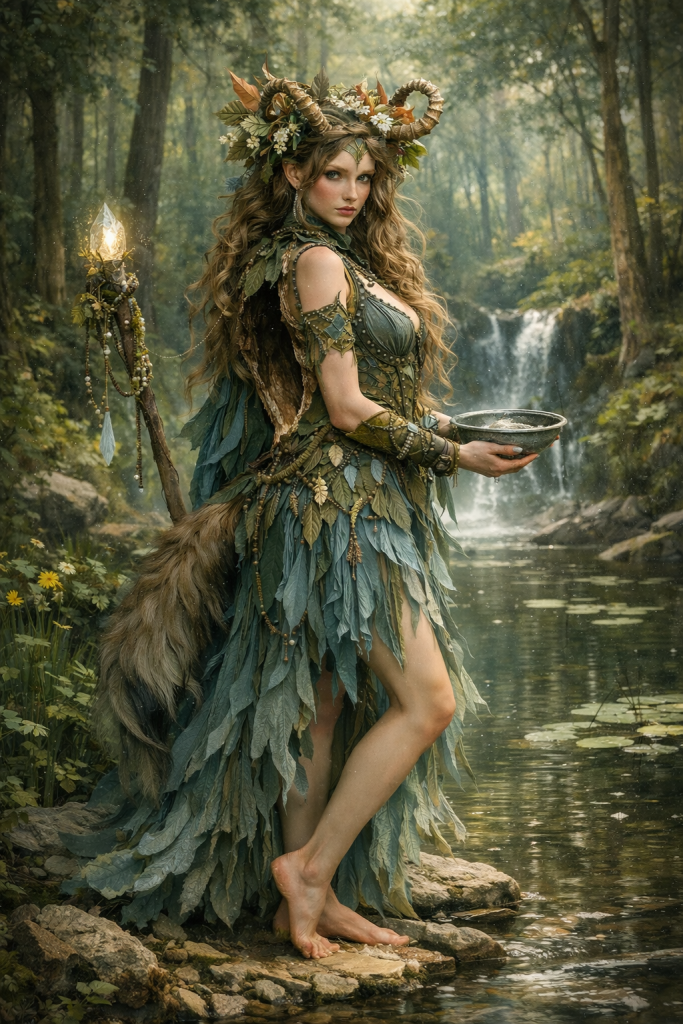
It helps to compare Norwegian Huldra traditions with Swedish skogsrå traditions, because they overlap strongly without being identical.
In Norway, the Huldra is often connected to the underjordiske, bergtaking motifs, cattle, farms, forest and mountain edges, and the classic cow-tail and hollow-back combination. She may also be understood as part of a broader hidden community rather than always as a lone forest temptress.
In Sweden, the skogsrå is more often framed as a forest keeper or owner-spirit. She is associated with leading people astray, erotic danger, hunting luck, and rewarding respect while punishing insult or betrayal. Descriptions may still include the hollow back or tail, but regional variation is broad.
Same eerie forest energy, slightly different local paperwork.
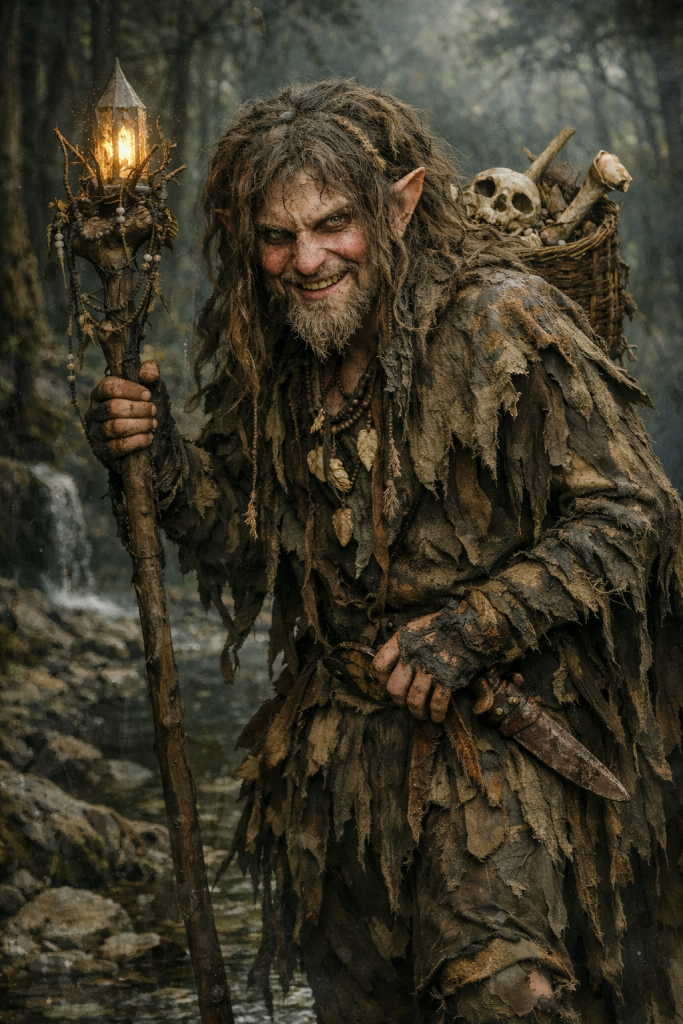
The Male Counterpart: Huldrekall
Yes, there is a male counterpart in Norwegian tradition, usually called the huldrekall. He appears less often in modern retellings and is usually portrayed as more grotesque or unsettling than alluring. Folklore, as ever, was not especially committed to equal-opportunity glamour.
Still, he’s important because he reminds us that the Huldra belongs to a broader hidden-folk landscape rather than existing as an isolated figure.
Changelings and Huldrebarn
In some traditions, the hidden folk are connected to changeling lore — the belief that supernatural beings could take a human child and leave another being in its place. This motif appears widely across European folklore and also turns up in Scandinavian traditions involving hidden folk.
Protection, Etiquette, and Surviving an Encounter
This is where folklore gets wonderfully practical. Stories about the Huldra do not only describe danger; they also preserve ways to avoid harm or earn goodwill, which tells us a great deal about traditional forest etiquette.
Politeness matters. If someone notices her tail or other hidden feature, they should not mock her. Instead, they are often expected to speak tactfully, perhaps implying a clothing issue rather than blurting out, “Lovely hair, terrifying spine arrangement.” Respect may bring help or luck. Insult may bring punishment.
Iron and steel often appear in Scandinavian folklore as protective or controlling substances against supernatural beings. Claims about throwing iron over her head to force marriage appear in some retellings, but these vary and should be treated as motifs, not universal rules.
In Swedish skogsrå lore, herbal counter-charms also appear. Some recorded tales mention plants such as tibast (daphne) and vändelrot (valerian) as protections against seduction or enchantment. It is a lovely example of folk medicine crossing paths with spirit-lore.
Another widespread protection motif is turning clothing inside out to break enchantment or confusion when one has been led astray. That appears in Nordic folklore more broadly and in skogsrå traditions specifically.
Music, Calling, and Huldreslått
The Huldra is strongly linked in folklore and later art to singing, enchanting music, and uncanny sound in the wilderness. Norwegian traditions preserve legends of huldreslåtter — Huldra tunes — especially in Hardanger fiddle lore, where certain melodies are said to have been learned from or overheard from supernatural beings in the mountains or woods.
This fits a wider Nordic theme in which music is not merely entertainment but a gift from the otherworld, or at least a suspiciously good tune with questionable origins.
As a modern example, the Norwegian band Gåte released a song titled “Huldra” in 2019, which has helped keep the figure visible in contemporary folk and folk-rock circles. That is modern art, not historical proof, but it shows how alive the motif still is.
Is the Huldra a goddess?
In modern pagan and Heathen-adjacent spaces, people sometimes use “goddess” as a shorthand for powerful female otherworld beings. That makes sense in a devotional or symbolic context, but historically the Huldra is better described as a folklore being, forest spirit, or hidden-folk figure, depending on the region.
That does not make her less important. If anything, it makes her more interesting, because she belongs to lived landscape tradition rather than only literary myth.
Modern ritual and devotional use
Any modern practice connected to the Huldra is best understood as folklore-inspired rather than historically reconstructed. That distinction is important because while the Huldra belongs to real Scandinavian folk tradition, modern devotional frameworks are still modern interpretations.
A respectful approach can centre on the values that already run through the folklore: respect for the land, quiet conduct in the woods, leaving no litter, speaking politely, and practising reciprocity with nature. Folklore does preserve examples of food or portions being left in places associated with hidden folk or local spirits, though not always in a specifically Huldra-only context. In a modern setting, that is often better understood as an act of respect and a relationship with place rather than a fixed ritual formula.
Using a small iron object symbolically for grounding, protection, or boundary-making is also a sensible modern adaptation, since iron has a long-standing protective role in Nordic folklore.
Runes and colours for representing the Huldra
Modern symbolic systems often pair the Huldra with runes and colours that reflect her hidden, liminal, and woodland nature. These are contemporary interpretive correspondences rather than historical ones, but they can still work well in modern spiritual or artistic practice.
Perthro can represent hiddenness, mystery, and the unseen.
Berkana suits woodland, feminine, and threshold themes.
Laguz fits intuition, lure, and altered states.
Uruz reflects wild force and untamed strength.
The same applies to colour symbolism. Forest green, blue, earth browns and greys, and white all evoke the Huldra beautifully: woodland guardianship, bark, mist, linen, liminality, and that unmistakable sense that the forest is lovely right up until it very much isn’t.
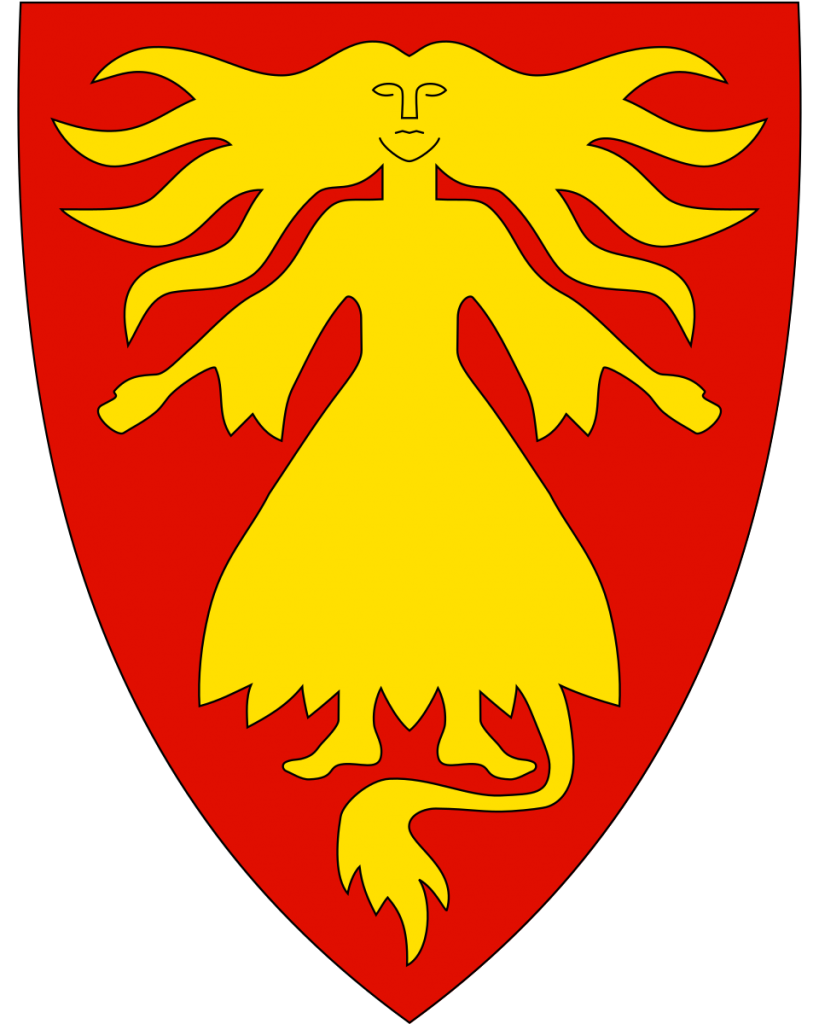
A lovely heritage detail: Lardal’s coat of arms
The former Norwegian municipality of Lardal used a Huldra on its coat of arms, approved in 1992, reflecting local folklore and the area’s forest character. It is a great example of how folklore beings survive not only in stories, but in civic identity and regional symbolism.
The Huldra’s Importance in Modern Paganism
The Huldra survives because she is more than a monster story.
She is a warning about the forest, a test of manners, a symbol of seduction and danger, a memory of older landscape spirits, and a figure reshaped by Christian storytelling. In modern readings, she can also stand as a powerful image of wildness that refuses to be fully domesticated.
She reminds us that the old Scandinavian landscape was never imagined as empty. It was inhabited by animals, ancestors, weather, luck, and beings who noticed how humans behaved when no one else was watching.
Which, honestly, is still a pretty useful spiritual lesson.
Primary Collections (Source Material)
- Asbjørnsen, P.C. & Moe, J. (1841/2019). The Complete and Original Norwegian Folktales of Asbjørnsen and Moe (Trans. Tiina Nunnally). This is the definitive English translation of the collection that first popularised Huldra stories internationally.
- Hofberg, H. (1882). Svenska folksägner (Swedish Folk Legends). A key historical Swedish text featuring the skogsrå (the Swedish Huldra), notable for its illustrations by Per Daniel Holm.
- Árnason, J. (1862/1979). Icelandic Folktales and Legends (Trans. Jacqueline Simpson). Provides the crucial “Hidden Children of Eve” origin story for the Huldufólk (Hidden People).
Scholarly & Analytical Works
- Kvideland, R. & Sehmsdorf, H.K. (1988). Scandinavian Folk Belief and Legend. This academic anthology includes a dedicated section on Huldra legends and their specific regional variations.
- Kuusela, T. (2020). “Spirited Away by the Female Forest Spirit in Swedish Folk Belief.” Folklore 131(2). A recent peer-reviewed article analyzing the Huldra/Skogsrå as a “femme fatale” and a symbol of the untamed wilderness.
- Mitchell, S.A. (2025). Old Norse Folklore: Magic, Witchcraft, and Charms in Medieval Scandinavia. Explores the survival and reconstruction of pre-Christian beliefs in late medieval and early modern Nordic society.
- Granberg, G. (1935). Skogsrået i yngre nordisk folktradition. A foundational scholarly study in Swedish focusing on the evolution of forest spirit traditions.
Modern Overviews
- Lindow, J. (2001). Norse Mythology: A Guide to the Gods, Heroes, Rituals, and Beliefs. An essential academic reference for understanding the transition from Old Norse myth to later folklore.
- O’Donoghue, H. (2008). From Asgard to Valhalla: The Remarkable History of the Norse Myths. Tracks how these myths have been repurposed and perceived from the Viking age to the modern era.