One thing that keeps coming up in Norse Pagan spaces is the claim that Snorri Sturluson was just a Christian monk who rewrote or distorted the old beliefs beyond recognition. It gets thrown around so casually that people start repeating it as though it is a settled fact.
But it is not.
Snorri was not a monk. He was an Icelandic chieftain, politician, poet, storyteller, and twice lawspeaker of the Althing. He lived in the world of land, law, alliances, ambition, family tensions, public standing, and political danger. He was not tucked away in a monastery, cut off from the harder edges of life. He was right in the middle of them.
That does not mean we need to turn him into a flawless pagan hero either. He lived in a Christian Iceland. He moved in elite Christian circles. He wrote in a world shaped by that reality. That part is true. But it is only part of the truth.
The other part is that Snorri was deeply rooted in Icelandic ancestral culture. He was raised in a world where genealogy, honour, poetry, memory, reputation, and the old stories still mattered. He stood at the meeting point of old and new, and that is exactly what makes him so important. He was not a man outside the tradition looking in. He was a man formed within a world that still remembered.
Because people often speak as though Christian Iceland and the old Norse world were two neat boxes with a wall between them. Real life is never that tidy. Snorri lived in that overlap. He belonged to a changing age, yes, but he also belonged to Iceland, and Iceland had not forgotten itself.
Not a Monk, but a Chieftain
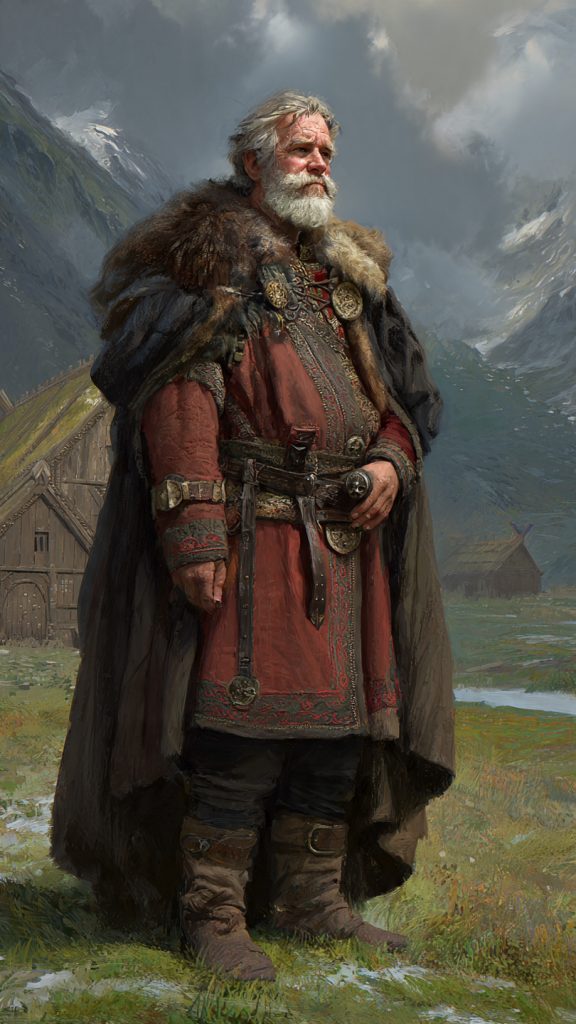
Snorri was born in 1179 into the powerful Sturlungar family, and from the very beginning, his life was tied to Icelandic elite politics. As a child, he was fostered at Oddi under Jón Loftsson, one of the most influential men in Iceland. Oddi was not a monastery. It was a major centre of learning and aristocratic culture, a place where law, history, genealogy, literature, and political education came together.
That early fosterage matters even more when we look at how it came about, and at the two very different men standing behind it. Snorri’s biological father, Sturla Þórðarson — often called Hvamm-Sturla — was a powerful, litigious western Icelandic chieftain whose life seems to embody the harder, older side of secular authority. Iceland had long since officially converted to Christianity by his lifetime, but men like Sturla still lived in a world where the values of honour, family prestige, legal aggression, and chieftain power could easily clash with the growing authority of priests and bishops. He was not “anti-Christian” in some simple modern sense, but he was very much the sort of old-school goði who was prepared to resist clerical influence when it threatened his standing.
That tension erupts vividly in the feud with the priest Páll Sölvason. During a settlement meeting, Páll’s wife attacked Sturla with a knife and shouted that she meant to make him “one-eyed like the hero Odin.” It is a startling moment, and not only because of its violence. It captures a world in which Christian institutions were present, but older heroic language still carried real cultural force. It also reminds us that Snorri’s earliest background was not one of quiet church piety, but one of struggle between secular chieftains and clerical authority, where law, insult, ancestry, and symbolic power all mattered.
Yet the man who truly shaped Snorri was not Sturla, but Jón Loftsson. The fosterage at Oddi came out of that same feud. After the knife attack, Sturla was entitled to compensation so great it could have ruined the priest, and Jón Loftsson stepped in to mediate. Instead of a crushing financial settlement, Jón offered to take the young Snorri into fosterage and raise him at Oddi. Sturla died in 1183, when Snorri was still a small child, so whatever Sturla passed on in blood or atmosphere, the real formation of Snorri’s mind happened under Jón’s roof.
And Jón himself is a fascinating figure. He was no pagan holdout. He was a devout Christian, a high-ranking deacon, and a man deeply connected to the religious life of Iceland. He was even known as a great singer in the church. But he was also a fierce defender of secular chieftain authority against ecclesiastical control. In the disputes over church estates, Jón resisted Bishop Þorlákur Þórhallsson’s attempts to shift power away from lay chieftains and into the hands of the church. He did so not by rejecting Christianity, but by insisting that older Icelandic arrangements — the authority of the great chieftains over local church property and appointments — should continue. In that sense, Jón represents something very important for understanding Snorri: not a rejection of Christianity, but a form of learned Christian aristocratic culture that still guarded native law, genealogy, and inherited power.
Oddi itself was the perfect place for that kind of education. Jón came from a family of immense learning, linked to Sæmundur the Wise, and the intellectual life there blended Christian scholarship with deep respect for history, lineage, and the memory of the north. This was not a narrow, censoring Christianity that tried to erase the past. It was a scholarly Christianity that could preserve old knowledge while still living within a Christian world. Jón’s own life was full of contradictions — including behaviour the Church itself condemned — which only underlines how untidy these categories really were. He was a churchman, but also a political opponent of church centralisation. He was religious, but not meek. He was learned, worldly, and deeply embedded in aristocratic power.
That’s important because it tells us something about the kind of man Snorri was shaped to become. He was not raised in a narrow religious bubble. He was brought up in a world where Christian learning and inherited northern memory existed side by side. He learned the world through law, lineage, story, and power. In many ways, the two men at the root of his early life — Sturla with his fierce chieftain instincts, and Jón with his learned but politically hard-edged Christianity — together help explain why Snorri grew into exactly the kind of figure he did: a Christian-era intellectual who could still preserve the old gods with unusual depth, sympathy, and understanding.
Later, he became one of the most important men in Iceland. He served twice as lawspeaker of the Althing, built enormous wealth, and moved among kings and powerful men. He became deeply involved in Norwegian politics and carried real authority in his own right. That is not the life of a monk. It is the life of a magnate, a power-broker, a chieftain.
And that changes the way we should read him.
The Old Gods Were Not Dead to His World
One of the biggest mistakes people make when talking about Snorri is imagining that he lived in a world where the old gods had already been neatly packed away and forgotten. That is not how cultural memory works, and it is certainly not how Icelandic memory worked.
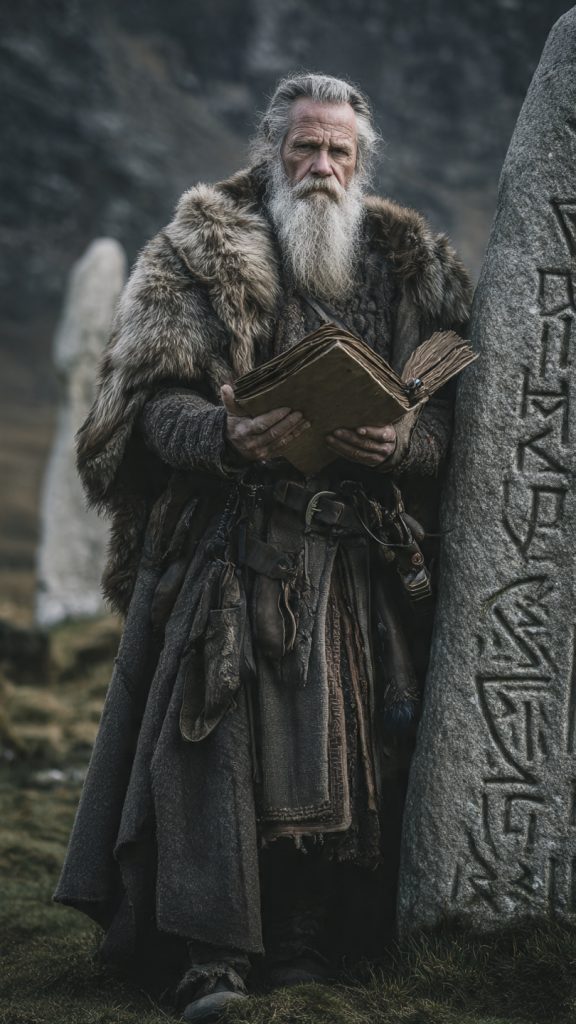
Snorri came from a world still shaped by the long afterglow of the old ways. He was closely associated with the tradition surrounding Egill Skallagrímsson and the saga world rooted in Iceland’s settlement-age memory. The old stories were not just literary curiosities to him. They belonged to the living inheritance of the culture around him.
That does not prove private pagan devotion in some simple way, and I do not think we need to force that argument. In truth, the more honest reading is more interesting. Snorri lived in a world where the names, images, and stories of the old gods still carried weight. They still had meaning. They still had presence.
They were not dead.
Looking for Snorri’s “Viking” Side
To understand Snorri properly, I think we have to look past the flattened image of “Christian writer with a pen” and see the sharper outline underneath: the ambitious chieftain, the strategist, the man who understood rank, image, loyalty, symbolic display, and the careful use of language as power.
When I speak of Snorri’s “Viking” side, I do not mean some fantasy version of the past. I mean something older and more human than that. I mean the instincts of a man still shaped by a northern honour culture — a culture of ancestry, reputation, public symbolism, pragmatic cunning, and remembered power.
I am not saying that every dramatic detail in his life proves private pagan belief. It would be careless to claim that. But there are moments around Snorri that feel unmistakably shaped by an older Icelandic mentality, one where mythic language still had force and where the old symbolic world had not faded into decoration.
A Childhood Marked by Old-World Language
One of the most striking stories connected to Snorri’s early world comes from the feud involving his father, Sturla, and Páll Sölvason. During that conflict, Páll’s wife is said to have lunged at Sturla with a knife and declared that she wanted to make him like his “one-eyed hero Odin.”
It is such a sharp little moment, and it tells us more than people sometimes realise.
Whether that was meant as an insult, a threat, theatrical humiliation, or some mix of all three, Odin’s name still had force enough to be used in conflict. It still carried enough cultural weight to mean something in the heat of violence. That is not the language of a world that had fully buried its older gods and moved on without a backward glance.
Now, to be fair, we cannot honestly say that this one event caused Snorri’s later fascination with the old stories. That would be overreaching. But I do think it is reasonable to say that he grew up in a world where mythic language still lived in people’s mouths, tempers, and memories. The old gods were not museum relics. Their names still moved through identity, feud, insult, and social drama.
Valhöll, Prestige, and Public Theatre
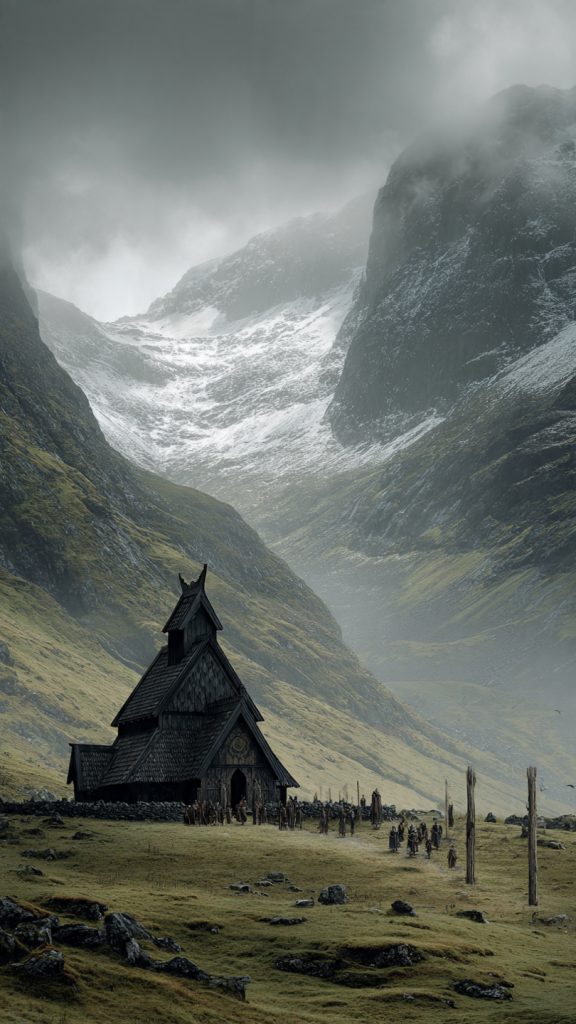
Then there is the question of Snorri’s booth at the Althing. The site is remembered through Alþingi tradition as Snorrabúð, and there is also a long-standing association between Snorri and the name Valhöll. I would not state that in the most rigid, absolute way, as if every detail is beyond question. But the association itself is worth paying attention to.
Because if Snorri did invoke Valhöll in connection with his public space, whether partly playful, rhetorical, or fully deliberate, that is not a meaningless detail.
A man does not casually reach for a name like Valhöll without understanding the atmosphere it creates.
That kind of choice suggests someone who knew exactly what old symbols could do. Someone who understood the prestige of those names. Someone who was willing to stand beneath their shadow when it suited rank, presence, or symbolic theatre. And really, that feels very much in keeping with the Snorri we meet elsewhere — politically clever, image-conscious, and fully aware that words and associations carry power.
Again, it is not proof of secret worship. It is something subtler than that. It is a sign of familiarity, of comfort, of deliberate use. It is one more glimpse of a man who did not treat the old mythic world as dead weight.
Not Proof, but a Pattern
This is where I think the conversation becomes more honest and more useful.
These details do not “prove” that Snorri was secretly pagan in some simple modern sense. But they do point to something more layered: that he moved through a culture where the old symbols still mattered, and he was more than willing to use that language when it suited status, authority, memory, or prestige.
To me, that is far more interesting than either extreme. He was not a pagan saint in disguise, and he was not a detached Christian censor with no roots in the older world. He was a man of a changing age who still carried the instincts of an older one.
Why He Preserved the Myths at All
One of the strangest things about the “Snorri was just a Christian rewriting everything” argument is that it ignores the practical reason his work mattered in the first place.
The Prose Edda was not simply a devotional book, and it was not just a random collection of stories gathered for curiosity’s sake. It functioned as a guide to poetic language. Snorri was preserving the mythic framework that made skaldic poetry intelligible. Without those stories, many of the kennings and mythic references woven through older poetry would become obscure or impossible to fully understand.
That makes his work feel far less like literary meddling and far more like cultural preservation.
He was not preserving myth because he was quaintly sentimental. He was preserving a whole inherited language of poetry. The old gods still lived inside those references, metaphors, and poetic turns. If the stories vanished, then part of the northern poetic tradition vanished with them.
And whatever else one thinks about Snorri, it is very clear that he did not believe this material was worthless.
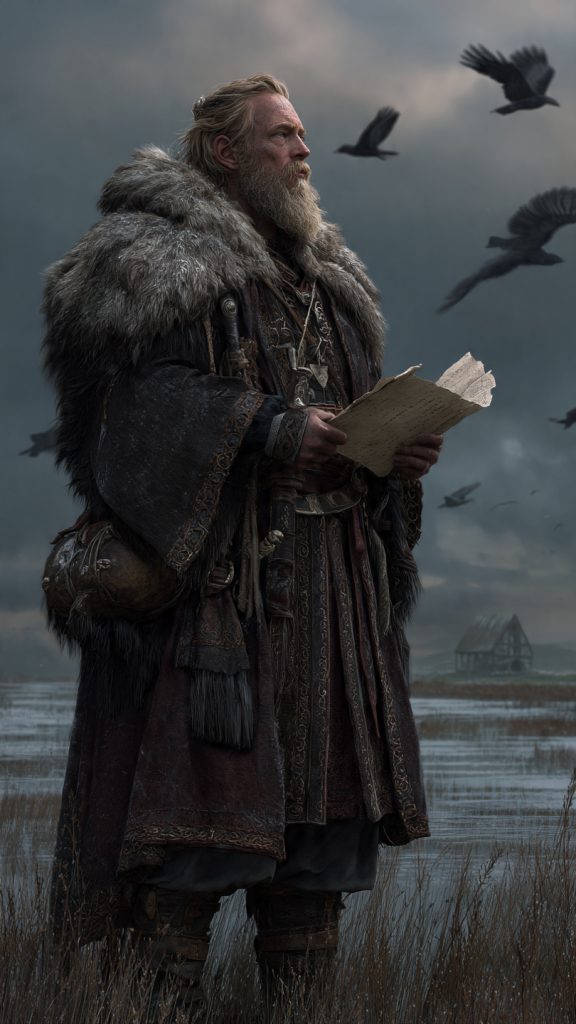
A Man Between Worlds
This, to me, is where Snorri becomes especially compelling.
He was a Christian-era intellectual, but he was also a man deeply entangled in the memory-world of the north. He did not give us an untouched or perfect record of pre-Christian religion. No one did. But neither was he some detached censor trying to scrub the old ways clean out of embarrassment.
He was navigating a complicated space between preservation and adaptation, reverence and practicality, memory and survival.
That is why euhemerism matters so much in his work. By presenting the gods in a framework acceptable to a Christian literary culture, he gave himself a safer way to preserve inherited material. Some people see that and call it betrayal. I think that is too simple.
A man in Snorri’s position had to be socially and politically intelligent. He knew what sort of age he lived in. Of course, he framed things carefully. He would have had to. But careful framing is not the same thing as destruction. In truth, he preserved an enormous body of mythic material that later generations might otherwise have lost altogether.
Snorri in the Age of the Sturlungs
Snorri’s life also has to be understood within the Sturlung Age, because this was not a peaceful world of quiet literary reflection. It was an age of elite rivalry, family tensions, shifting alliances, blood-feud logic, and increasing Norwegian interference in Icelandic affairs. It was a hard age. Power was sharp-edged, and so was survival.
Snorri was not standing at a safe distance from that world. He was right in the middle of it.
He moved between Iceland and Norway, dealt with King Hákon and Earl Skúli, accepted royal favour, and became entangled in the very politics that would later destroy him. The same man who preserved kings, gods, heroes, and ancestral memory was also balancing on dangerous political ground between Icelandic independence and Norwegian royal power.
That tension runs through his life, and I think it is part of what makes him feel so real. He was not just writing about power. He was living inside it.
Reykholt, Ambition, and Blood
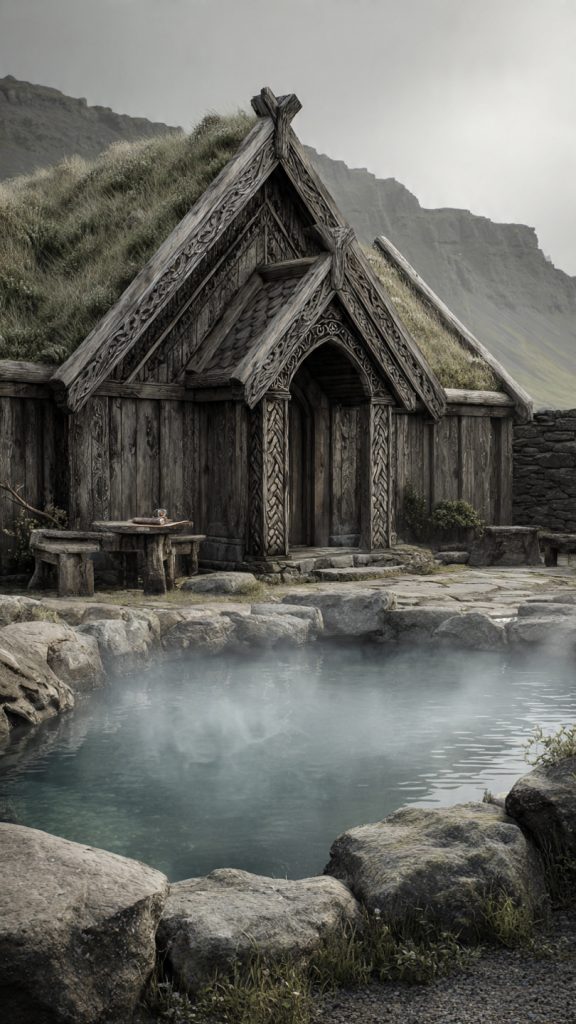
At Reykholt, Snorri was not living like a withdrawn copyist. Reykholt was a seat of influence. It was where he wrote, hosted, negotiated, planned, and exercised authority. It was a place where learning and power met in the same person.
And perhaps that is part of why he understood the old material so well. He knew how status worked. He knew how memory could be shaped. He knew that symbolic language was never just decorative. In a culture like his, words could preserve honour, shape identity, record ancestry, and turn a person into a legend long after their body was gone.
Snorri understood that, perhaps better than most.
His End Was Political, Not Monastic
If nothing else, Snorri’s death should be enough to bury the monk myth once and for all.
He was assassinated in 1241 at the order of King Hákon after his political relationship with the Norwegian crown deteriorated. That is not the end of a sheltered religious compiler. It is the end of a man who had become politically dangerous, compromised, or troublesome enough to be removed by force.
There is something bleakly fitting in that. Snorri, the man who helped preserve gods, kings, heroes, ancestry, and poetic memory, did not die in some grand mythic blaze. He died in the hard violence of his own age. He was a man of words, yes, but he was also a man of power, and power has a habit of drawing blood around it.
Why Snorri Still Matters Today
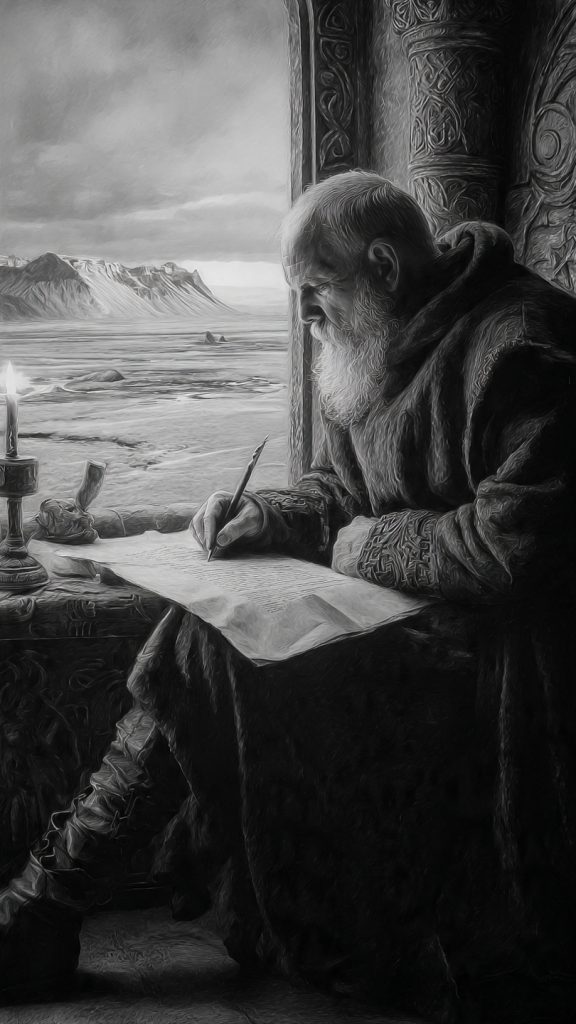
For those of us who care about Norse history, myth, and ancestral memory, Snorri matters because he carried something across the threshold.
He did not give us a perfect or untouched record of pre-Christian religion. We should be honest about that. But he gave us something without which the old Norse mythic world would be far dimmer and far harder to reach. He preserved a body of material that later generations still rely on when approaching these stories.
So no, Snorri Sturluson was not a Christian monk rewriting everything from a safe distance. He was an Icelandic chieftain with deep roots in the culture he inherited, a man shaped by law, lineage, ambition, poetry, and the lingering power of the old gods in the world around him.
Christian? Yes.
Complicated? Absolutely.
But also far more entangled with the older world than the lazy version of the story allows.
And maybe that is exactly why he still matters. He was not tidy. He was not simple. He was not easy to fit into modern categories. He was a threshold figure, and in many ways, those are the people who carry the most across time.
He belonged to a changing world, but he did not let the old one vanish quietly.
References
- Encyclopaedia Britannica — Snorri Sturluson
- Snorrastofa — biographical and historical material on Snorri Sturluson and Reykholt
- The Cambridge History of Old Norse-Icelandic Literature — section on the Prose Edda
- Cambridge scholarship on gods and humans in the Prose Edda — discussion of euhemerism and literary framing
- Þingvellir National Park — historical material on Alþingi booths and Snorrabúð
Primary Literary References for Jón Loftsson
- Nóregs konungatal: A poem composed in his honour that traces his descent from the Norwegian royal line.
- Sturlunga saga: Particularly the Íslendinga saga section, which details the political dealings of the era.
- Diplomatarium Islandicum: Historical records containing letters from the Archbishop of Nidaros, which occasionally scolded Jón for his “sinful” lifestyle and sexual misconduct.
Primary Literary References for Hvamm-Sturla
- Sturlu saga: A biographical saga focused on his rise to power, located at the beginning of the larger Sturlunga saga compilation.
- Sturlunga saga: The “Contemporary Sagas” collection, which traces the history of his family and their dominance in 12th- and 13th-century Iceland.
- Landnámabók: Mentions his ancestry, tracing his lineage back to early settlers like Helgi the Lean.