
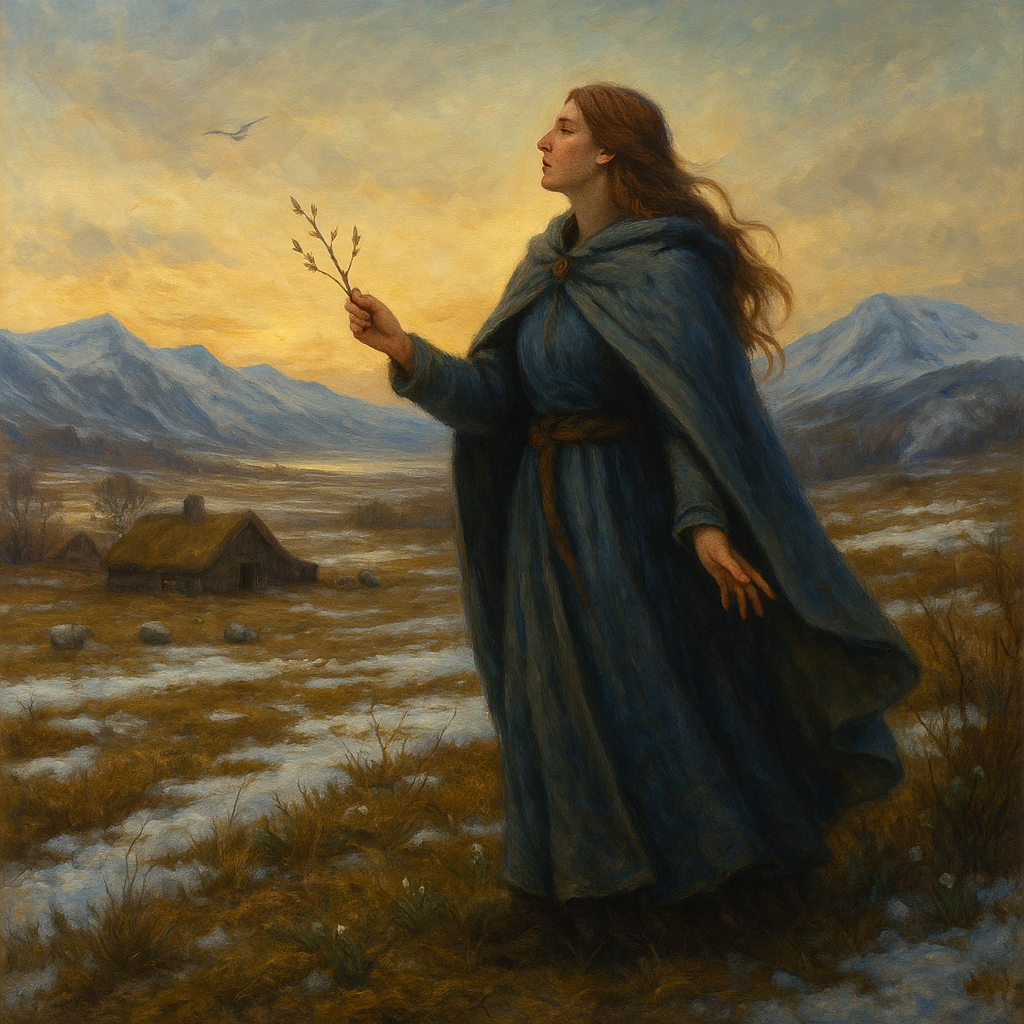
In the old Icelandic calendar, Góa (older form Gói) is the fifth and next-to-last month of winter, landing roughly from mid-February into mid-March. It’s the month where winter is still very much present… but the light is back in the conversation. Days are noticeably longer, the weather starts doing that late-winter “anything goes” thing, and people begin to feel that subtle shift from enduring to looking forward.
Traditionally, Góa begins on a Sunday, falling somewhere between 18 and 25 February (the dates vary year to year). That fixed weekday rhythm is one of the things I love about the old calendar — it tracks the season in a lived, practical way, not just a neat line on a modern page.
Gói or Góa?
The meaning of the name is uncertain, but Icelandic scholarship and folklore both lean toward a connection with snow. In older sources and stories, the month/person is often called Gói, with Góa becoming the later, more familiar form (the shift is generally placed around the late 1600s rather than early modern times in general).
Either way, the feel of the name matches the season: not the clean, hard frosts of deep winter, but the more changeable, in-between stretch where snow can turn to sleet, winds shift overnight, and the thaw starts to whisper.
The Lady of Late Winter
One of the loveliest things about these month-names is that they weren’t only labels — they were imagined as living presences. In Icelandic tradition, Gói/Góa is personified as a feminine figure tied to winter, and she’s placed within a mythic family line that reads like a genealogy of weather itself: Frosti (Frost) → Snær (Snow) → Þorri → Gói/Góa, with Mjöll (fresh snow) and Drífa (driving snow) appearing as her aunts.
There’s also a tale where Gói disappears during a Þorrablót feast, running off with a boy, and Þorri has a blót performed to discover what became of her — “they called it Góiblót,” says the tradition. Whether that points to an older seasonal rite or simply reflects story and custom blending over time, it shows how strongly people felt these months as characters you could welcome, negotiate with, and try to live in harmony with.
Weather lore and that very northern optimism
Góa comes with a very Icelandic sort of hope: the idea that if the month starts off rough, the rest will ease. One traditional saying (in various forms) boils down to: let the first days be harsh, and Góa will be kind after that. It’s the mindset of people who know winter can still bite — but also know the year is turning.
And that’s really the heart of Góa’s mood: still winter, but with the promise of spring audible in the background.
Konudagur – Women’s Day / Wife’s Day
The first day of Góa is Konudagur — Women’s Day (sometimes translated as Wife’s Day). It’s still celebrated in Iceland today, and historically it honoured the lady of the house for the work of keeping the home and farm running through winter. In modern times, it’s often marked with small gifts, kind attention, and (very commonly now) flowers.
This is one of those places where the “old” and the “modern” are both true at once:
- The day itself belongs to the old calendar structure (first day of Góa).
- The word konudagur shows up in written sources from around the mid-19th century and becomes widely known by around 1900 (with official almanac recognition later on).
- The flowers are the newer layer — the first newspaper advertising for konudagsblóm that’s been traced is from 1957, with flower-sellers promoting it from around the mid-1950s onward.
So if you’ve ever wondered, “Is this ancient, or is this a modern tradition?” — the answer is: both, stacked together, like all living folk customs.
Góublót – what we can (and can’t) say confidently
You’ll sometimes see modern references to Góublót, framed as a counterpart to Þorrablót. Historically, it’s a bit more complicated. The legend of Þorri holding a blót to seek news of Gói is part of the story tradition — and it may hint that small seasonal feasts or welcomes happened around the start of winter months — but we don’t have solid evidence for a single, standardised “everyone celebrated Góublót this way” festival in medieval Iceland.
That said, as a modern heathen practice, “Góublót” works beautifully as a meaningful reconstruction: a simple rite or meal to welcome late winter, honour the returning light, and bless the shift toward spring. The key is just being honest about what’s reconstructed versus what’s firmly attested.
Bringing Góa into a modern practice
If you want to work with Góa as a seasonal energy (whether culturally, spiritually, or both), the themes are straightforward and surprisingly powerful: renewal while it’s still cold, gratitude for the work that sustains life, and hope that doesn’t require denial.
A simple way to mark it can be as small as lighting a candle and saying a few words of welcome, or sharing a meal with intention. You might also use this month for gentle divination: not “tell me everything,” but “what’s beginning to thaw in my life?” and “what deserves nurturing as the light returns?”
Góa’s lesson is quiet but steady: change often begins long before it looks dramatic. The thaw starts as a drip. The new season starts as a thought. And the strength that carries people through winter — especially the unseen work of care, home, and keeping things going — deserves to be named and honoured.
Sources:
https://www.visindavefur.is/svar.php?id=1132 “Vísindavefurinn: Hvaða mánaðanöfn voru notuð samkvæmt gamla íslenska tímatalinu og yfir hvaða tímabil náðu þau?”
https://www.visindavefur.is/svar.php?id=7101 “Vísindavefurinn: Hver er uppruni og saga konudagsins?”
https://guidetoiceland.is/connect-with-locals/sigrunthormar/goa—konudagur–womens-day–at-the-22february-2015?utm_source=chatgpt.com “Góa – Konudagur / Women’s Day on the 22nd of February …”