When you hear someone mention ‘the Norse creation story,’ what you’re really getting is a myth layered like winter clothes: old poems tucked into later manuscripts, and a prose version carefully gathered by a Christian Icelander who loved the old tales and couldn’t help but sort them out.
That doesn’t make the story any less true in spirit. It just means we’re piecing things together from sources, not reading from a single holy book. And really, the Norse cosmos was never meant to be tidy or polished. It’s wild, physical, and very much alive.
Where The Story Comes From
Our primary medieval Icelandic sources are:
The Poetic Edda (manuscripts written down in the 1200s, preserving older oral poetry). The most crucial creation poem is Völuspá (“The Seeress’s Prophecy”), which gives a cosmic overview from beginning to end.
The Prose Edda by Snorri Sturluson (early 1200s), especially Gylfaginning (“The Beguiling of Gylfi”), which gives the most continuous “story version” via a clever frame narrative.
Snorri also includes a Prologue that explains the gods as heroic humans from Troy — a medieval strategy called euhemerism (basically: “these aren’t literal gods, don’t panic, Church!”).
So, we read Snorri with appreciation and awareness.
Before the World: Ginnungagap and the Two Extremes
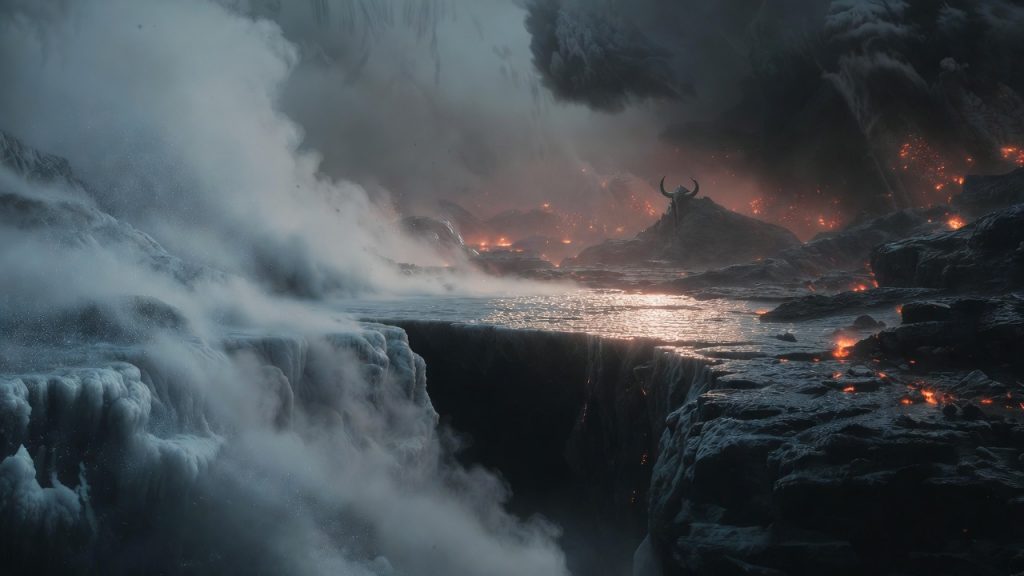
In the beginning, there isn’t “light.” There’s Ginnungagap — a yawning emptiness — and on either side of it, two primal realities:
Niflheim: cold, mist, ice, rime, the deep freeze of beginnings.
Múspell (often given as Múspellsheimr / Muspelheim): heat, flame, sparks, the wild burn of becoming.
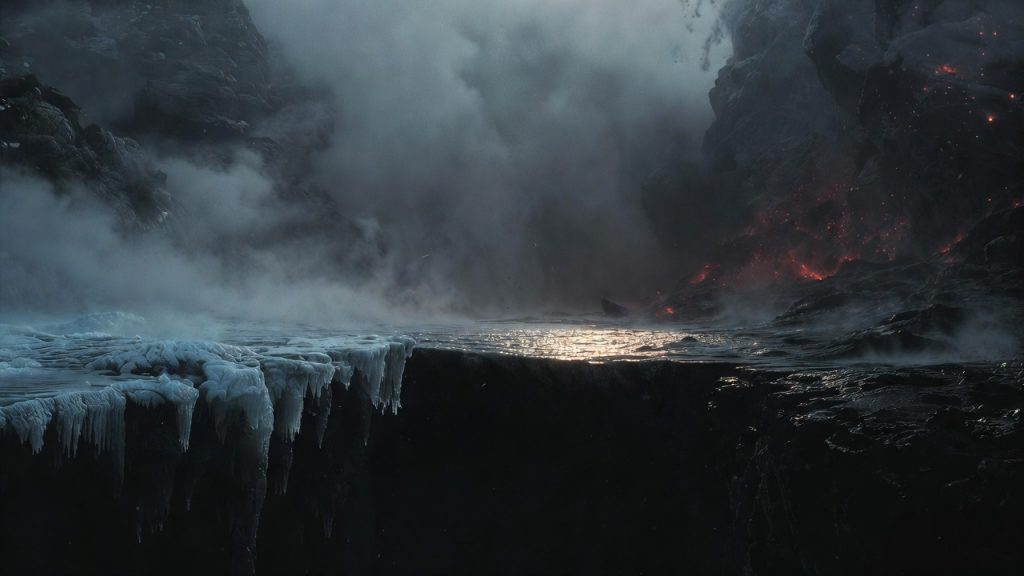
Creation kicks off when opposites collide. Heat stretches out to meet frost, ice starts to drip, and in that crackling tension, life stirs.
If you’re looking for a modern metaphor, forget perfect paradise. This is more like: something bursts into being because wild forces crash together and change each other. It’s the Norse take on the Big Bang—messy, loud, and full of potential.
The Detail That Often Gets Skipped: Élivágar, Hvergelmir, and “eitr”
Snorri throws in a handful of details that most modern retellings skip, but they’re worth keeping—because they make the myth feel properly Norse: physical, strange, and just a little bit dangerous.
In Gylfaginning, the cold side isn’t passive. From a primal source called Hvergelmir (often placed in/near Niflheim) flow rivers called the Élivágar. These rivers carry a primal substance that Snorri describes as eitr (often translated as venom/poison). As the rivers move away from their source, the eitr hardens into rime and ice.
Then the warmth from Múspell reaches the rime.
That’s the chemistry set of creation: ice, melt, frost, heat—and something like venom, hardening into the bones of reality. This detail matters, because it frames the Norse cosmos as something born out of raw, messy processes—not a clean ‘let there be…’ moment. Reality here forms the way a storm does: pressure, temperature, movement, reaction.
The First Beings: Ymir and Auðhumla
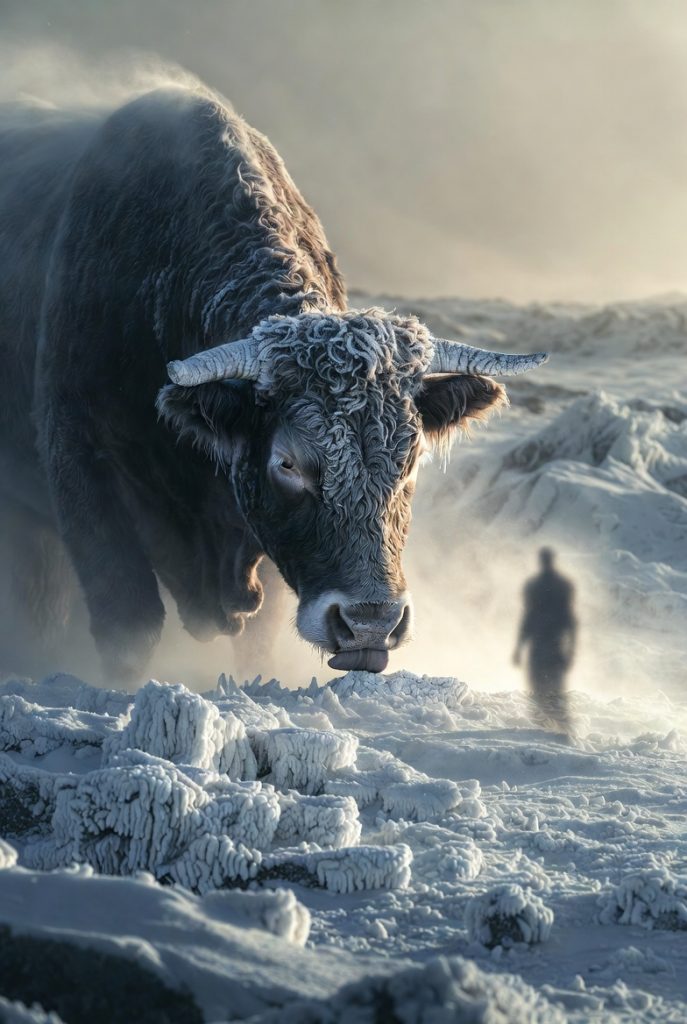
Out of the mingling meltwater and rime, Ymir emerges, the primordial jötunn—the first giant, ancestor of all his kind, raw and ancient as the world itself. At this stage, the line between ‘person’ and ‘landscape’ is blurry. Ymir is a living fact of existence.
And with him comes Auðhumla, the cosmic cow.
This part of the myth is gloriously strange and earthy. Auðhumla feeds Ymir with her milk. While she’s at it, she’s busy licking salty rime-stones, and with each lick, something stirs beneath the ice—until Búri, ancestor of the gods, is revealed.
Búri emerges from the rime—not created out of nothing, but revealed, as if the world itself had secrets waiting just beneath the surface.
That’s a huge mythic idea: the divine isn’t dropped in from outside, but revealed from within the world’s own substance.
Búri fathers Borr, and Borr fathers Odin, Vili, and Vé — the three brothers who will take what is wild and unfinished and turn it into a world.
Creation Through Transformation: the Slaying of Ymir
Here’s where everything turns. Odin and his brothers kill Ymir. This is the part where a lot of people go ‘oof,’ because we’re used to creation being gentle, clean, and morally straightforward. The Norse version? Not so much.
Instead, the myth is telling you something about how the universe really works:
- Order doesn’t appear by itself.
- Chaos doesn’t politely organise itself.
- Making a world takes a turning, a cutting, a radical act of transformation
In the myth, Ymir’s blood floods the world, drowning most of the giants (though a few survive, because the story always leaves a thread). It’s a cosmic rebalancing: the old, wild state is overturned so something new can take shape.
You don’t have to read this as ‘violence is holy.’ Many Heathens see it as a mythic truth about reality: life is made from what came before, and transformation always comes with a price.
The Cosmos is a Body: Building the World From Ymir
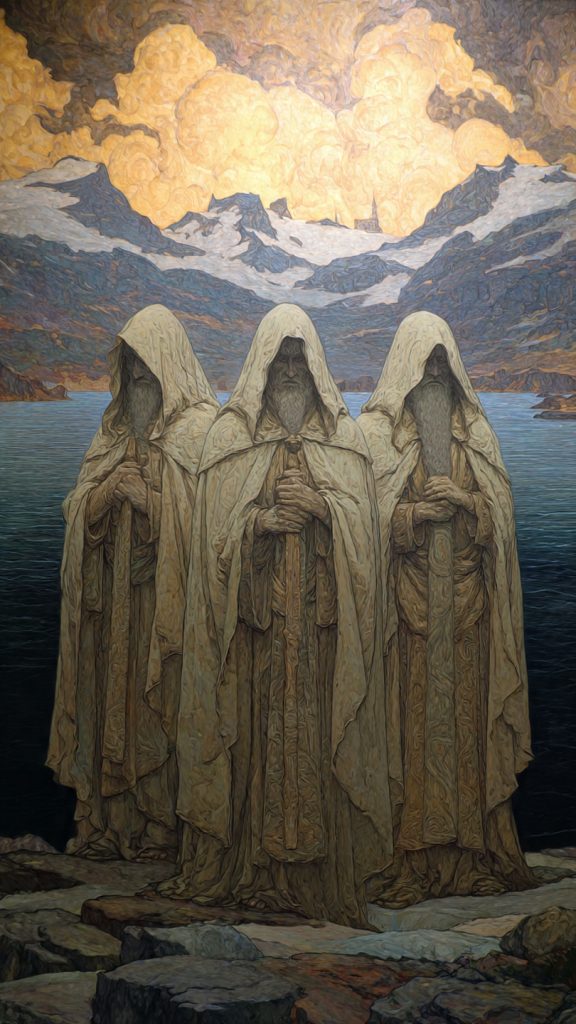
Snorri gives us the most detailed cosmic anatomy, and it’s the part that sticks with people because it’s so striking:
This is the iconic moment—the part where the Norse universe gets visceral, and the myth steps right into the body.
Odin, Vili, and Vé shape the world from Ymir’s corpse:
- Flesh becomes the earth.
- Blood becomes sea and waters.
- Bones become mountains.
- Teeth / shattered bone become stones and boulders.
- Skull becomes the sky.
- (Often included in the wider tradition: brains become clouds; sparks become stars)
This is the ‘anthropomorphic universe’ in action: the world isn’t a dead stage set. It’s made from living substance. The cosmos is kin to the body.
It’s a reminder that many modern Heathens feel in their bones: we aren’t separate from the world. We’re made of it, and it’s made of the same deep material as us.
The Missing Midgard Detail: Eyebrows as the Boundary
A lot of people list “earth/sea/mountains/sky” and move on. But one of the most telling details is this:
Midgard is described as a fortification made from Ymir’s eyebrows.
It’s not just ‘humans live on earth.’ Humans live inside an enclosure. Midgard is literally a ‘middle yard’—a bounded space where human life can exist with at least a little protection.
This flows right into one of the big Norse worldview themes: the tension between what’s inside the fence and what’s out beyond it—the difference between the hearth-world and the wild.
If you want to connect it to modern Heathen language without getting preachy: this is where “frith” starts to feel like a cosmic principle, not just a social one.
Ordering Time: Sun, Moon, Night, Day — and the first “measuring” of reality
The gods don’t just shape land—they set the rhythm. In this mythic world, time isn’t just a clock ticking away. It’s a force that needs to be nudged into motion. The sun and moon are set on their paths, and the great cycles start to turn.
That’s what separates chaos from cosmos: a world with rhythm, seasons, and pattern you can live by.
Most people mention the sun and moon being put on their paths (Sól and Máni). But Snorri adds another lovely layer: Night (Nótt) and Day (Dagr) are personified beings set into motion, riding across the sky.
This is such a Norse move: time isn’t just an idea. Time is alive. Time is a power, a presence.
So creation isn’t just ‘stuff exists.’ It’s ‘stuff exists in rhythm.’
Midgard: the enclosure that makes human life possible
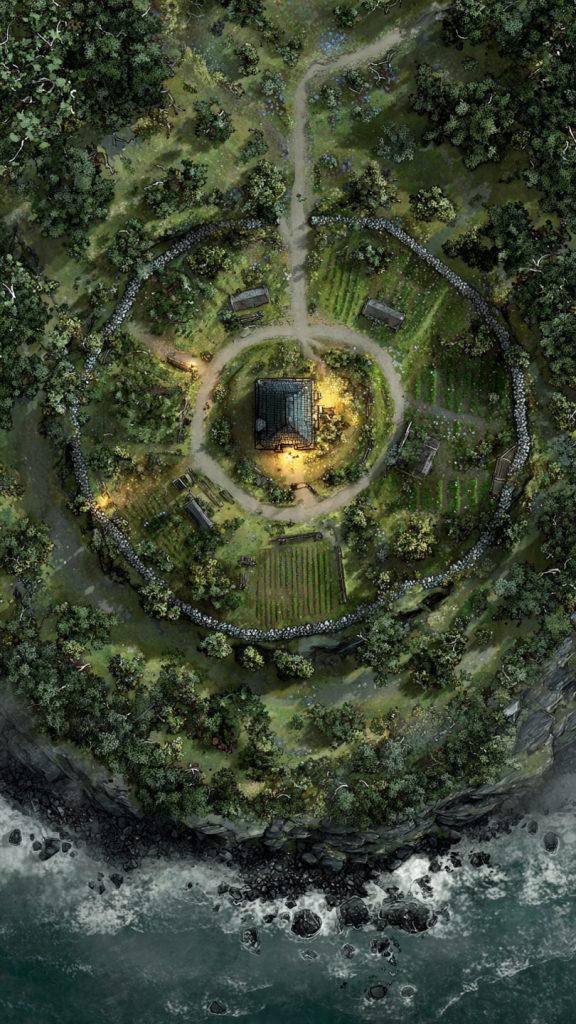
Even with a world in place, boundaries are still needed.
A huge theme in Norse thought is the difference between what’s inside the fence and what’s outside it — a worldview that scholars often describe with the Old Norse terms innangarðr (“within the enclosure”) and útangarðr (“beyond the enclosure”).
So Midgard—the Middle Enclosure—isn’t just ‘earth.’ It’s the safe space where humans can actually live: with frith, law, community, and the warmth of a hearth at the centre.
And outside that fence? All the forces that test and threaten what’s inside: wilderness, giants, the open sea, winter, and everything unknown.
Ask and Embla: how humans enter the story.
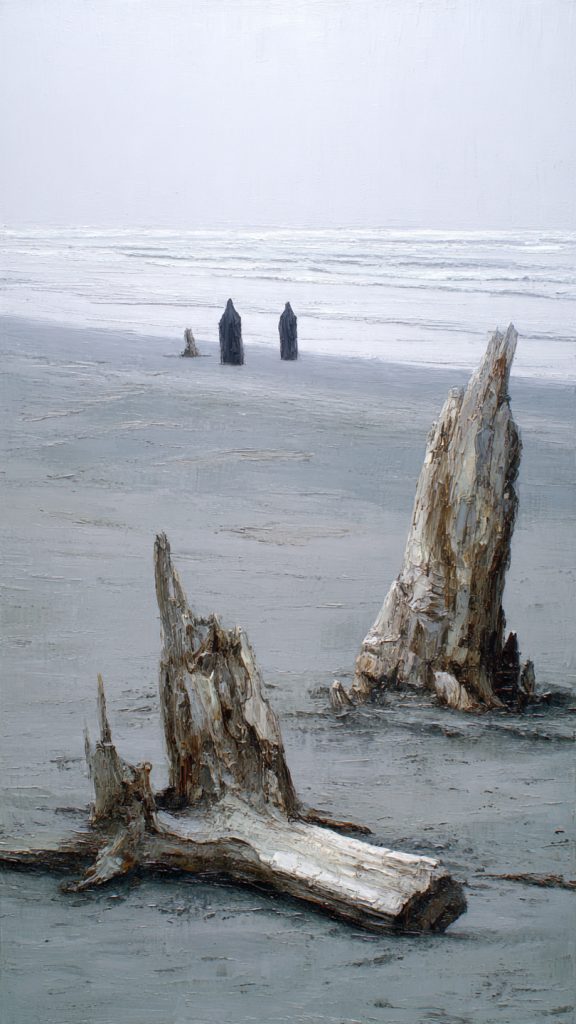
This is one of my favourite moments—it’s small and close after all the cosmic thunder.
The gods find two tree trunks on the shore and shape the first humans: Ask and Embla (often interpreted as ash and elm, though the exact identification is debated).
They don’t just shape bodies—they hand out the gifts that make us human: breath, spirit, awareness, senses, speech, and appearance. The details shift from source to source, but the heart of it stays the same:
Humans are not an afterthought. We are part of the cosmic architecture — placed into Midgard as living participants in the ordered world.
The “two traditions” people miss
This is one of the most common “wait, are we missing something?” moments:
In Snorri, the gifting is often tied to Odin, Vili, and Vé.
In Völuspá, the trio is Odin, Hœnir, and Lóðurr.
Same mythic job, different names preserved.
Different tellings, different names for the gift-givers—but both agree: humans are made human by a bundle of divine gifts, not just breath but consciousness and social personhood.
And if you’re tempted to compare this to Adam and Eve, the mood here is completely different. This isn’t ‘made perfect, then broken.’ It’s ‘shaped, gifted, set down, and expected to live in a world that’s always wrestling with chaos.’
Ask and Embla vs. Adam and Eve: Same “first humans” slot, but totally different mythic vibes.
It’s tempting to line up Ask and Embla with Adam and Eve—they’re both the first humans, right at the world’s beginning. But the Norse story is different enough that the comparison actually throws its uniqueness into sharp relief.
Humans are crafted from the world, not placed over it
Ask and Embla are shaped from trees—literally drawn from the living material of the world. That detail matters. It makes humans feel like kin to the land, not rulers dropped in from above. This isn’t a story where humanity is handed dominion over a finished creation; it’s one where we’re made from the same stuff as the world and set inside its boundaries.
Personhood arrives through multiple gifts
In the Norse sources, being human isn’t just ‘alive.’ It’s layered: breath or spirit, mind, senses, speech, appearance—the details shift depending on the telling, but the point holds. Humanness is a bundle of gifts. That difference is subtle but powerful. Personhood arrives in pieces—not just ‘body plus one breath.’ (And it’s worth noting the sources preserve different gift-giver names: Snorri leans toward Odin–Vili–Vé, while Völuspá names Odin–Hœnir–Lóðurr. Same function, different preserved tradition.)
There’s no “Fall” as the engine of human suffering
The Adam and Eve story is often structured around a moral rupture: a forbidden act that breaks an original harmony, and suffering becomes a consequence of that break. The Ask and Embla story doesn’t hinge on a single moment of moral collapse. The Norse cosmos is already a place where chaos prowls at the edges, and order must be maintained. Human struggle isn’t ‘you sinned once, now you’re cursed.’ It’s ‘you live in a world built from tension, and you have to find your way through it.’
Boundaries are the point: Midgard as an enclosure
In the Norse creation story, Midgard isn’t just ‘where humans live.’ It’s a defended enclosure—a middle yard, a protected space set against whatever waits beyond. So human life isn’t ‘paradise lost’—it’s ‘community and order held inside a boundary.’ That’s a very different spiritual focus: hearth, frith, law, and right relationship become central, because they’re what keep Midgard, well, Midgard.
The myth is less about obedience, more about belonging and responsibility
Many Genesis readings (not all, but many) emphasise obedience, transgression, and the moral consequences of disobedience. Ask and Embla sits in a worldview that’s more about belonging inside the cosmic structure: you’re made from the world, gifted into awareness, placed within boundaries, and expected to live well inside them—not because you’re ‘fallen,’ but because the cosmos is a living thing that can be strengthened or strained.
In short: Adam and Eve is a story of moral rupture. Ask and Embla is a story of ensoulment, belonging, and being set down in a cosmos that’s always negotiating with the wild beyond.
Völuspá vs Snorri: same myth, different camera angle
Völuspá (Poetic Edda)
Völuspá isn’t a tidy narrative. It’s a cosmic vision: the seeress remembers the beginning, names the powers, and moves through vast mythic time. Creation shows up as a series of awakenings—void, shaping, ordering, the setting of celestial bodies—and then the story just keeps rolling.
There’s also a kind of post-creation ‘settling in’—the gods establishing, building, crafting—which gives you a sense of an early, ordered phase before the trouble starts.
Gylfaginning (Snorri)
Snorri gives you the clearest step-by-step ‘story version,’ but you’re always reading it through a few filters:
- a frame narrative (King Gylfi being “beguiled”)
- a Christian-era author who often organises and systematises
- a writer who is preserving old lore while also making it legible to a medieval audience
This is where scholars start waving flags about Christian influence—not that Snorri made it all up, but that he may have tidied, rationalised, or shaped the way it’s presented.
A useful way to hold both
A simple approach that keeps everyone sane:
- Völuspá = older poetic worldview, big mythic atmosphere
- Snorri = narrative clarity + extra details + a medieval lens
So you can lean on Snorri for the storyline, but let Völuspá give you the myth’s ancient, haunted backbone.
The Nine Worlds: a map, a metaphor, and a living system
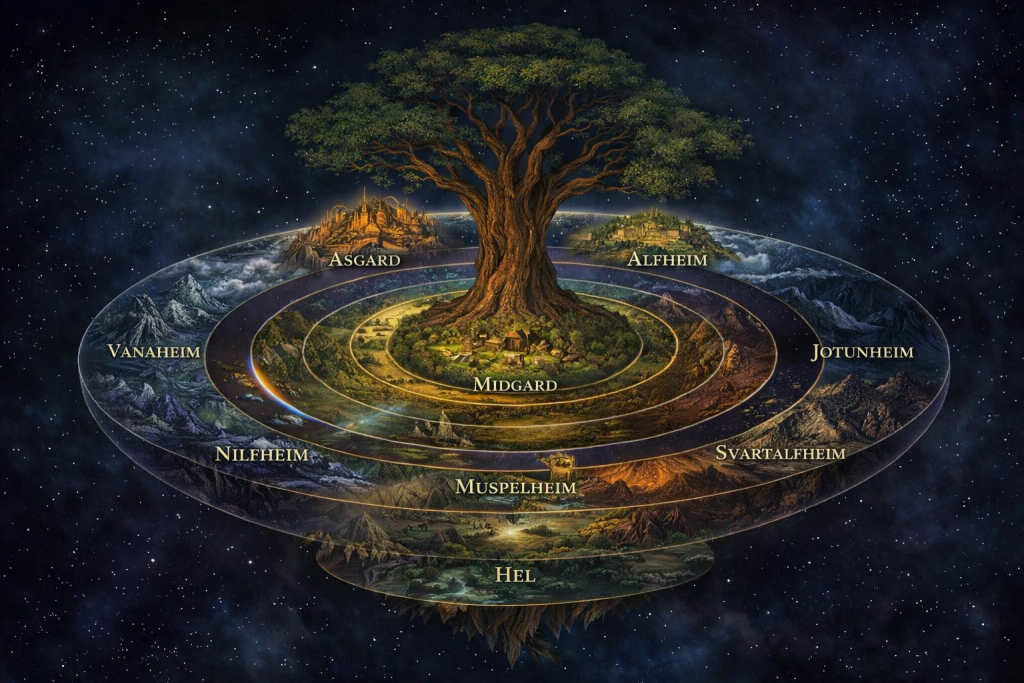
Quick reality check: when people talk about ‘the Nine Worlds,’ it’s easy to imagine the sources hand us a neat, labelled map.
They don’t.
The texts mention many worlds and realms, and ‘nine’ is clearly a powerful number—but you won’t find a single, tidy list anywhere. No fantasy atlas, just hints and patterns.
Still, it’s useful—spiritually and symbolically—to treat the Nine Worlds as states of being as much as places.
This is a modern way to organise patterns in the sources — a map for meaning, not a single medieval checklist:
| World | Symbolic Meaning | Elemental Association |
|---|---|---|
| Asgard | The realm of the Aesir; represents order, consciousness, and the “higher self.” | Sky / Celestial |
| Midgard | “Middle Yard”; the physical realm of humanity, the balance point between extremes. | Earth / Material |
| Helheim | The realm of the dead; represents the subconscious, roots, and stillness. | Cold / Depth |
| Jotunheim | Realm of the Giants (Jötnar); represents wild nature and chaotic forces. | Rock / Wilderness |
| Alfheim | Realm of the Light Elves; represents inspiration, beauty, and intellect. | Light / Air |
| Svartalfheim | Realm of the Dwarves; represents craftsmanship, the ego, and material wealth. | Subterranean / Ore |
| Vanaheim | Realm of the Vanir; represents fertility, intuition, and the natural cycle. | Water / Growth |
| Muspelheim | Primordial Fire; represents destruction, creation, and raw energy. | Heat / Fire |
| Niflheim | Primordial Ice; represents stagnation, mist, and the beginning of matter. | Mist / Ice |
Vertical vs horizontal: what shape is the cosmos?
Vertical model (the popular modern one): Asgard above, Midgard middle, Hel below.
Horizontal/concentric model (often argued as closer to older world-feeling): Midgard at the centre; other realms reached by travelling outward — over sea, into wilderness, across boundaries.
A lot of scholarship describes models using concentric “rings” around the centre, with the world tree as the central axis and the enclosures defining reality.
A very Norse way to put it isn’t ‘up/down, heaven/hell,’ but more like:
centre/enclosure / beyond
That fits the Midgard-eyebrows detail perfectly, too.
Archaeology: “snapshots” of worldview (not a Viking Bible)
There’s no Viking Age holy book, but we do have objects—things you can hold in your hand—that show how myth and worldview travelled through daily life.
Gotland picture stones
Gotland’s picture stones (roughly AD 400–1100) depict mythic scenes and journeys—proof that cosmology was depicted long before Snorri wrote a word. Even without labels, the fact that these stories were carved in stone tells you they were culturally real, not just literary invention. The Ardre image stones, dated roughly 8th–11th centuries, are often discussed in this context.
The Torslunda plates
The Torslunda plates (bronze dies used to stamp helmet foils) are usually dated to around the Vendel Period and are famous for imagery that many scholars connect to Odin-cult themes — including an apparent one-eyed figure and ritual/animal-costume elements.
Mjölnir pendants as boundary symbols
Archaeologically, roughly around a thousand Thor’s hammer pendants have been recorded across the Nordic world and beyond, and they appear in graves, hoards, and settlements.
Whatever else they were, these weren’t just jewellery. They’re bold, wearable shields of protection, identity, and devotion—a little piece of Midgard’s fence you wear right over your heart.
The Oseberg “Buddha bucket”
The Oseberg ship burial has a bucket with a handle ornament that gets called the ‘Buddha bucket’—the figures sit cross-legged, which looks a lot like the lotus posture to modern eyes. Museums and write-ups are quick to point out that any real link to Buddhism is uncertain.
Still, it’s a great example of just how global the Viking Age could get—but it’s best seen as interpretation, not hard evidence of borrowed beliefs.
A Heathen takeaway: what the creation story teaches
For me, the Norse creation story isn’t here to comfort you with perfection. It’s here to lay out the kind of universe you’re standing in:
Life comes from tension (ice and fire, stillness and motion)
Order is crafted (not inherited)
Boundaries matter (Midgard is meaningful because it’s enclosed)
The world is alive (made from body, not from sterile matter)
We belong here—but belonging comes with responsibility: to keep frith, build right relationship, and hold the line against whatever tries to unravel it.
And maybe the most Heathen truth of all: creation isn’t a one-and-done event. It’s something we do again and again—every time we keep frith, build community, hold the line against chaos, and make a world worth living in.
References
Primary sources
The Poetic Edda, especially Völuspá. Translation: Carolyne Larrington (Oxford University Press).
The Prose Edda (Snorri Sturluson), especially Gylfaginning. Translation/edition: Anthony Faulkes.
On dating and oral tradition
Sapp, Christopher D. “Dating the Old Norse Poetic Edda…” (scholarly discussion of dating debates). (journals.uchicago.edu)
Archaeology and iconography
Gotland picture stones (general dating and overview); Ardre image stones (8th–11th centuries). (gotlandicpicturestones.se)
Torslunda plates (Vendel Period helmet-plate dies; mythic/ritual imagery). (Wikipedia)
Mjölnir pendants (archaeological record; distribution and approximate totals). (thehistoryblog.com)
Oseberg ship burial: the so-called “Buddha bucket” handle ornament (nickname; caution about interpretation). (Wikipedia)
Cosmology models
Scholarship overviews discussing horizontal/concentric models in Old Norse cosmology and enclosure-thinking (innangarðr/útangarðr). (germanicmythology.com)