Theme: frith, hospitality, and the bonds that hold the tribe together
The fifth night of Yule — often kept as the High Feast of Yule (commonly observed on December 24th) — is a night for community. Not in the vague “good vibes” sense, but in the old way: shared table, shared responsibility, shared protection. This is the night we remember that a person doesn’t stand alone. We belong to kin, chosen family, friends, neighbors — and to the living land beneath our feet.
This is also a night tied to the noble virtue of Hospitality, and to the deep, binding concept of frith.
Frith: more than “peace”
People often translate frith as “peace,” but it’s bigger than that. Frith is the agreement we make with one another — a mutual obligation to consider the welfare of others, to act with courtesy, and to keep the community strong. It’s trust. It’s accountability. It’s the choice to do no harm when you have the power to harm… and the choice to help when you have the power to ignore.
Frith isn’t passive. It’s something we maintain, like a hearth fire. It needs tending.
Hospitality as sacred practice
Hospitality sits at the heart of nearly every ancient culture for a reason: it keeps people alive. In the old world, travelers needed shelter, food, and safety. In our world, people still need those things — and they also need belonging.
Hospitality is a strength of character. It says:
- You’re safe here.
- You are seen.
- You are welcome at the fire.
The duties of a good host — generosity, courtesy, and care — are even echoed in the Hávamál, where wisdom is measured not by fancy words, but by how you treat the living who cross your threshold.
And hospitality isn’t only what the host gives. Guests have responsibilities too: respect the home, respect the people, and don’t bring chaos where peace has been offered.
The High Feast and the old “ring-giver” world
A lot of modern Christmas warmth has older roots: the feast, the gift-giving, the gathering, the sense that generosity is part of leadership and part of love.
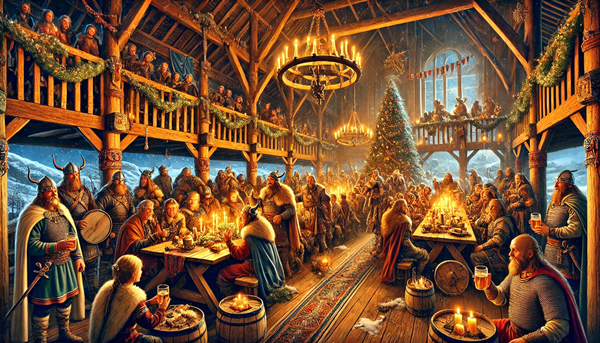
In Viking Age society, leaders were expected to embody generosity and hospitality. A good king or jarl fed their people, shared wealth, maintained justice, and made the hall a place where the tribe could feel secure. At great feasts, food and drink were plentiful, gifts were distributed, and oaths and boasts were made — all under the eyes of the gods. In many tellings, the lady of the hall ensured cups were refilled, making sure no one was forgotten.
The message is simple: a strong community takes care of its own.
What this night asks of us now
We may come from different lands, bloodlines, or beliefs — but as people of Midgard, we share a responsibility: be a good neighbor. Be the kind of person someone can rely on.
This night is perfect for:
- inviting someone in (literally or with a message)
- rekindling friendship in frith
- bringing food to someone who’s struggling
- donating, volunteering, or quietly helping where help is needed
- making a plan for community care in the coming year (clean-ups, mutual aid, creating spaces for new life to grow)
Winter might not be the time to plant trees — but it is the time to plant intentions and commitments that will matter when the land wakes again.
So tonight, lift your cup — to the gods, to the ancestors, and to the living people who make your life richer. Celebrate the tribe. Strengthen the bonds. Keep the fire lit.
Closing Blessing for the Fifth Night of Yule
May your hearth be warm and your door be open to the right kind of company.
May frith dwell in your home — peace with backbone, trust with roots, and kindness with boundaries.
May you give hospitality with a full heart, and receive it with gratitude and respect.
And may your community hold you through the dark, until the light returns.
Hail the High Feast, and hail the bonds that make us whole.