Sacred to Thor and Sif — protection, plenty, and the virtue of Fidelity
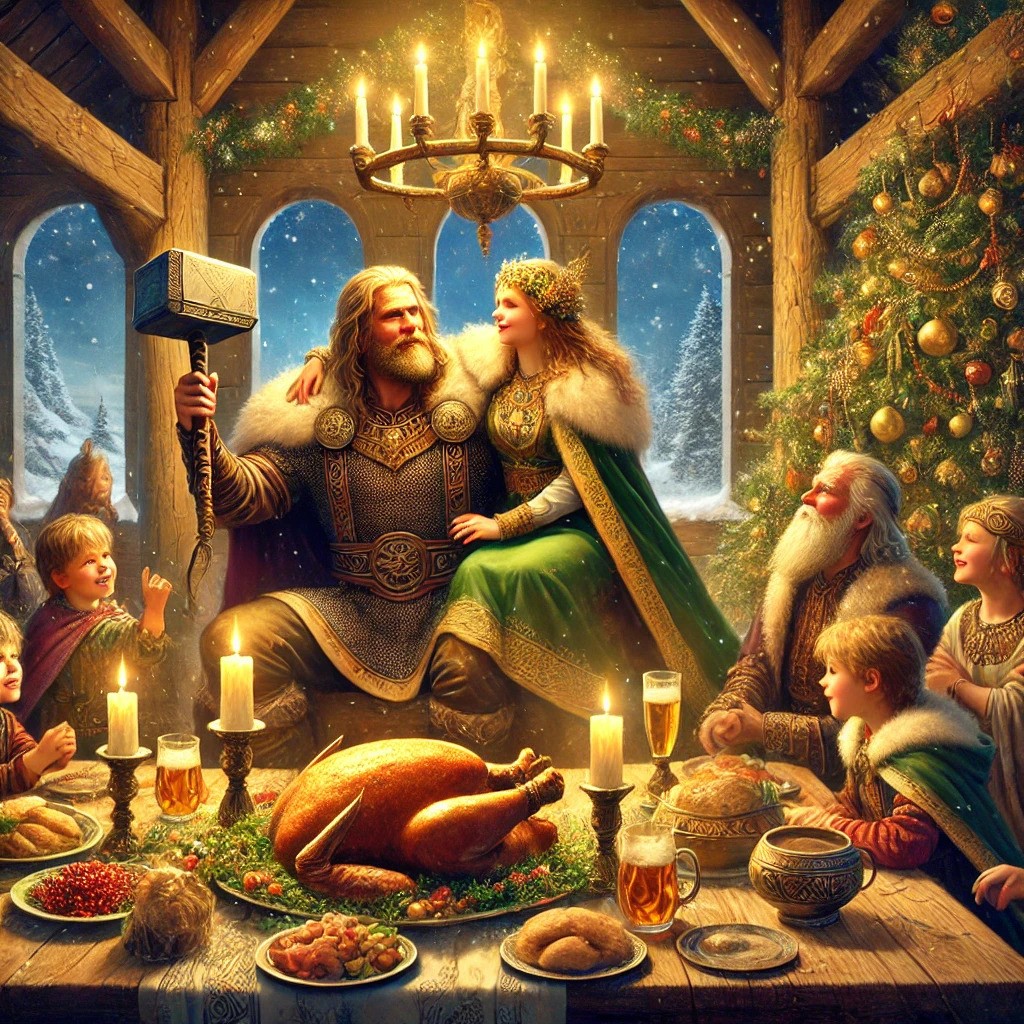
The seventh night of Yule is sacred to Thor, the mighty protector, and his wife Sif, goddess of the fields and grain. This night is also devoted to children — not only as the joy of our homes, but as the living promise of our traditions and communities. If Yule is about the turning of the wheel, then children are the “next turning” made human: the future arriving in laughter, questions, and bright eyes.
Thor’s protection isn’t abstract. In the old worldview, winter was dangerous — dark, cold, and full of unseen forces. People could offer to the powers of night and death, but they also sought a guardian. Thor was that guardian: the one who stands between Midgard and chaos. His strength isn’t just muscle — it’s courage that shows up when it matters, loyalty that holds, and the will to protect what is worth protecting.
And that includes children.
Thor, the Yule goats, and the old symbol of renewal
Thor’s sacred goats, Tanngrisnir and Tanngnjóstr, pull his chariot and carry an old, potent message. In myth, Thor can slaughter his goats for a meal and then revive them through the power of Mjölnir — a cycle of sacrifice and restoration, death and return, hunger and nourishment answered.
That story echoes in the longstanding Yule symbolism of the Yule Goat (julbock) — a figure that still survives in Scandinavian Christmas traditions. In the Viking Age, it was customary in many places to honor Thor at Yule by slaughtering a goat for the feast, offering its life to the protector of the people. Even if we don’t keep that practice today, the meaning remains: Thor is the force that protects the community and restores what sustains it.
Sif, golden grain, and the promise of abundance
Where Thor is protection, Sif is sustenance. Her golden hair is the fields themselves — wheat, barley, grain — the food that got people through winter. Sif represents abundance, nourishment, and the quiet miracle of “enough.”
Traditionally, the last sheaf harvested before Vetrnætr (Winter Nights) could be offered in gratitude and reverence — a way of honoring the powers that guard the harvest and ensure survival. In this way, Thor and Sif stand together as protectors of the people and the future — and that future is carried in the lives of children.
The virtue of Fidelity
This night centers on the virtue of Fidelity, and it deserves a wider definition than most modern conversations give it.
Fidelity means being faithful — to a person, a path, a promise, a community, a set of values. Yes, it can include marital fidelity. But it also includes:
- loyalty to friends and kin
- showing up when it’s inconvenient
- keeping your word when no one is watching
- being true to your beliefs
- being faithful to yourself — your integrity, your healing, your boundaries
And it comes with a crucial truth: fidelity doesn’t mean staying bound to what is harmful. Loyalty is sacred — but it must be healthy and worthy.
Honoring children on this night
Let children take the lead tonight. Let them help with the feast, the candles, the offerings. Invite their voices into the sacred space. Ask them what they dream of. Tell them stories of their people — bloodline or chosen line — and let them feel that they belong to something older and bigger than the moment.
This is how traditions survive: not through perfection, but through presence.
So lift a horn to Thor and Sif — and to the children who carry the bright thread forward.
May their future be as strong as Thor’s protection, and as golden as Sif’s fields.