As the long dark of winter deepens, November 25th opens the doorway to the Norse month of Ýlir, counted as the second month of winter in the Old Norse calendar, and also as the first among the Yule months. The Norse viewed the year in only two seasons, summer and winter. Ýlir usually reached from late November to late December, closing near the Winter Solstice. Since the Norse kept a lunar based calendar, the dates of the months slid a little from year to year, moving with the moon’s pattern instead of the fixed solar count that guides us today.
The Meaning of Ýlir
Ýlir stands in close kinship with Jól (Yule), the great midwinter festival that honors the returning sun. Several sources link the word Ýlir to Jól or to Jólnir, one of Odin’s names, thus binding this span directly to him as the giver of vision, change, and untamed winter magic. In certain Old Icelandic texts, Ýlir is also labeled Frermánuður, or Freezing Month, an apt title for the sharp cold and drawn out nights of the North.
The Spirit of Yule
Yule was a twelve day festival that marked the turning of the year and the rebirth of the sun. Even in the far north, where the sun slipped beneath the horizon for weeks, Yule stood for hope and renewal, the moment when darkness peaked and light began to creep back. In the mythic tales, this rekindled light is often bound to Baldr, the radiant god of the summer sun. Just as the Summer Solstice signals Baldr’s symbolic death at the zenith of brightness, Yule speaks of his return, when warmth and brilliance are pledged once more. Yule therefore braids the cycles of death, renewal, and resurrection, urging us to remember that even in the deepest night, the light will climb again.
Feasting, Toasts, and Offerings
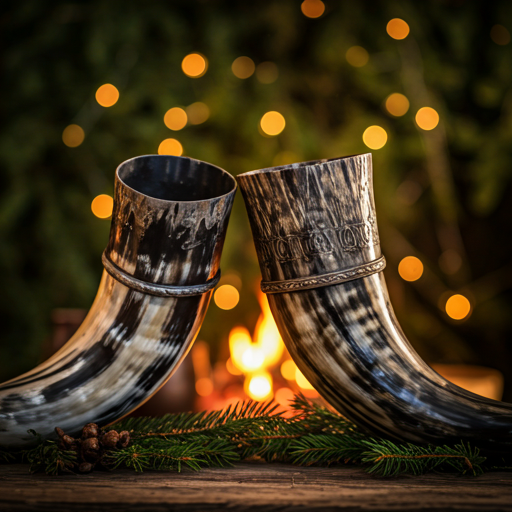
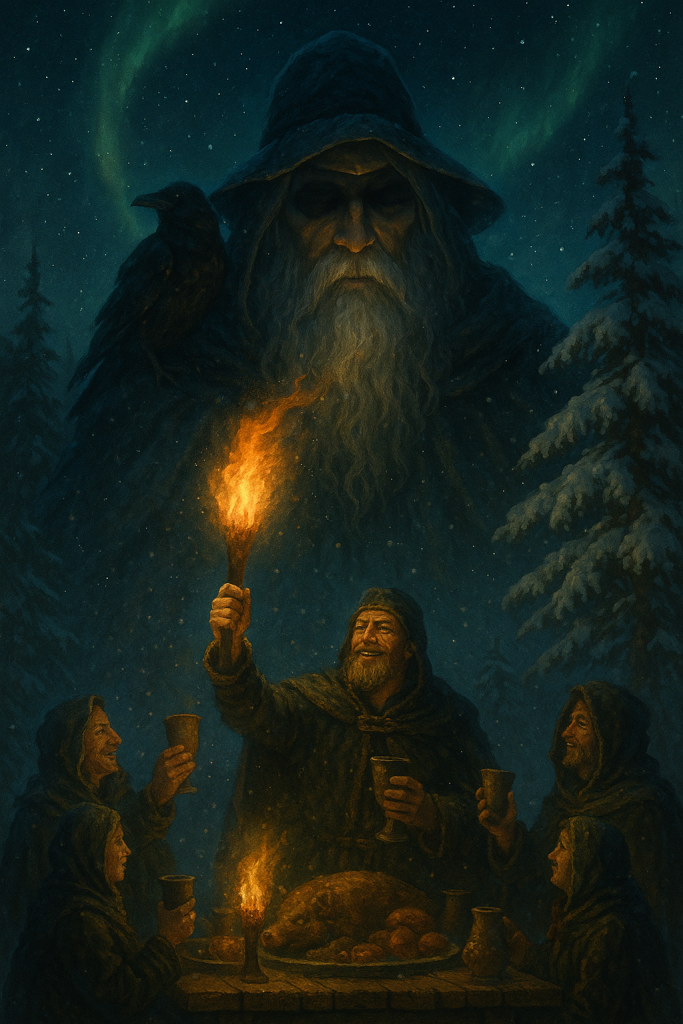
During Ýlir, the hearth stood as the heart of fellowship and kin. Feasts were shared in praise of års ok friðar, “a good and peaceful year.” Horns lifted to Odin, Njörðr, and Freyr, and also to forebears and dear ones who had moved beyond the veil. One of the most sacred practices was the bragarfull, a toast spoken while sealing an oath or vow for the coming year, a mirror of the Norse view that a person’s word carried great might. Tables overflowed with hearty fare, especially pork sacred to Freyr and emblematic of prosperity, along with ample ale or mead for the whole clan. Such gatherings were more than common festivity, for they were deeds of devotion that refreshed ties with gods, spirits, and the wider community.
Traditions and Night Watchings
One ancient custom called Åregang (“åre” meaning “area” or “property,” and “gang” meaning “walk” or “process”) asked folk to pace the edges of their land with torch or candle, marking limits while holding watch through the long night. People believed that if you strolled with a calm heart and sharp senses, you could catch sight of spirits or otherworldly beings drifting in the gloom. Candles found their place in windows to proclaim light’s triumph over shadow, guiding the living along with the wandering dead. Another custom asked that a plate of food and drink be set out overnight, first given to the dead, then to the nisse (house spirits), elves, and vættr (land wights). These gifts saluted the unseen keepers who watched over home and field through the stern season.
Even today, many modern Heathens keep the habit alive, leaving offerings or thankful toasts for the gods, ancestors, and beasts whose lives uphold our own.
Ways to Honor Ýlir and Yule Today
If you’d like to celebrate Ýlir in your own style, here are a handful of simple yet heartfelt practices to fold into your observance:
Light Candles or Torches: Mark your home or garden with lights, symbolizing hope and the returning sun. You can even perform your own Åregang, strolling your property in hushed reflection.
Leave Offerings: Set aside a plate of food and drink overnight for the spirits or house wights. A humble gesture of thanks keeps harmony with the unseen.
Make a Toast: Lift your cup to the gods, ancestors, and the land. Toast to a good and peaceful year and to the coming back of the sun.
Feast and Reflect: Invite family or friends, share tales, speak vows, and pay homage to the turning of the year. Include pork or seasonal fare as a respectful nod to custom.
Connect with Nature: Even in the bite of winter, spend moments outside. The quiet of the land mirrors the deep rest that precedes rebirth, an ideal moment for introspection and renewal.
A Month of Contemplation and Celebration
Ýlir, the Yule Month, spans the stern days of winter while holding the promise of returning light. It is a season of feasting and thought, night and dawn, death and revival. Whether through hush of candle flame, bursts of laughter, or holy toasts under the stars, Ýlir calls us to honor our gods, ancestors, and the wheel of the seasons, to pause and recall that even in the longest night, the light stands ready to rise again.
Skål to a good and peaceful year.
Read about Jol Festivities